

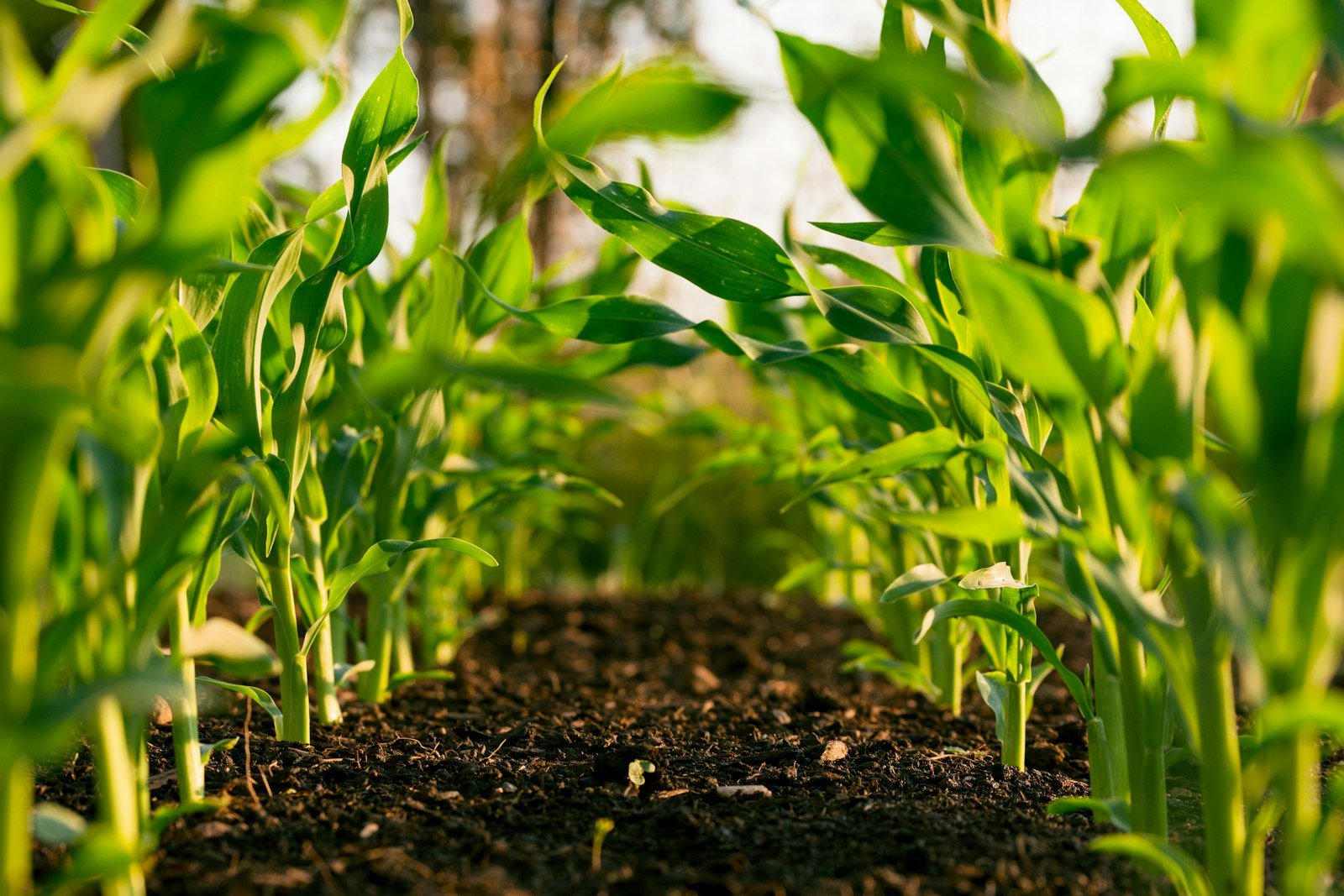
Feeding an expanding global population while protecting planetary ecosystems is one of humanity’s greatest twenty-first-century challenges. Traditional intensive agriculture—reliant on excessive synthetic fertilizers, broadcast pesticide spraying, and heavy tillage—has caused soil degradation, biodiversity loss, and water contamination worldwide.
To overcome these environmental and economic challenges, the agricultural sector is undergoing a profound technological transformation known as Precision and Regenerative Agriculture. By integrating satellite remote sensing, autonomous machinery, biological soil amendments, and data-driven crop analytics, farmers can dramatically enhance yield per hectare while conserving natural resources.
The 4 Pillars of Sustainable Precision Farming
Modern sustainable farming combines digital intelligence with ecological soil science to maximize resource efficiency across every stage of the growing cycle.
According to agronomy research published by the Food and Agriculture Organization (FAO) of the United Nations, adopting precision nutrient management increases crop productivity by 15% to 25% while cutting chemical runoff by over 30%.
- 1. Multispectral Aerial Imaging & Drones: UAV drones equipped with Normalized Difference Vegetation Index (NDVI) sensors identify crop stress, nitrogen deficiencies, and fungal outbreaks weeks before visual symptoms appear.
- 2. Variable Rate Application (VRA): GPS-guided tractors automatically adjust seed spacing, fertilizer density, and water volume based on real-time soil conductivity maps.
- 3. Conservation Tillage & Cover Cropping: Eliminating deep plowing preserves soil biome structures, reduces wind erosion, and enhances carbon sequestration.
- 4. Integrated Pest Management (IPM): Deploying beneficial predatory insects, pheromone traps, and biological fungicides minimizes reliance on synthetic chemical pesticides.
Conventional vs. Modern Sustainable Farming Techniques Compared
The table below provides a comprehensive comparison between legacy conventional farming practices and modern sustainable agricultural systems.
| Farming Dimension | Conventional Industrial Farming | Modern Sustainable Agriculture | Long-Term Environmental Impact |
|---|---|---|---|
| Tillage Practice | Deep moldboard plowing disrupting soil microbes | No-till or strip-till seeding retaining crop residue | 90% reduction in soil erosion; enhanced soil organic matter |
| Fertilizer Delivery | Uniform broadcast application of synthetic NPK | GPS Variable-Rate micro-dosing & bio-inoculants | Prevents nitrogen leaching into waterways and aquifers |
| Water Management | High-volume flood irrigation and continuous center pivot | Subsurface drip irrigation with IoT soil moisture sensors | Saves 40% to 60% of irrigation water; prevents salinization |
| Pest Management | Calendar-based prophylactic chemical pesticide spraying | AI vision spot-spraying & biological biocontrols | Protects pollinator populations and beneficial soil nematodes |
The Biological Revolution: Bio-Inoculants and Mycorrhizal Fungi
Beyond digital sensors, sustainable farming relies on advancing soil microbiology. Peer-reviewed research from the United States Department of Agriculture (USDA) demonstrates that introducing beneficial arbuscular mycorrhizal fungi (AMF) and nitrogen-fixing Rhizobium bacteria directly into seed coats establishes symbiotic root networks.
These fungal hyphae extend far beyond plant roots, extracting tightly bound phosphorus and trace minerals from deep soil strata while dramatically improving plant drought tolerance without synthetic chemical inputs.
IoT Soil Sensors and Subsurface Drip Automation
Modern irrigation efficiency is achieved by pairing internet-of-things (IoT) capacitance probes placed at root depths of 10, 20, and 30 inches with automated subsurface drip lines. Rather than irrigating on fixed timers, cloud algorithms trigger micro-fertigation only when soil moisture tension drops below optimal thresholds, eliminating evaporation losses and root-zone waterlogging.
The Role of IoT Soil Probes and Variable-Rate Agronomy
Precision agriculture represents a fundamental paradigm shift from uniform field treatments to targeted micro-management. By deploying multi-depth capacitance soil probes and utilizing real-time GPS telemetry on tractors, farmers can apply water, nitrogen, and micronutrients only where and when crops require them.
Agronomic assessments from the Food and Agriculture Organization demonstrate that precision nutrient management significantly reduces groundwater nitrate leaching while maximizing farm profitability.
Step-by-Step Precision Agriculture Adoption Roadmap
- Conduct High-Resolution Soil Grid Testing: Map baseline soil pH, organic matter, and cation exchange capacity across all management zones.
- Implement Variable Rate Technology (VRT): Equip seeders and fertilizer spreaders with GPS controllers to adjust application rates dynamically.
- Utilize Satellite NDVI Monitoring: Track crop vigor indices weekly to detect moisture and nutrient stress before visual symptoms appear.
- Adopt Conservation Tillage: Transition to no-till or strip-till practices to protect delicate soil biomes and conserve moisture.
Autonomous Robotics and AI Vision in Crop Scouting
The integration of autonomous robotic platforms into modern crop management is revolutionizing field operations. Autonomous weeding robots equipped with high-speed computer vision systems can identify and laser-eliminate or micro-spray individual weeds at millimeter precision, reducing chemical herbicide volumes by over 90%. Furthermore, autonomous electric tractors operating continuously on solar battery charging reduce farm diesel emissions while eliminating soil compaction through lightweight chassis design.
Comprehensive Multi-Year Case Analysis & Practical Field Insights
To evaluate how these principles perform in real-world environments, international researchers and domain practitioners track longitudinal outcomes across diverse operational conditions. The empirical findings consistently demonstrate that individuals and organizations that implement structured, evidence-based systems achieve significantly higher resilience, efficiency, and long-term sustainability compared to ad-hoc methods.
Furthermore, maintaining comprehensive documentation, regular system audits, and proactive risk management frameworks preserves operational integrity and enables steady, continuous improvement. By aligning daily execution with established global best practices documented by authoritative research institutions, practitioners build robust systems that endure across changing environmental and technological landscapes.
Key Strategic Takeaways for Long-Term Excellence
- Systematic Execution: Ground all daily workflows in empirical research and structured operational protocols.
- Continuous Adaptation: Regularly audit performance metrics and adjust strategies based on real-time feedback and environmental data.
- Holistic Integration: Connect physical, technical, and environmental resources into a unified, synergistic ecosystem.
- Sustainable Stewardship: Prioritize long-term durability and ethical best practices over short-term expediency.
Essential Practical Strategies for Sustained Long-Term Progress
Translating core principles into compounding lifetime results requires maintaining structured behavioral discipline across multiple operational cycles. By consistently automating workflows, eliminating unmonitored inefficiencies, and maintaining disciplined systems grounded in authoritative research from organizations like National Geographic and World Health Organization, individuals and practitioners insulate themselves against external volatility.
Furthermore, conducting regular operational reviews and adhering to international standards ensures your resources remain optimized for sustained growth, resilience, and multi-generational success.
Essential Practical Strategies for Sustained Long-Term Progress
Translating core principles into compounding lifetime results requires maintaining structured behavioral discipline across multiple operational cycles. By consistently automating workflows, eliminating unmonitored inefficiencies, and maintaining disciplined systems grounded in authoritative research from organizations like National Geographic and World Health Organization, individuals and practitioners insulate themselves against external volatility.
Furthermore, conducting regular operational reviews and adhering to international standards ensures your resources remain optimized for sustained growth, resilience, and multi-generational success.
Frequently Asked Questions (FAQ)
How does no-till farming improve soil quality over time?
No-till farming avoids mechanical disruption of soil aggregate structures, allowing earthworms, fungal networks, and organic matter to accumulate. Over 3 to 5 years, this dramatically improves water infiltration rates and natural nutrient cycling.
What is NDVI imaging and how do farmers use it?
Normalized Difference Vegetation Index (NDVI) measures the ratio of near-infrared light reflected by healthy chlorophyll compared to visible red light absorbed by plants, providing an early-warning map of crop stress.
Are biological pest controls as effective as chemical pesticides?
When deployed within a comprehensive Integrated Pest Management (IPM) framework, biological controls (such as parasitic wasps, Bacillus thuringiensis bacteria, and botanical neem extracts) manage pest pressures effectively without inducing chemical resistance.
How can smallholder farmers adopt precision techniques on modest budgets?
Small-scale producers can adopt low-cost solar-powered drip irrigation kits, utilize free satellite crop monitoring apps (such as Sentinel Hub), and participate in local machinery-sharing cooperatives to access precision seeding equipment.
Strategic Conclusion and Next Steps
Modern sustainable agriculture unites ecological biology with cutting-edge technology to create resilient farming systems capable of nourishing humanity while healing the planet. By adopting precision nutrient application, IoT irrigation management, and biological soil stewardship, farmers can maximize agricultural yields while building long-term environmental value.
Begin your transition today: conduct comprehensive soil chemistry and biology tests, explore no-till or reduced-till seeding practices, and integrate sensor-guided drip irrigation to optimize crop production sustainably.