
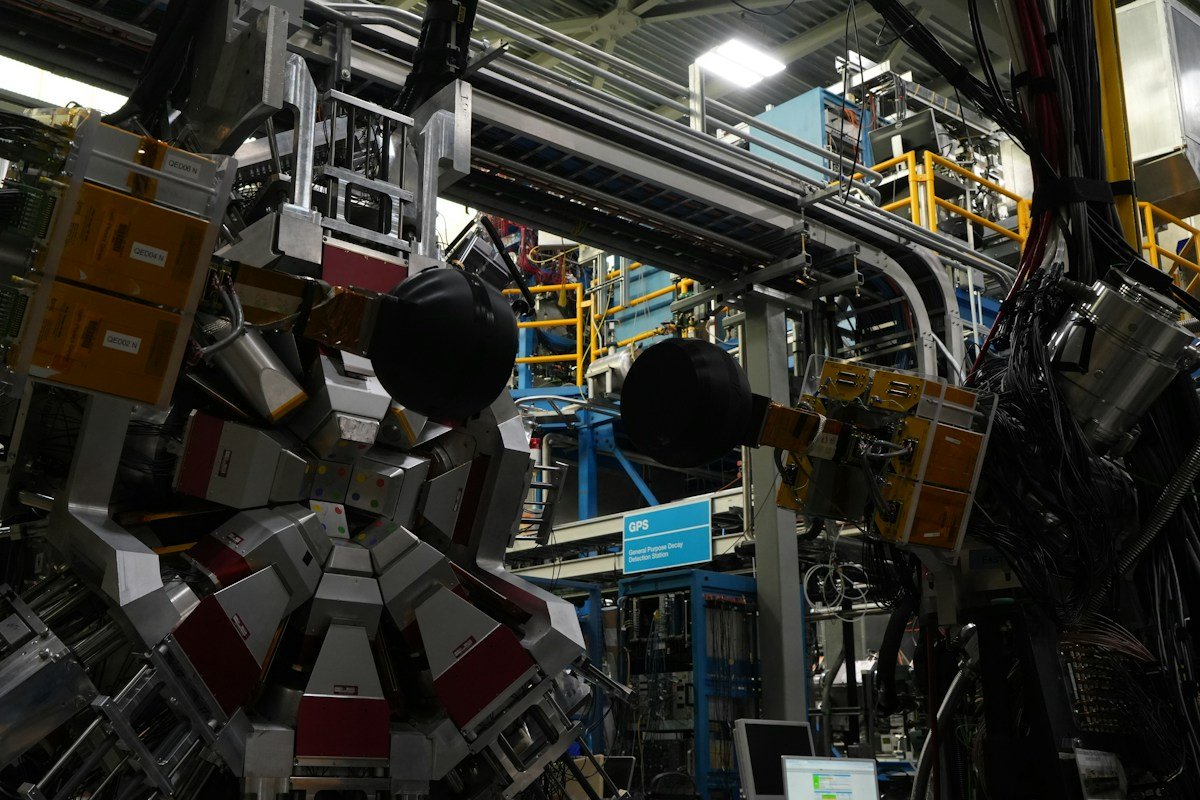

Nuclear fusion plasma confinement engineering represents the definitive frontier of modern physics, high-temperature materials science, and clean energy engineering. For over seven decades, physicists and engineers have pursued the technological mastery of nuclear fusion: the elemental process that powers the sun and the stars across the cosmos. By fusing light atomic nuclei into heavier elements, nuclear fusion releases millions of times more energy per unit mass than the combustion of chemical fossil fuels and four times more energy per reaction than conventional nuclear fission, without producing long-lived transuranic radioactive waste or greenhouse gas emissions.
However, replicating thermonuclear stellar conditions within terrestrial containment vessels presents unprecedented physical challenges. At the atomic scale, positively charged atomic nuclei experience fierce electrostatic Coulomb repulsion as they approach one another. To overcome this Coulomb barrier and allow the attractive strong nuclear force to bind the nucleons together, the fuel particles must possess immense thermal kinetic energy. This requires heating the fuel mixture to temperatures exceeding one hundred and fifty million degrees Celsius—more than ten times hotter than the core of the sun. At these extreme temperatures, electrons are completely stripped from atomic nuclei, transforming the matter into a fully ionized, highly turbulent state of matter known as plasma.
Because physical material container walls vaporize instantaneously upon direct contact with hundred-million-degree plasma, fusion reactors must isolate the superheated medium using magnetic or inertial confinement. Among all confinement paradigms explored to date, the Tokamak—a toroidal magnetic confinement chamber originally conceived by Soviet physicists Igor Tamm and Andrei Sakharov—has demonstrated the highest plasma performance, greatest thermal insulation, and most credible pathway toward commercial baseload electric power generation.
Achieving commercial fusion power requires attaining net scientific energy gain (Q > 1), commercial net electric power delivery (Q_electric > 5), and self-sustaining thermonuclear ignition, wherein the high-energy alpha particles generated by the fusion reactions deposit sufficient heat within the plasma to sustain the reaction without external heating input. Reaching these milestones demands mastery over non-linear magnetohydrodynamics (MHD), micro-turbulent transport, high-temperature superconducting magnets, and resilient plasma-facing materials.
This comprehensive engineering manual provides an exhaustive technical analysis of nuclear fusion plasma confinement within advanced tokamak architectures. Written for nuclear engineers, plasma physicists, and high-energy research systems architects, this manual dissects the governing laws of thermonuclear fusion, analyzes magnetic field topologies and MHD equilibrium, examines high-temperature superconducting magnet design, evaluates auxiliary plasma heating mechanisms, details divertor heat-flux mitigation, and outlines the engineering requirements for commercial closed-loop tritium breeding cycles.
Thermonuclear Fusion Physics and the Lawson Triple Product Criterion
To engineer a commercially viable fusion reactor, systems architects must evaluate the fundamental reaction kinetics and thermal scaling laws that govern high-temperature thermonuclear plasmas. While numerous light-element fusion reactions are theoretically possible, the reaction exhibiting the highest reaction cross-section at the lowest achievable thermal ignition temperature is the fusion of deuterium (hydrogen-2) and tritium (hydrogen-3).
The Deuterium-Tritium (D-T) nuclear reaction proceeds according to the formulation: D + T yields Helium-4 (3.5 MeV) plus a Neutron (14.1 MeV), releasing a total of 17.6 mega-electronvolts (MeV) of kinetic energy per discrete fusion event. The reaction products diverge dramatically in their physical behavior and operational utility within the tokamak. The electrically charged alpha particle (He-4 nucleus carrying 3.5 MeV of energy) is trapped by the reactor magnetic confinement fields, transferring its kinetic energy back into the surrounding plasma through Coulomb collisions to maintain thermonuclear temperatures. In contrast, the electrically neutral 14.1 MeV neutron escapes the magnetic cage unimpeded, penetrating deeply into the surrounding blanket modules where its kinetic energy is converted to thermal heat to drive conventional steam turbine generators.
The operational viability of a magnetic confinement fusion reactor is dictated by the Lawson Criterion, commonly formulated as the fusion triple product. The triple product states that the product of plasma particle density (n), plasma ion temperature (T), and energy confinement time (tau_E) must exceed a rigorous physical threshold to achieve net thermal energy gain. For a Deuterium-Tritium plasma operating at optimal thermal cross-sections between ten and twenty kilo-electronvolts (100 to 200 million Kelvin), the triple product must satisfy: n * T * tau_E >= 3 * 10^21 kilo-electronvolt seconds per cubic meter.
In magnetic confinement tokamaks, plasma density n is bounded by fundamental physical limits—specifically the Greenwald density limit, beyond which radiative cooling and micro-instabilities trigger catastrophic plasma disruptions. Consequently, tokamaks operate at low particle densities (roughly one hundred thousand times less dense than atmospheric sea-level air) and compensate by engineering extended energy confinement times tau_E, spanning several seconds. Maximizing energy confinement time requires maximizing the physical dimensions of the plasma volume, reinforcing the intensity of the confining magnetic fields, and suppressing turbulent convective heat transport across the outer magnetic boundary layers.
Tokamak Magnetic Topology: Toroidal and Poloidal Magnetic Field Integration
The central engineering triumph of the tokamak design is the creation of a closed, helical magnetic geometry that prevents charged plasma particles from escaping along magnetic field lines. In a simple straight magnetic cylinder, plasma particles stream freely out of the open ends. Bending the magnetic cylinder into a closed donut-shaped torus eliminates the physical ends, but introduces a severe spatial asymmetry: the magnetic field lines on the inner board (closer to the central torus hole) are packed more densely than the field lines on the outer board.
This spatial gradient creates an inhomogeneous magnetic field (grad-B drift) and magnetic field curvature (curvature drift). Under these combined electromagnetic forces, positively charged deuterons and tritons drift vertically upward toward the top of the chamber, while negatively charged electrons drift downward toward the bottom. This charge separation generates a powerful vertical electrostatic dipole electric field (E). In turn, this electric field crosses with the primary toroidal magnetic field (B_phi), producing an E x B drift that drives the entire plasma bulk outward toward the outer chamber walls in microseconds, destroying plasma confinement.
To cancel this catastrophic charge separation, the tokamak introduces a helical twist into the magnetic field lines, wrapping them into nested magnetic flux surfaces like concentric donut layers. As a charged particle orbits around the torus along a twisted helical field line, it spends half its trajectory in the upper hemisphere and half in the lower hemisphere, continuously canceling out the vertical charge separation and stabilizing the plasma column.
This helical magnetic field configuration is synthesized by integrating two distinct magnetic field components: the Toroidal Magnetic Field and the Poloidal Magnetic Field. The Toroidal Field (B_phi) encircles the torus horizontally and is generated by massive external superconducting D-shaped coils arranged symmetrically around the outer vacuum vessel. The Poloidal Field (B_theta) encircles the torus vertically and is generated primarily by a powerful electrical current (the plasma current, I_p) induced directly inside the conductive plasma column itself.
The plasma current is induced through transformer action. A massive solenoid magnet, known as the Central Solenoid, is positioned in the central hole of the torus. By rapidly ramping the electrical current through the central solenoid coils, engineers generate a time-varying magnetic flux that induces a toroidal electric field within the chamber. Because the superheated ionized plasma possesses exceptionally high electrical conductivity, this induced voltage drives millions of amperes of plasma current through the torus, generating the essential poloidal magnetic field required for equilibrium.
Greenwald Density Limit and Micro-Turbulent Radial Transport
While achieving hundred-million-degree ion temperatures is fundamental, sustaining high plasma particle density n is equally decisive for maximizing thermonuclear reaction rates, which scale proportionally with the square of density. However, magnetic confinement devices encounter an empirical upper density boundary designated as the Greenwald Density Limit. Formulated by Martin Greenwald, the line-averaged plasma electron density n_G cannot exceed the ratio of plasma current to plasma cross-sectional area: n_G = I_p / (pi * a^2), where I_p is plasma current in mega-amperes and a is plasma minor radius in meters.
Attempting to fuel the plasma beyond the Greenwald limit triggers intense radiative cooling at the plasma edge. As edge density rises, atomic bremsstrahlung and line radiation from residual impurities cool the outer boundary layer, shrinking the current-carrying channel and steepening the radial current density gradient. This steep gradient destabilizes resistive tearing modes, causing the plasma current to violently disrupt. Consequently, advanced tokamak operation demands precise edge density control and gas puffing protocols to maintain core density near the Greenwald boundary without triggering peripheral thermal collapse.
Compounding density constraints is anomalous micro-turbulent transport. Classical and neoclassical diffusion theories predict very slow radial heat leakage driven solely by inter-particle Coulomb collisions. In experimental reality, radial heat transport across magnetic surfaces occurs orders of magnitude faster than neoclassical predictions. This transport is dominated by electrostatic micro-instabilities, particularly Ion Temperature Gradient (ITG) modes and Trapped Electron Modes (TEM). These micro-scale drift waves generate turbulent convective eddies that rip heat and particles out of the core, requiring active suppression through sheared toroidal plasma rotation and magnetic shear optimization.
Magnetohydrodynamic Equilibrium and the Grad-Shafranov Governing Equation
The physical stability of a confined fusion plasma is governed by the laws of Magnetohydrodynamics (MHD), which treat the multi-species ionized gas as an electrically conducting macroscopic fluid interacting with electromagnetic fields. In a steady-state tokamak, the plasma must maintain stationary force equilibrium, wherein the outward kinetic thermal expansion pressure of the hundred-million-degree gas is precisely counterbalanced by the inward inward Lorentz force (J x B) exerted by the magnetic fields.
This fundamental momentum balance equation is expressed as grad(P) = J x B, where P represents plasma scalar pressure, J represents electric current density, and B represents the total magnetic field vector. Combining this force balance with Ampere’s Law and Maxwell’s magnetic divergence constraint under conditions of toroidal axisymmetry yields the legendary Grad-Shafranov Equation: a non-linear, second-order partial differential equation that defines the spatial geometry of nested poloidal magnetic flux surfaces psi(R, Z) within the tokamak.
Solving the Grad-Shafranov equation reveals critical non-dimensional operational limits that dictate reactor engineering. The primary metric of magnetic efficiency is the Plasma Beta (beta), defined as the ratio of plasma kinetic pressure to external magnetic field pressure: beta = 2 * mu_0 *
/ B^2. Because superconducting magnets represent the single largest capital expenditure in a fusion powerplant, maximizing beta is essential for economic viability: a higher beta indicates that a given magnetic field intensity is confining a larger quantity of thermal fusion fuel.
However, plasma beta cannot be increased indefinitely. Above a critical threshold, known as the Troyon Beta Limit, the plasma pressure gradient drives destructive macro-instabilities that rupture the magnetic equilibrium. The Troyon limit scales as beta_max = beta_N * (I_p / (a * B_0)), where I_p is plasma current, a is the plasma minor radius, B_0 is the toroidal magnetic field, and beta_N is the normalized beta parameter (typically bounded between 2.5 and 3.5 in standard tokamak regimes). To maximize beta, modern tokamaks shape the plasma cross-section into an elongated D-shape with high vertical elongation (kappa > 1.7) and high triangularity (delta > 0.4), optimizing magnetic shear and volume utilization.
Plasma Instabilities: Neoclassical Tearing Modes and Disruption Mitigation
Confinement engineering within a tokamak represents a continuous battle against macroscopic and microscopic plasma instabilities. While ideal MHD instabilities can be controlled through careful magnetic shaping and profile tuning, resistive and kinetic instabilities present severe operational risks that can trigger catastrophic plasma disruptions.
The most ubiquitous performance-limiting instability in high-confinement tokamak regimes is the Neoclassical Tearing Mode (NTM). NTMs are resistive instabilities driven by the loss of bootstrap current within resonant magnetic flux surfaces. In advanced tokamaks, radial pressure gradients generate a self-driven toroidal current known as the bootstrap current, which reduces the required external current drive. However, when magnetic perturbations tear and reconnect magnetic field lines, forming closed helical magnetic islands, the pressure profile inside the island flattens.
This pressure flattening extinguishes the local bootstrap current inside the magnetic island, producing a current deficit that amplifies the island width. As NTM islands grow, they degrade energy confinement time by providing low-resistance thermal short-circuits across flux surfaces, and can lock to the metallic vacuum vessel walls, halting plasma rotation and precipitating a rapid global disruption.
A plasma disruption is the most violent event in tokamak physics. Within tens of milliseconds, the entire thermal energy of the plasma (hundreds of megajoules in a power-scale reactor) is dumped onto the vessel walls (the thermal quench), followed immediately by the rapid collapse of the multi-mega-ampere plasma current (the current quench). This sudden collapse induces massive eddy currents in structural steel components, generating tens of thousands of kilonewtons of electromagnetic Lorentz forces that can warp the physical vacuum chamber.
Furthermore, during the current quench, intense electric fields accelerate relativistic runaway electrons into collimated beams carrying mega-amperes of current, which can drill holes through solid tungsten armor tiles. To prevent disruption damage, modern tokamaks deploy active Disruption Mitigation Systems (DMS) utilizing Shattered Pellet Injection (SPI). Cryogenically frozen neon and deuterium pellets are fired into the plasma at hundreds of meters per second and shattered into micro-fragments immediately prior to entry. The shattered pellet fragments vaporize uniformly, radiating thermal energy isotropically via soft X-rays and dramatically increasing plasma density to safely suppress runaway electron avalanches.
High-Temperature Superconducting Magnets: REBCO Tape Conductor Engineering
The commercialization of magnetic confinement fusion has been revolutionized by the emergence of Rare-Earth Barium Copper Oxide (REBCO) High-Temperature Superconductors (HTS). For decades, flagship fusion experiments (such as JET and ITER) relied on Low-Temperature Superconductors (LTS), specifically Niobium-Titanium (NbTi) and Niobium-Tin (Nb3Sn).
While LTS conductors are robust and mature, their physical upper critical magnetic field limits maximum peak fields at the magnet winding pack to approximately twelve Tesla, requiring operation at liquid helium temperatures (4.2 Kelvin). In tokamak engineering, fusion power density scales with the fourth power of the magnetic field (P_fusion proportional to B^4). Doubling the magnetic field on the plasma axis increases the volumetric fusion power output by a factor of sixteen, enabling a drastic reduction in reactor physical size for equivalent energy output.
Second-generation HTS conductors, manufactured as flexible multi-layer REBCO coated tapes, exhibit astounding superconducting performance. Unlike brittle niobium alloys, REBCO tapes maintain extraordinary critical current densities (J_c exceeding 1,000 amperes per square millimeter) in magnetic fields exceeding twenty Tesla, even at elevated temperatures between twenty and fifty Kelvin.
Engineering twenty-Tesla HTS toroidal field coils presents unprecedented mechanical and thermal challenges. At twenty Tesla, magnetic pressure reaches two hundred megapascals—equivalent to the hydrostatic pressure at the bottom of the Mariana Trench. The structural coil casing must withstand immense bursting forces trying to expand the coil outward, alongside centering forces driving coil legs inward against the central bucking cylinder. Advanced HTS magnets utilize high-strength structural Hastelloy substrates and cryogenic stainless-steel casings reinforced with non-insulated or metal-insulated winding techniques to mitigate catastrophic quench hotspots.
Cryogenic Vacuum Systems and First-Wall Wall Conditioning Protocols
Achieving stable thermonuclear plasma confinement requires maintaining an ultra-high vacuum environment within the toroidal chamber, with base background pressures below 10^-8 millibars prior to fuel gas injection. Any ambient atmospheric gas molecules, water vapor, or carbon compounds present inside the vacuum vessel represent fatal contaminants. When high-Z impurities are ionized by the plasma, their radiative power losses scale quadratically with atomic number. Even minute concentrations of heavy metallic impurities at concentrations above 0.01 percent radiate sufficient energy to extinguish the thermonuclear flame.
To achieve and sustain this level of vacuum purity, tokamaks deploy multi-stage cryogenic vacuum pumping systems. Primary evacuation is handled by magnetic-levitation turbomolecular pumps backed by dry scroll roughing pumps, while high-throughput operational pumping during plasma discharges relies on cryogenic sorption panels cooled by liquid helium to 4.5 Kelvin. These cryopumps utilize activated charcoal sorbent beds to freeze out and pump deuterium, tritium, and helium ash at volumetric pumping speeds exceeding one hundred thousand liters per second.
In parallel with active pumping, operators execute rigorous Wall Conditioning protocols. Between plasma discharges, the vessel undergoes high-temperature vacuum baking at temperatures up to 200 degrees Celsius to desorb trapped water vapor from metallic walls. This is followed by Glow Discharge Cleaning, wherein low-temperature helium or deuterium glow discharge plasmas scrub hydrocarbon contaminants from plasma-facing surfaces. Modern metal-wall tokamaks additionally deploy Boronization: injecting deuterated diborane or carborane gas during glow discharges to deposit an ultra-thin, nanometer-scale amorphous boron film over all first-wall tungsten components, dramatically suppressing oxygen impurity influx and heavy-metal physical sputtering.
Auxiliary Plasma Heating and Non-Inductive Current Drive Architectures
Because the electrical resistivity of a plasma decreases dramatically as its temperature rises (scaling inversely with temperature to the three-halves power according to Spitzer resistivity), inductive ohmic heating from the central solenoid becomes completely ineffective above thirty million degrees Celsius. To drive the plasma from ohmic temperatures to thermonuclear ignition temperatures, tokamaks must deploy massive auxiliary heating systems delivering tens of megawatts of thermal power.
The primary external heating system is Neutral Beam Injection (NBI). In an NBI system, hydrogen or deuterium gas is ionized in an arc chamber and accelerated across high-voltage electrostatic grids to kinetic energies exceeding one mega-electronvolt (1 MeV). Because charged ions would be deflected immediately by the tokamak outer magnetic fields, the accelerated beam passes through a neutralization gas cell where charge-exchange reactions convert the energetic ions back into fast neutral atoms.
These neutral atoms shoot straight through the confining magnetic fields and penetrate deep into the dense plasma core. Inside the core, the neutral beam atoms undergo ionizing collisions with plasma particles, re-ionizing and becoming trapped within the magnetic cage, where they transfer their kinetic energy to the background plasma via Coulomb collisions. In addition to core heating, tangential neutral beam injection imparts momentum to the plasma, driving steady-state non-inductive toroidal current and spinning the plasma column to stabilize resistive wall modes.
To complement NBI, tokamaks utilize Radio-Frequency (RF) Wave Heating systems that beam high-power electromagnetic waves into the plasma, tuned precisely to natural particle resonance frequencies. Ion Cyclotron Resonance Heating (ICRH) operates in the megahertz frequency range (forty to eighty megahertz), launching fast magnetosonic waves that resonate with ion cyclotron gyro-orbits. Electron Cyclotron Resonance Heating (ECRH) operates in the high-frequency microwave domain (one hundred to one hundred and seventy gigahertz), utilizing high-power gyrotrons to focus millimeter waves onto narrow resonant surfaces with millimeter spatial precision.
ECRH provides a vital operational capability: real-time stabilization of Neoclassical Tearing Modes. By dynamically steering steerable microwave launcher mirrors, control systems deposit targeted ECRH microwave power directly inside the center of rotating NTM magnetic islands. This localized heating drives non-inductive Electron Cyclotron Current Drive (ECCD), replacing the missing bootstrap current deficit and shrinking the magnetic island before it can lock and disrupt the discharge.
Divertor Engineering, Plasma-Facing Components, and Extreme Heat Flux Mitigation
The most critical materials science challenge in a commercial fusion reactor is the Divertor: the exhaust system of the tokamak designed to extract helium ash, remove impurities, and handle the staggering heat exhaust streaming along the plasma scrape-off layer (SOL). In a high-power fusion reactor, steady-state heat flux directed toward the divertor target plates exceeds fifteen to twenty megawatts per square meter—a thermal load comparable to the surface of the sun or spacecraft heat shields entering planetary atmospheres.
To prevent instantaneous melting or sublimation of divertor components, tokamak divertors utilize actively cooled Tungsten Monoblocks bonded to high-conductivity copper alloy cooling tubes (CuCrZr) carrying pressurized water at several megapascals. Tungsten is selected due to its extraordinary melting temperature (3,422 degrees Celsius), low physical sputtering yield under light-ion bombardment, high thermal conductivity, and exceptionally low retention of radioactive tritium fuel.
However, solid tungsten armor cannot survive unmitigated direct plasma attachment. Tokamaks must operate in the Detached Divertor Regime. By injecting controlled impurities (such as nitrogen, argon, or neon) into the divertor region, engineers induce intense atomic line radiation, dispersing up to ninety percent of the exhaust heat isotropically across the entire vacuum vessel wall before the plasma reaches the divertor strike plates.
Simultaneously, charge exchange with dense neutral gas clouds cushions the divertor target, lowering the local plasma electron temperature at the target surface below five electronvolts. Below this temperature threshold, plasma volume recombination occurs: ions and electrons recombine spontaneously into neutral atoms, dramatically reducing physical ion impact energy below the physical sputtering threshold of tungsten, extending divertor component service lifespans across multiple years of power generation.
Closed-Loop Tritium Breeding Blankets and Fuel Cycle Stewardship
While deuterium fuel is virtually inexhaustible—naturally occurring in seawater at an abundance of approximately thirty-three milligrams per liter—tritium is a radioactive hydrogen isotope with a short half-life of 12.3 years, virtually non-existent in terrestrial nature. The total global commercial inventory of tritium, produced primarily as a byproduct in CANDU fission reactors, amounts to less than thirty kilograms. Consequently, a commercial fusion powerplant must be entirely self-sufficient: it must breed its own tritium fuel internally.
Tritium breeding occurs within Breeding Blanket modules that line the internal walls of the vacuum vessel behind the first wall armor tiles. When the 14.1 MeV fusion neutrons escape the magnetic cage, they penetrate the blanket modules and collide with Lithium isotopes (Lithium-6 and Lithium-7), initiating exothermic nuclear reactions that synthesize new tritium atoms. The primary reaction occurs with Lithium-6: Li-6 + n yields He-4 (2.05 MeV) + T (2.73 MeV).
To achieve a closed-loop fuel cycle, the reactor must achieve a Tritium Breeding Ratio (TBR) greater than 1.05. A TBR of 1.05 signifies that for every one hundred tritium atoms consumed in the fusion plasma core, the blanket produces one hundred and five new tritium atoms, providing a five percent surplus to compensate for radioactive decay, extraction inefficiencies, and fuel reserve accumulation for future powerplant startups.
Because natural lithium consists predominantly of Lithium-7 (ninety-two percent), commercial blankets utilize enriched Lithium-6 (enriched up to sixty to ninety percent) and incorporate Neutron Multipliers (such as Beryllium or Lead). When a 14.1 MeV neutron strikes a lead or beryllium nucleus, it triggers an (n, 2n) reaction, releasing two slower neutrons that subsequently breed tritium in neighboring lithium ceramic pebbles (such as Lithium Orthosilicate Li4SiO4 or Lithium Titanate Li2TiO3). The newly synthesized tritium is continuously extracted using purged helium gas streams, purified in an on-site isotope separation facility, and re-injected into the plasma core, establishing a perpetual closed-loop fuel cycle.
Diagnostic Instrumentation Suite: Thomson Scattering and Magnetic Sensors
Operating a magnetic confinement fusion reactor requires a comprehensive suite of real-time diagnostic sensors capable of measuring plasma parameters in extreme thermal and radiation environments. Because no physical probe can survive immersion within the core plasma, diagnostic systems rely predominantly on contactless optical, laser, and magnetic measurement techniques.
The primary diagnostic for measuring core electron temperature and electron density profiles is Thomson Scattering. High-energy pulsed neodymium-doped lasers fire nanosecond laser pulses along vertical and horizontal chords through the plasma core. As the laser photons collide with free electrons, they undergo elastic scattering. Because the electrons are moving at relativistic thermal velocities, the scattered laser light exhibits a Doppler frequency shift proportional to the square root of the electron temperature, while the integrated photon intensity reflects local electron density. Advanced polychromators detect this scattered light, providing millimeter-resolved temperature and density profiles across the discharge.
Magnetic diagnostics provide the primary feedback signals for the real-time plasma equilibrium and shape control system. Arrays of Rogowski coils, Mirnov magnetic pick-up coils, and saddle flux loops are mounted around the inner perimeter of the vacuum vessel behind protective armor tiles. Rogowski coils measure the total plasma current via electromagnetic induction, while Mirnov coils detect high-frequency magnetic field oscillations, identifying the onset of rotating MHD instabilities and tearing modes. Simultaneously, far-infrared Laser Interferometry measures line-integrated electron density by calculating the phase shift of laser beams passing through the refractive index of the ionized medium, feeding high-speed digital signal processors that adjust gas puff valves and central solenoid currents in microsecond control loops.
Authoritative Plasma Physics Standards and Official Research Repositories
The plasma confinement principles, magnetohydrodynamic equations, and materials science data presented in this technical engineering manual are derived from international fusion energy projects and peer-reviewed plasma physics literature. Research engineers and hardware architects can verify and expand upon these foundational principles through the following official organizations and repositories:
Global fusion science standards and regulatory frameworks are coordinated by the International Atomic Energy Agency through the official IAEA Fusion Energy Portal. Engineering specifications and technological progress for the world’s largest magnetic confinement experiment are documented directly on the ITER Official International Megaproject Portal.
Pioneering magnetic confinement theory, spherical tokamak modeling, and advanced divertor research are published by the Princeton Plasma Physics Laboratory (PPPL). High-temperature superconducting magnet breakthroughs and compact tokamak scaling are led by academic research teams at the MIT Plasma Science and Fusion Center.
Theoretical plasma physics, turbulent transport simulations, and disruption mitigation experimental data are extensively peer-reviewed in leading academic journals, including Nature Physics and the IEEE Nuclear and Plasma Sciences Society.
Thermonuclear Confinement Paradigms Technical Comparison Matrix
Selecting the optimal magnetic confinement topology involves balancing physics maturity, engineering complexity, capital cost, and commercial maintenance logistics. While the conventional tokamak remains the most experimentally proven confinement concept, alternative magnetic configurations offer distinct operational advantages regarding steady-state operation and plasma stability.
In particular, Stellarators utilize complex modular three-dimensional external coils to generate the entire helical magnetic field without requiring a driven plasma current, eliminating current-driven disruptions at the cost of extreme coil manufacturing tolerances. Spherical tokamaks offer high plasma beta at lower magnetic fields, and Magnetized Target Fusion bridges the gap between magnetic and inertial confinement. The following engineering matrix provides a comparative evaluation of the primary fusion confinement architectures:
| Confinement Architecture | Magnetic Field Generation Mechanism | Primary Physics Advantage | Primary Engineering Challenge |
|---|---|---|---|
| Conventional Tokamak (ITER/DEMO) | Toroidal coils combined with central solenoid induced plasma current | Highest achieved triple product (n * T * tau_E) and proven scaling laws | Pulsed operation limits; susceptibility to violent current disruptions |
| Compact HTS Tokamak (SPARC/ARC) | High-field 20-Tesla REBCO superconducting magnet coils | Extreme power density (proportional to B^4) enabling compact reactor size | Colossal Lorentz mechanical forces; extreme divertor heat flux densities |
| Advanced Stellarator (Wendelstein 7-X) | 100% external non-planar modular superconducting coils | Inherent steady-state operation; 0 net current; 0 current disruptions | Hyper-complex 3D coil geometries and sub-millimeter construction tolerances |
| Spherical Tokamak (STEP/NSTX-U) | Tight aspect ratio torus with slim central conductor post | High natural plasma beta (up to 40%); excellent MHD stability | Zero space for central solenoid or internal shielding on center column |
| Field-Reversed Configuration (FRC) | Self-generated internal diamagnetic toroidal current rings | Extreme beta (approaching 100%); linear cylindrical chamber geometry | Severe rotational and tilt instabilities; lower thermal confinement times |
| Inertial Confinement Fusion (NIF) | Laser-driven hohlraum X-ray ablation and spherical implosion | Demonstrated target net energy gain (Q > 1); zero magnetic coils | Requires multi-hertz target injection and colossal laser driver electrical inputs |
Synthesizing these technological systems into a functional commercial reactor requires continuous engineering optimization across magnetic field strength, materials survivability, and fuel cycle integration. The successful convergence of high-temperature superconductors with advanced divertor physics establishes magnetic confinement fusion as the most viable long-term candidate for clean planetary baseload power.
Fusion systems engineers and power plant operators must navigate complex questions regarding plasma control, neutron activation, and power grid integration. The following section provides comprehensive answers to the most vital questions in nuclear fusion plasma engineering.
Frequently Asked Questions Regarding Nuclear Fusion Plasma Confinement
How does the Lawson Criterion determine the breakeven conditions for thermonuclear fusion?
The Lawson Criterion defines the minimal mathematical product of plasma density, ion temperature, and energy confinement time required for the internal fusion heating power (from 3.5 MeV alpha particles) to equal or exceed the total plasma thermal power losses. Meeting this criterion enables self-sustaining fusion reactions without ongoing external heating.
What is the physical function of the Central Solenoid in a conventional tokamak?
The Central Solenoid acts as the primary transformer winding. Ramping the electrical current through the solenoid induces a powerful toroidal electric field inside the vacuum chamber, which drives millions of amperes of plasma current through the conductive gas, generating the poloidal magnetic field essential for equilibrium.
How do high-temperature superconducting (HTS) magnets alter tokamak reactor economics?
HTS REBCO tapes allow toroidal field magnets to operate at fields exceeding twenty Tesla. Because fusion power output scales with the magnetic field raised to the fourth power, HTS magnets permit power plants to achieve equivalent fusion output in chambers with a fraction of the physical volume, slashing capital fabrication costs.
What mechanism causes Neoclassical Tearing Modes (NTMs) in high-pressure plasma?
NTMs occur when localized magnetic perturbations form magnetic islands that flatten radial plasma pressure profiles. This flattening extinguishes the local self-driven bootstrap current inside the island, creating a current deficit that amplifies the island width, degrading energy confinement and risking plasma disruptions.
How does Shattered Pellet Injection (SPI) mitigate catastrophic plasma disruptions?
SPI fires cryogenic neon-deuterium pellets into the plasma that shatter into millions of microscopic shards immediately before impact. The shards vaporize instantly, radiating thermal energy uniformly through soft X-rays and rapidly increasing electron density to dissipate thermal loads and quench runaway electron beams.
What is the operational purpose of operating in the Detached Divertor Regime?
The detached divertor regime introduces impurity seeding to disperse exhaust heat isotropically via atomic radiation before plasma reaches the physical armor tiles. This lowers divertor surface temperatures below five electronvolts, inducing spontaneous volume recombination and preventing tungsten armor sputtering.
How does a Breeding Blanket achieve tritium fuel cycle self-sufficiency?
Escaping 14.1 MeV fusion neutrons strike Lithium-6 atoms and neutron multipliers within blanket modules, synthesizing fresh tritium atoms through nuclear reactions. Maintaining a Tritium Breeding Ratio above 1.05 ensures the powerplant generates more tritium than it consumes, providing fuel for ongoing operation.
What distinguishes Electron Cyclotron Resonance Heating (ECRH) from Neutral Beam Injection (NBI)?
NBI accelerates energetic neutral atoms physically into the plasma core to deposit kinetic heat and momentum, whereas ECRH beams focused high-frequency microwaves that resonate with electron gyration frequencies, allowing sub-millimeter targeted heating to actively suppress magnetic island growth.
What is the difference between a Tokamak and a Stellarator?
A tokamak requires inducing a large electrical current inside the plasma to create its poloidal magnetic field, which risks pulsed operation and disruptions. A stellarator uses twisted, non-planar external coils to generate the entire helical magnetic field passively, enabling continuous steady-state operation with zero current disruptions.
Fusion Engineering Synthesis and the Clean Energy Paradigm
Nuclear fusion plasma confinement engineering represents humanity’s ultimate leap toward establishing an unconstrained, carbon-free energy economy. By conquering the complex magnetohydrodynamic instabilities of hundred-million-degree plasmas, harnessing twenty-Tesla high-temperature superconductors, and engineering resilient tungsten divertor interfaces, modern fusion engineers are turning stellar physics into dependable terrestrial power generation.
The commercialization of magnetic confinement fusion will dismantle the geopolitical and environmental constraints that have dictated global energy production for over two centuries. Supported by rigorous predictive simulation codes, advanced closed-loop diagnostics, and modular reactor manufacturing methodologies, advanced tokamak power plants stand prepared to provide perpetual, safe, and abundant baseload electricity, powering human civilization for millennia to come.