
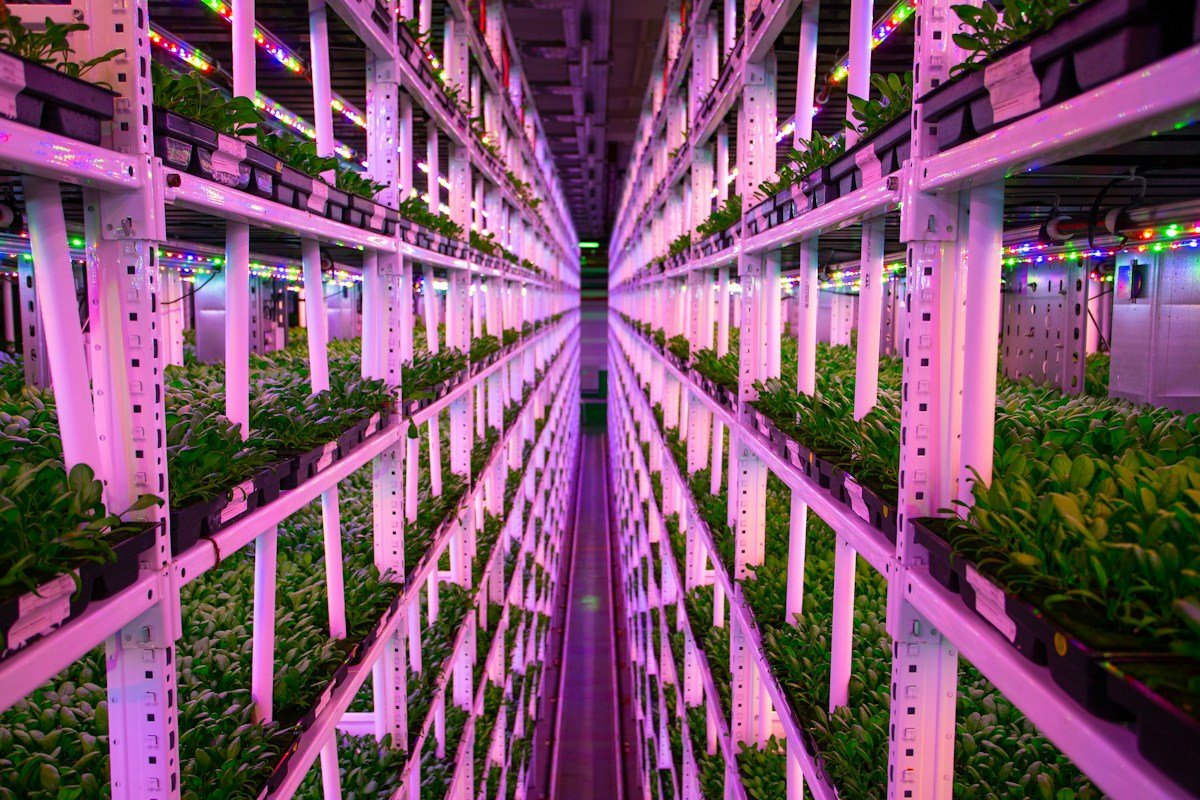

Commercial indoor vertical farming represents the most technologically concentrated and climate-decoupled production paradigm in modern horticultural science. By stacking crop cultivation layers vertically inside sealed, thermally insulated building envelopes, vertical farms eliminate seasonal weather vulnerabilities, pest immigration vectors, and geographic arable land constraints. In fully enclosed controlled environment agriculture (CEA) facilities, every physical parameter governing vegetative plant life (from photon flux density and spectral wavelengths to atmospheric carbon dioxide concentration, air velocity, and root-zone irrigation dynamics) is completely governed by automated electromechanical systems.
However, operating multi-tier vertical farming facilities at commercial scale introduces monumental thermodynamic, psychrometric, and aerodynamic challenges. Cultivating millions of closely spaced plants beneath thousands of high-intensity light-emitting diode (LED) fixtures creates an extreme microclimatic environment. Plants transpire up to ninety-eight percent of the water applied to their root systems directly into the enclosed room atmosphere, while LED fixtures convert roughly fifty to sixty percent of incoming electrical power into sensible heat. If thermal heat loads and latent moisture emissions are not continuously managed with industrial precision, enclosed grow rooms suffer from runaway relative humidity, stagnant microclimatic boundary layers, widespread physiological tip-burn, and explosive outbreaks of fungal pathogens.
Achieving economic viability in vertical farming requires mastering the complex thermodynamic interactions connecting Heating, Ventilation, and Air Conditioning (HVAC) engineering with plant photobiology and root-zone water balance. Facility engineers and agronomists must calculate sensible and latent heat loads, model air distribution fluid dynamics, calibrate target Vapor Pressure Deficits (VPD), and optimize Daily Light Integrals (DLI) to maximize dry matter biomass per kilowatt-hour of grid electricity consumed. This comprehensive technical manual delivers an exhaustive operational guide for engineering, calibrating, and managing environmental control systems in commercial vertical farming installations.
Furthermore, environmental control optimization directly determines corporate balance sheet viability. With electrical utility power for environmental climate control and supplemental lighting representing thirty to forty-five percent of recurring monthly operating expenses, implementing high-efficiency variable-capacity HVAC systems and dynamic spectral lighting protocols delivers massive cost savings that transform marginal facilities into highly profitable commercial enterprises.
Psychrometrics and Thermodynamics of Enclosed Plant Growth Envelopes
Designing environmental control systems for enclosed vertical farms requires an uncompromising grasp of psychrometrics, the thermodynamic study of moist air behavior. Unlike conventional commercial greenhouses that exchange vast volumes of outside air through mechanical ridge vents or exhaust louvers, commercial vertical farms operate as near-hermetically sealed envelopes. In these closed spaces, the air mass functions as an insulated thermodynamic accumulator, capturing all energy and water vapor released by internal equipment and biological crops.
The thermodynamic load within an indoor grow room is partitioned into two distinct physical vectors: sensible heat load and latent heat load. Sensible heat represents energy that increases the measurable dry-bulb temperature of the air without changing its moisture content. In vertical farms, sensible heat originates primarily from electrical LED drivers, diode thermal dissipation, circulation fan motors, water pump friction, and structural envelope conduction. Sensible heat is measured directly in kilowatts or British Thermal Units per hour (BTU/hr).
Latent heat represents the energy bound up within the phase change of liquid water into atmospheric water vapor via crop transpiration. When plants absorb irrigation water, their metabolic transpiration converts liquid water into vapor, absorbing approximately 2,260 kilojoules of latent thermal energy per kilogram of water evaporated from the leaf mesophyll. This transpirative cooling dampens sensible air temperatures while dramatically escalating atmospheric relative humidity and dew-point temperatures.
Psychrometric charts provide the essential diagnostic tool for HVAC sizing. Engineers plot dry-bulb temperature, wet-bulb temperature, relative humidity, specific volume, and humidity ratio to map air conditioning state points. A properly sized environmental control system must continuously modulate between sensible cooling (chilling the air) and latent dehumidification (condensing water vapor out of the air) to maintain target psychrometric set-points throughout the diurnal light and dark cycles.
Sensible Heat Loads from LED Fixtures and Latent Moisture Removal Dynamics
Accurately sizing commercial HVAC equipment requires precise mathematical quantification of continuous heat and moisture generation. A common engineering error in early vertical farming projects was utilizing conventional commercial building HVAC formulas designed for human office occupancy. Human-centric HVAC systems are heavily front-loaded toward sensible cooling, with minimal latent dehumidification capacity; applying these systems to vertical farms leads to rapid compressor short-cycling and catastrophic room humidity spikes.
In a vertical farming room packed with four to six stacked tiers of high-output LED fixtures, lighting heat represents the dominant sensible load. High-efficiency horticultural LED fixtures operate at electrical efficiencies between 2.8 and 3.2 micromoles of photosynthetically active radiation per joule of input electricity. From an energy balance perspective, however, the First Law of Thermodynamics dictates that all electrical energy entering the sealed room must ultimately exit as thermal heat. Approximately forty-five to fifty percent of electrical wattage is immediately converted into conductive and convective sensible heat by the aluminum fixture heat sinks, while the remaining fifty to fifty-five percent emitted as photon energy is absorbed by plant foliage, benches, and floor surfaces, ultimately degrading into sensible heat.
Calculating daily latent dehumidification loads is directly tied to automated irrigation delivery. In a mature leafy green or herb grow room, plants transpire ninety-five to ninety-eight percent of total daily irrigation volume. If a commercial room receives 5,000 liters of irrigation water per day, the HVAC and dehumidification system must physically condense and remove 4,800 to 4,900 liters of water vapor from the room air mass every twenty-four hours to maintain constant relative humidity.
Latent load calculations must also account for photoperiod transitions. The moment LED fixtures extinguish at the start of the dark period, sensible heat generation plunges to near zero within minutes. However, warm plants, moist root zones, and wet channel surfaces continue evaporating water into the rapidly cooling air mass. If the HVAC system lacks independent, dedicated reheat coils or separate commercial desiccant dehumidifiers, the air temperature drops below the dew point, causing catastrophic moisture condensation on plant leaves and structural ceiling beams, triggering explosive gray mold (Botrytis cinerea) outbreaks.
Vapor Pressure Deficit (VPD) Calibration for Commercial Cultivars
Vapor Pressure Deficit (VPD) is the supreme physiological metric governing environmental control in precision vertical farming. Rather than evaluating temperature and relative humidity as isolated variables, VPD integrates both parameters into a single biological driving force that quantifies the difference between the saturated water vapor pressure inside the internal leaf air spaces (VPleaf) and the actual vapor pressure of the surrounding room air (VPair), expressed in kilopascals (kPa).
VPD directly controls the opening and closing of plant leaf stomata through guard cell turgor regulation. When ambient room air is maintained within the ideal target VPD window for commercial leafy greens (0.8 to 1.2 kPa), the vapor pressure gradient exerts a gentle, continuous pulling force on water inside the leaf. Stomata remain wide open, allowing carbon dioxide to diffuse rapidly into chloroplasts to fuel photosynthesis, while transpiration pulls dissolved calcium, potassium, and nitrate ions smoothly through the root and xylem vascular architecture.
If environmental control systems allow VPD to drop below 0.5 kPa (a condition of excessive humidity), the ambient air becomes saturated with water vapor. Transpiration ceases entirely. Without transpirative pull, immobile nutrients (most notably calcium) cannot reach rapidly expanding leaf margins, triggering catastrophic tip-burn, while guttation water droplets form along leaf edges, creating ideal infection courts for bacterial soft rot (Pectobacterium carotovorum).
Conversely, if the room air becomes too dry and VPD spikes above 1.5 kPa, the excessive evaporative demand exceeds the hydraulic transport capacity of the plant roots. To prevent lethal cellular desiccation, guard cells rapidly deflate and close stomatal apertures. Stomatal closure immediately halts carbon dioxide uptake, arresting vegetative photosynthesis and causing leaf surface temperatures to rise as evaporative cooling ceases. Maintaining strict VPD dead-bands via closed-loop PID control algorithms is therefore non-negotiable for commercial success.
Microclimatic Aerodynamics: Fluid Dynamics and Boundary Layer Disruption
In dense, multi-tier vertical farming rack systems, stagnant air microclimates represent severe biological hazards that cannot be resolved through standard ceiling HVAC diffusers alone. As plants transpire, they create a microscopic layer of stagnant, cool, and humid air immediately adjacent to the leaf cuticle, known as the leaf boundary layer. If this boundary layer remains undisturbed by air movement, it forms an insulating blanket that blocks carbon dioxide diffusion into the stomata and suppresses localized transpiration.
Overcoming this biological resistance requires engineering microclimatic aerodynamics utilizing computational fluid dynamics (CFD) modeling. High-density vertical farming racks require dedicated, under-bench or canopy-level air distribution systems capable of delivering uniform, horizontal or vertical airflow directly through every growing tier. Commercial facilities utilize perforated fabric ducting (air socks) or low-voltage variable-speed brushless DC fan arrays mounted every meter along the cultivation racks.
Air velocity within the plant canopy must be calibrated to maintain between 0.3 and 0.5 meters per second directly across leaf surfaces. Fluid dynamic analysis demonstrates that velocities within this range generate sufficient micro-turbulence to strip the humid boundary layer without causing mechanical leaf fluttering or wind stress. Maintaining this continuous air movement ensures uniform carbon dioxide replenishment and drives inner leaf transpiration, completely eliminating localized microclimatic hot-spots and tip-burn across all vertical tiers.
Airflow distribution must also be engineered to prevent short-circuiting, where conditioned air from supply vents bypasses lower cultivation racks and returns directly into the HVAC exhaust intake. Utilizing pressurized plenums with micro-perforated backplates ensures that equal static pressure is maintained across all vertical tiers, delivering identical air velocity to bottom racks and top tiers alike.
Photobiological LED Spectral Engineering: PAR, Far-Red, and UV Tuning
Solid-state light-emitting diode (LED) technology has completely supplanted traditional high-intensity discharge (HID) and fluorescent lighting in commercial vertical farms. Unlike legacy lighting sources that emit broad, uncalibrated spectrums with heavy waste infrared heat, modern horticultural LEDs allow agronomists to engineer narrow-band photon spectrums tailored with sub-nanometer precision to match specific plant photoreceptors.
Plant photobiology operates across two primary pigment systems: chlorophylls (chlorophyll a and b), which absorb light predominantly in the blue (430 to 460 nm) and red (640 to 680 nm) spectral bands to drive photosynthesis, and photomorphogenic receptors (phytochromes, cryptochromes, and phototropins), which govern plant structural development, leaf expansion, stomatal opening, and secondary metabolite synthesis based on photon wavelength ratios.
Commercial leafy green vertical farms utilize specialized broad-spectrum white LED arrays enriched with deep red (660 nm) and far-red (730 nm) diodes. While a simplistic red-blue spectrum (the purple “blurple” light of early vertical farms) drives basic photosynthesis, human eyes cannot accurately evaluate crop disease or chlorosis under purple light. Broad-spectrum white light containing a full green wavelength band (500 to 600 nm) allows commercial technicians to scout crops accurately while providing green photons that penetrate deep into the lower canopy layers to drive understory photosynthesis.
Incorporating targeted far-red photons (730 nm) provides immense commercial value. Far-red light shifts the phytochrome photostationary state, triggering the shade-avoidance response in leafy greens. By adding ten to fifteen percent far-red photons to the spectrum, crops expand their individual leaf surface areas by twenty to thirty percent, dramatically increasing total canopy photon interception and accelerating fresh weight harvest yields by up to fifteen percent without compromising leaf nutritional thickness.
Strategic pulses of ultraviolet radiation (UV-A from 315 to 400 nm and UV-B from 280 to 315 nm) are applied during the final forty-eight to seventy-two hours prior to harvest. Mild UV stress stimulates plant defense pathways, inducing the rapid synthesis of protective secondary metabolites, including anthocyanins (which turn red oakleaf and red romaine lettuce deep, vibrant purple), flavonoids, and essential aromatic oils in culinary herbs (such as eugenol and linalool in sweet basil), drastically elevating culinary flavor profiles and commercial retail appeal.
Daily Light Integral (DLI) Optimization and Photoperiod Synchronization
Maximizing vertical farm crop productivity requires managing total light delivery through the metric of Daily Light Integral (DLI). DLI measures the cumulative moles of photosynthetically active photons (photons between 400 and 700 nm) delivered to a one-square-meter area over a twenty-four-hour period, expressed as mol/m2/d. DLI integrates both instantaneous light intensity (Photosynthetic Photon Flux Density, or PPFD, in umol/m2/s) and photoperiod duration (hours of light per day).
Commercial butterhead, red oakleaf, and crisphead lettuce cultivars require an optimal target DLI between fourteen and sixteen mol/m2/d. Culinary herbs, such as sweet basil and mint, thrive under higher DLIs between sixteen and twenty mol/m2/d. Delivering an inadequate DLI (under twelve mol/m2/d) prolongs crop production cycles by seven to ten days, while delivering excessive DLIs (above twenty-two mol/m2/d) saturates plant biochemical capacity, causing photobleaching, tip-burn, and massive waste of electrical power.
Calculating the mathematical relationship between PPFD and photoperiod allows facility managers to optimize grid electricity economics. The formula: DLI = PPFD * Photoperiod (hours) * 0.0036 reveals that an operator can deliver a target DLI of 15 mol/m2/d using two distinct operational strategies: running high-intensity PPFD (260 umol/m2/s) for sixteen hours, or running moderate-intensity PPFD (208 umol/m2/s) for twenty hours.
Advanced vertical farms synchronize photoperiods with regional electrical utility time-of-use (TOU) billing structures. By running eighteen-hour photoperiods exclusively during off-peak nighttime hours (from 20:00 to 14:00) when grid electricity tariffs are fifty to seventy percent cheaper, and turning lights off during expensive peak afternoon grid hours (14:00 to 20:00), facilities slash their monthly power bills by hundreds of thousands of dollars without reducing cumulative daily photon delivery to the crop.
Desiccant Dehumidification Rotors vs Mechanical Vapor Compression Systems
When designing high-density commercial vertical farms, mechanical engineers must evaluate the thermodynamic trade-offs between conventional mechanical vapor compression refrigeration and active desiccant wheel dehumidification. Mechanical refrigeration removes moisture by chilling the air below its dew-point temperature across cold evaporator coils, which condenses water vapor into liquid droplets but inevitably cools the air mass, requiring substantial subsequent reheating to prevent thermal room shock.
Active desiccant dehumidification systems utilize continuously rotating honeycomb wheels impregnated with solid silica gel or titanium silicate molecular sieves. As warm, humid room air passes through the process sector of the desiccant rotor, moisture molecules are physically adsorbed directly into the microscopic pores of the desiccant matrix through chemical affinity, bypassing the need to chill the air below its dew point. The desiccant wheel rotates slowly through a reactivation sector, where a counter-current stream of heated air desorbs the captured moisture, exhausting it outside the building envelope.
Desiccant systems excel in low-temperature grow environments (such as twelve to sixteen degrees Celsius rooms used for cool-season brassicas or specialty herbs) where mechanical refrigeration coils suffer from coil frost accumulation and reduced thermodynamic efficiency. Furthermore, when facilities possess access to low-grade industrial waste heat, district thermal loops, or on-site solar thermal collectors, desiccant wheels utilize this free thermal energy for rotor reactivation, lowering continuous electrical dehumidification expenses by thirty to forty-five percent compared to mechanical compressor banks.
Predictive Machine Learning Control Algorithms and Digital Twin Thermodynamics
Traditional proportional-integral-derivative (PID) feedback controllers operate reactively, adjusting compressor speeds and valve positions only after a temperature or humidity sensor registers a deviation from the programmed set-point. In ultra-high-density vertical farms, this reactive latency frequently causes environmental oscillations, with temperatures and humidity levels swinging back and forth across target set-points in continuous hunting cycles.
Advanced commercial vertical farms replace legacy PID loops with predictive model-based control (MPC) algorithms powered by machine-learning digital twins. A digital twin is a high-fidelity thermodynamic and biological computer simulation that continuously models the heat and mass transfer of the entire physical facility in real time. By integrating historical sensor telemetry, upcoming weather forecasts, regional grid electrical pricing schedules, and real-time plant growth metrics, the digital twin forecasts room microclimate dynamics fifteen to thirty minutes into the future.
When the automated lighting schedule approaches a photoperiod transition (such as turning on thousands of high-output LED fixtures), the predictive MPC algorithm initiates pre-cooling cycles minutes before the lights activate, establishing a thermal buffer that absorbs the sudden burst of sensible heat without experiencing temperature spikes. Conversely, minutes before lights-out, the system ramps up dehumidification compressors and modulates reheat coils, smoothing out the transition and maintaining an unshakeable, flat Vapor Pressure Deficit curve throughout the entire diurnal cycle.
Bio-Aerosol Air Filtration Protocols and Cleanroom HEPA Enclosure Standards
Operating an indoor vertical farm without chemical pesticides demands treating the facility as an industrial microbiological cleanroom. In a sealed indoor environment, airborne fungal spores (such as Botrytis cinerea and powdery mildew) and human-vectored bacterial pathogens can circulate continuously through HVAC ducting networks, establishing chronic contamination cycles that infect successive crop cohorts.
Commercial facilities implement multi-stage progressive air filtration arrays engineered into the central air handling units. Air entering the mechanical conditioning loops passes first through pre-filters (MERV-8) to capture coarse dust and large debris, followed by intermediate secondary filters (MERV-13 to MERV-15) that capture fine particulates and pollen. The final filtration stage utilizes medical-grade High-Efficiency Particulate Air (HEPA) filter banks certified to trap 99.97 percent of airborne particles down to 0.3 microns in diameter, physically capturing fungal spores and bacterial aerosols before air is distributed back into cultivation rooms.
Positive-pressure cascade architecture provides an additional biosecurity barrier. Environmental control computers maintain grow rooms at a positive static air pressure (fifteen to twenty-five Pascals higher than surrounding corridors and entry airlocks). When technicians enter through double-door airlock thresholds, air rushes outward, physically preventing external airborne pests (such as thrips, fungus gnats, and aphid crawlers) or ambient fungal spores from entering the pristine cultivation environment.
Atmospheric Carbon Dioxide (CO2) Enrichment Kinetics
In standard outdoor agricultural environments, ambient atmospheric carbon dioxide concentration hovers around 415 to 420 parts per million (ppm). In enclosed vertical farms illuminated by high PPFD lighting, however, the intense photosynthetic activity of millions of plants rapidly depletes ambient CO2 levels within an unventilated room, dropping concentrations below 250 ppm within two hours of lights-on. At these suppressed levels, the primary photosynthetic enzyme, RuBisCO (ribulose-1,5-bisphosphate carboxylase-oxygenase), shifts into photorespiration, consuming cellular energy and releasing previously fixed carbon back into the atmosphere, stalling plant growth.
To unlock maximum vegetative growth velocity, commercial vertical farms implement artificial carbon dioxide enrichment, elevating room CO2 concentrations to super-atmospheric thresholds between 1,000 and 1,200 ppm. Operating at 1,200 ppm completely saturates RuBisCO carboxylation active sites, virtually eliminating wasteful photorespiration and accelerating net photosynthetic carbon fixation rates by thirty to forty percent compared to ambient levels.
Carbon dioxide is delivered into the room through dedicated distribution manifolds connected to bulk liquid CO2 storage tanks or on-site natural gas CO2 generators equipped with catalytic scrubbers to remove hazardous carbon monoxide and ethylene contaminants. Automated non-dispersive infrared (NDIR) optical CO2 sensors deployed throughout the canopy send continuous telemetry to environmental controllers, which pulse solenoid dosing valves to maintain target concentrations within a tight dead-band (plus or minus 50 ppm).
Furthermore, CO2 enrichment elevates the plant’s physiological temperature optimum. Crops cultivated under 1,200 ppm CO2 thrive at ambient temperatures two to three degrees Celsius higher than crops grown under ambient CO2. Operating grow rooms at twenty-four degrees Celsius rather than twenty-one degrees Celsius reduces the refrigeration cooling load on the HVAC compressors, delivering compounding energy efficiency dividends across the entire facility.
HVAC Engineering Configurations: Chilled Water vs Dedicated Outdoor Air Systems
Selecting the central HVAC architecture represents the largest single capital expenditure and operational design decision in vertical farm engineering. The primary mechanical configurations deployed in commercial installations are central chilled water loops with variable-air-volume air handling units (AHUs), and specialized Dedicated Outdoor Air Systems (DOAS) with integrated modulating reheat dehumidification.
Central chilled water systems represent the gold standard for large-scale commercial facilities (exceeding 5,000 square meters of grow canopy). In these installations, high-efficiency water-cooled magnetic-bearing centrifugal chillers generate a continuous supply of chilled water at four to six degrees Celsius. This cold fluid is pumped to multi-stage air handling units located above each grow room. Variable frequency drive (VFD) fans pull room air across deep chilled water cooling coils to condense moisture and strip sensible heat, while modulating hot-water reheat coils (powered by recovered chiller condenser heat) re-warm the air to the precise dry-bulb temperature required to satisfy the room VPD target.
Utilizing recovered compressor condenser heat for reheat is mandatory for thermal efficiency. Traditional commercial systems that burn natural gas or use electric resistance elements to reheat sub-cooled dehumidified air waste immense quantities of energy. Capturing waste condenser heat through water-to-water heat exchangers provides free, continuous reheat energy, elevating total facility coefficient of performance (COP) above 4.5 to 5.5.
For smaller, modular installations, packaged commercial dehumidification systems with variable-speed digital scroll compressors provide high operational flexibility. These modular units modulate their sensible-to-latent removal ratios dynamically in real time, tracking the instantaneous moisture output of the canopy without requiring complex external chiller piping networks.
Water Recycling Kinetics and Closed-Loop Evaporative Recovery
One of the most profound ecological and operational advantages of indoor vertical farming is its near-complete hydrological circularity. In open-field agriculture, up to eighty percent of applied irrigation water is lost to deep ground percolation and atmospheric evaporation. In a sealed vertical farm, however, every drop of water transpired by the crop into the air is captured by the HVAC cooling coils as condensate.
HVAC condensate drainage manifolds collect thousands of liters of pristine, demineralized water daily. Condensate exhibits an electrical conductivity near zero (typically under 0.05 mS/cm), containing zero dissolved mineral salts or carbonate alkalinity. Rather than discharging this water into municipal sewer lines, commercial facilities channel condensate through secondary multi-stage filtration skids comprising activated carbon block filters, ozone oxidation contactors, and high-dose ultraviolet sterilizers (delivering 250 mJ/cm2).
The purified recycled condensate is pumped directly back into the central reverse-osmosis storage tanks, where it is blended with concentrated fertilizer salts to reformulate fresh nutrient batches. Commercial vertical farms achieve ninety-five to ninety-eight percent water recycling efficiency, consuming less than two liters of freshwater to produce a full one-kilogram head of gourmet lettuce, compared to one hundred to two hundred liters required in traditional field cultivation.
Sanitization Protocols for Condensate Recycling and Biofilm Prevention
While HVAC condensate recovery provides thousands of liters of free, pure water daily, raw condensate lines represent severe biological contamination hazards if improperly plumbed. Cooling coil drain pans and internal piping operate in dark, damp, and warm conditions that foster the rapid colonization of bacterial biofilms, slime molds, and Legionella species. If untreated condensate is pumped directly into fertigation mixing tanks, it introduces biological slimes that clog fine drip emitters and contaminate hydroponic channels.
Commercial facilities engineer condensate recovery lines utilizing slope-pitched, antimicrobial copper or Schedule 80 PVC piping that drains directly into dedicated, fully enclosed stainless steel collection sumps. Air gaps are installed at all physical plumbing junctions to prevent sanitary sewer back-siphonage. Within the collection sump, automated submersible UV-C lamps emit continuous germicidal radiation, preventing biofilm attachment to internal tank walls.
Before recycled condensate is blended into the primary reverse-osmosis storage tanks, the water passes through an advanced oxidation process (AOP) skid combining ozone injection and high-intensity ultraviolet irradiation. This advanced oxidation creates powerful hydroxyl free radicals (OH) that instantly oxidize any trace organic compounds, volatile organics, or bacterial spores, converting raw condensate into ultra-pure, medical-grade water that exceeds municipal drinking water standards, ensuring complete crop safety and zero pathogen transmission across commercial production cycles.
Economic Modeling, Energy Metrics, and Commercial Profitability
Achieving long-term commercial solvency in vertical farming requires meticulous financial modeling centered on energy efficiency metrics. The definitive economic KPI governing indoor CEA is electrical energy consumption per kilogram of marketable fresh produce, expressed as kilowatt-hours per kilogram (kWh/kg).
In legacy vertical farms utilizing inefficient HPS fixtures and uncalibrated human-comfort HVAC systems, energy intensity routinely exceeded twenty-five to thirty-five kWh/kg, rendering commercial profitability impossible against field-grown commodity pricing. Modern high-efficiency vertical farms integrate 3.0 umol/J LEDs, demand-controlled variable-speed HVAC systems, dynamic photoperiod scheduling, and automated robotic spacing, compressing energy consumption down to eight to twelve kWh/kg of finished marketable leafy greens.
Operational cost modeling demonstrates that electrical power accounts for thirty-five to forty percent of total cost of goods sold (COGS), labor represents twenty to twenty-five percent, and packaging/distribution constitutes fifteen to twenty percent. By locating vertical farms within metropolitan logistics corridors directly adjacent to wholesale grocery distribution hubs, operators eliminate cross-country refrigerated trucking expenses, delivering fresh-picked, pesticide-free produce to retail shelves within twenty-four hours of harvest.
To assist vertical farming facility engineers and agricultural investment executives in evaluating mechanical climate control architectures, CEA economists employ comprehensive comparative matrices. Analyzing engineering, operational, and financial indicators across different environmental control methodologies provides commercial operators with an objective decision-making framework.
The following comparative diagnostic matrix illustrates the thermodynamic, operational, and financial trade-offs across distinct commercial vertical farming HVAC and environmental control architectures.
Comparative Diagnostic Matrix of Vertical Farming Environmental Control Architectures
| Environmental Control Parameter | Standard Commercial Rooftop Units | Modular Packaged Dehumidification | Central Chilled Water with Heat Recovery |
|---|---|---|---|
| Sensible to Latent Tuning Capacity | Fixed ratio (poor latent moisture removal) | High (modulating compressor cycles) | Complete independent modulating control |
| Vapor Pressure Deficit Precision | Erratic (plus or minus 0.4 kPa drift) | Tight (plus or minus 0.15 kPa dead-band) | Surgical (plus or minus 0.05 kPa control) |
| Energy Efficiency Ratio (COP) | Low (2.2 to 2.8 COP) | Moderate (3.2 to 3.8 COP) | Maximum (4.5 to 5.8 COP with heat recovery) |
| Free Condenser Heat Reheat Utilization | Zero (requires electric or gas reheat) | Partial (hot gas bypass coils) | 100 percent (water-to-water heat loops) |
| Transpirative Condensate Recovery | Unreliable (open rusty drain pans) | High (stainless steel condensate traps) | Complete closed-loop water reclamation |
| Microclimatic Boundary Layer Control | Poor (localized stagnant humidity pockets) | Moderate (requires external booster fans) | Integrated precision CFD fabric air socks |
| System Failure Redundancy | Low (single rooftop failure halts zone) | High (multiple modular units per room) | N+1 dual chiller and pump redundancy |
| Initial Capital Expenditure (CapEx) | Low (standard commercial equipment) | Medium (modular plug-and-play skids) | High (industrial mechanical infrastructure) |
Authoritative thermodynamic and controlled environment agricultural research published by the Food and Agriculture Organization Urban Agriculture Framework and engineering standards from the USDA Agricultural Research Service definitively establish that decoupled latent and sensible heat management represents the core prerequisite for commercial vertical farm viability. Academic engineering centers such as the Cornell University Controlled Environment Agriculture Program publish verified psychrometric equations and lighting efficacy benchmarks. Furthermore, canopy aerodynamic boundary layer studies indexed in the Journal of Biosystems Engineering and indoor microclimate energy modeling in Nature Food CEA Section provide empirical validation for automated sensor-driven HVAC closed-loop control. These institutional principles provide the rigorous engineering foundation required to resolve critical environmental control questions across commercial indoor agricultural enterprises.
Frequently Asked Questions About Vertical Farming Environmental Controls
Why do vertical farms require specialized HVAC systems rather than standard commercial air conditioning?
Standard commercial air conditioning systems are designed for human comfort, focusing almost entirely on sensible cooling with minimal latent dehumidification capacity. Vertical farms contain millions of transpiring plants that convert up to ninety-eight percent of irrigation water into atmospheric humidity, requiring specialized systems capable of independently modulating massive latent moisture removal and sensible heat extraction without short-cycling.
What is the optimal Vapor Pressure Deficit (VPD) range for commercial leafy greens?
The optimal VPD range for leafy greens is maintained between 0.8 and 1.2 kilopascals. This vapor pressure window ensures that plant stomata remain open for continuous carbon dioxide absorption while generating sufficient transpirative pull to transport calcium and other immobile nutrients to expanding leaf tips, preventing physiological tip-burn and fungal outbreaks.
How does atmospheric carbon dioxide (CO2) enrichment accelerate crop growth velocity?
Elevating carbon dioxide concentrations to 1,000 to 1,200 ppm saturates the active sites of the RuBisCO enzyme, virtually eliminating wasteful photorespiration. This enables crops to fix carbon thirty to forty percent faster than under ambient 420 ppm CO2, accelerating cell division and compressing production cycles by five to seven days.
Why is far-red light (730 nm) strategically added to indoor LED lighting spectrums?
Far-red light triggers the shade-avoidance response via phytochrome receptors, inducing crops to expand individual leaf surface area by twenty to thirty percent. This structural expansion increases total canopy photon capture, boosting vegetative biomass yields by up to fifteen percent without causing excessive stem stretching when balanced with deep blue photons.
What air velocity is required within the plant canopy to disrupt the boundary layer?
An air velocity between 0.3 and 0.5 meters per second directly across the crop canopy is optimal. This velocity creates sufficient micro-turbulence to strip the stagnant, humid leaf boundary layer, facilitating continuous carbon dioxide uptake and driving inner leaf transpiration to prevent calcium-deficiency tip-burn.
How do central chilled water systems utilize heat recovery to slash operating costs?
Central chilled water systems capture the waste heat rejected by chiller compressors through water-to-water heat exchangers, channeling this warm water directly into the air handling reheat coils. This provides free, continuous reheat energy to warm sub-cooled dehumidified air, eliminating the need for expensive electric or gas reheat systems.
What is Daily Light Integral (DLI) and how is it optimized for electrical efficiency?
Daily Light Integral (DLI) measures the total moles of photosynthetically active photons delivered per square meter per day. Commercial lettuce requires fourteen to sixteen mol/m2/d. Operators optimize electrical efficiency by scheduling eighteen-hour photoperiods during off-peak nighttime hours when grid electricity tariffs are fifty to seventy percent cheaper.
How much water can a commercial vertical farm recycle through HVAC condensate recovery?
Commercial vertical farms recycle ninety-five to ninety-eight percent of total applied irrigation water. Because plants transpire clean water vapor, HVAC cooling coils condense this vapor into demineralized water. After UV and ozone sanitization, condensate is returned directly to nutrient mixing tanks, slashing municipal water demand.
What causes catastrophic humidity spikes immediately after LED lights extinguish?
When lights extinguish, sensible heat generation drops instantly, causing room air temperatures to fall rapidly. Because cold air holds significantly less water vapor than warm air, relative humidity spikes toward one hundred percent while warm plants continue evaporating moisture. Dedicated dehumidification with modulating reheat is required to prevent dew point condensation.
Furthermore, facility automation platforms integrate continuous volatile organic compound (VOC) and ethylene gas monitoring. Transpiring crops and decaying root matter release trace quantities of gaseous ethylene, which, if allowed to accumulate inside sealed rooms, triggers premature leaf yellowing, epinasty, and stunted crop development. Automated potassium permanganate catalytic scrubbers strip ethylene molecules from recirculating airstreams, preserving crisp vegetative leaf texture across all finishing benches.
Ultimately, commercial vertical farming proves that agricultural production can achieve complete independence from climatic disruptions and environmental degradation. When controlled environment facilities combine industrial thermodynamics, precision psychrometrics, tailored photobiology, and cleanroom biosecurity, they construct resilient, high-yield food manufacturing ecosystems capable of sustaining global urban populations with pristine, pesticide-free nutrition for centuries to come.
Electromechanical Synthesis and the Future of Controlled Environment Agriculture
Vertical farming environmental control systems represent the triumphant convergence of mechanical thermodynamics, photobiology, and precision digital automation. By mastering the delicate psychrometric balance between sensible lighting heat and latent transpirative moisture, commercial operators achieve total mastery over vegetative crop growth. As sensor telemetry, machine-learning digital twins, and solid-state LED efficiencies continue their exponential trajectory, indoor vertical farming stands as an unshakeable pillars of modern sustainable agriculture, capable of delivering bountiful, pesticide-free nutrition directly to the world’s burgeoning urban metropolises with near-zero environmental impact.