
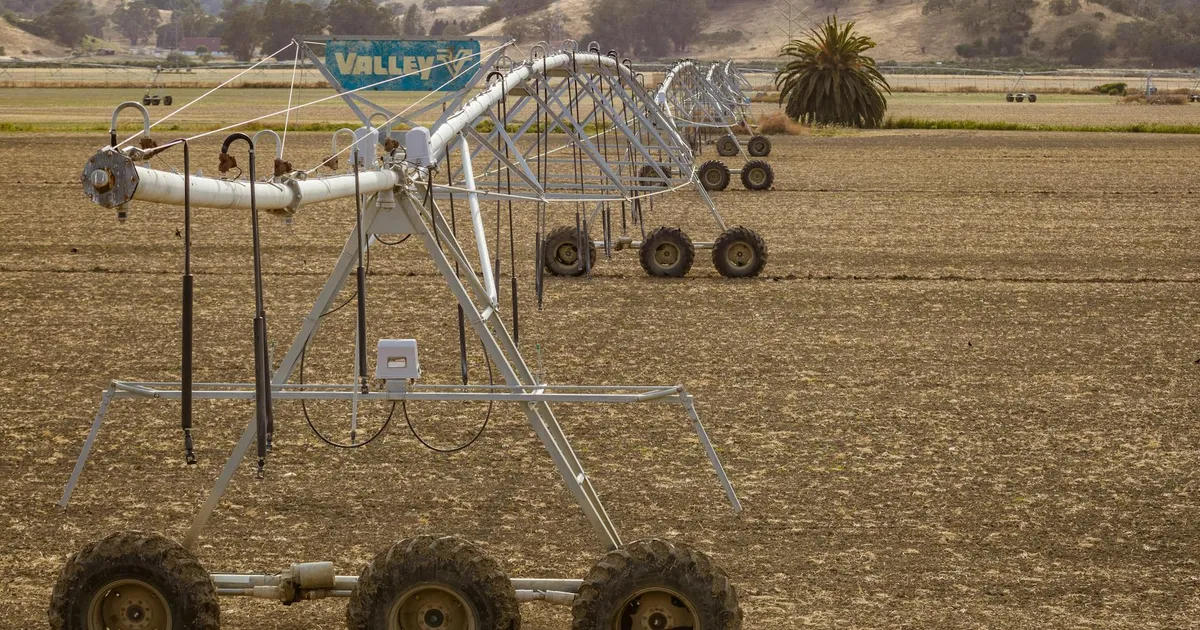

Harnessing smart irrigation methods for dry climates is no longer merely an option but a critical necessity for sustainable agriculture and landscape management. As global populations grow and climate change intensifies, arid and semi-arid regions face unprecedented water scarcity challenges. Traditional irrigation techniques, often inefficient and wasteful, exacerbate these issues, leading to depleted aquifers, increased energy consumption, and diminished crop yields. This article delves into the sophisticated technologies and strategies that comprise smart irrigation, offering a comprehensive guide to how these innovations can revolutionize water management in parched environments, ensuring water conservation, economic viability, and environmental resilience for the long term.
The Imperative for Smart Irrigation in Arid Regions
Dry climates, characterized by low annual rainfall and high evapotranspiration rates, present formidable challenges to water resource management. With over 40% of the world’s land area classified as arid or semi-arid, and a significant portion of the global population residing in these regions, the pressure on finite water supplies is immense. Conventional irrigation systems, relying on fixed schedules or manual adjustments, frequently overwater or under-water crops, resulting in substantial water loss through runoff, deep percolation, and evaporation. This inefficiency is unsustainable, particularly as freshwater sources become increasingly strained by population growth, industrial demands, and the erratic weather patterns associated with climate change.
The economic and environmental ramifications of inefficient water use are profound. Farmers face higher operational costs due to excessive water pumping and fertilizer leaching, while communities grapple with aquifer depletion and land degradation. Smart irrigation methods for dry climates offer a paradigm shift, moving from reactive, guess-based watering to proactive, data-driven precision. By optimizing water application, these systems not only conserve precious resources but also enhance agricultural productivity, reduce energy consumption, and minimize the environmental footprint of irrigation practices. Adopting these advanced techniques is fundamental to building resilient agricultural systems in a water-stressed world.
Core Technologies Powering Smart Irrigation Systems
At the heart of smart irrigation lies a sophisticated integration of various technologies designed to monitor environmental conditions and automate water delivery. Key components include a diverse array of sensors that gather real-time data from the field. Soil moisture sensors, for instance, measure the volumetric water content in the soil, preventing both over and under-watering. Weather stations provide crucial data on temperature, humidity, wind speed, and rainfall, which are vital inputs for calculating evapotranspiration (ET) – the amount of water lost from the soil and plants. These sensors act as the eyes and ears of the system, providing the granular information needed for intelligent decision-making.
The data collected by sensors is then fed into smart irrigation controllers, often considered the brain of the system. Unlike traditional timers, these controllers are equipped with advanced algorithms that process sensor data, local weather forecasts, and specific plant requirements. They dynamically adjust irrigation schedules, determining precisely when, where, and how much water is needed. Some controllers are weather-based, using ET calculations to determine daily water needs, while others are sensor-based, responding directly to soil moisture levels. The synergy between sensors and controllers ensures that water is applied only when and where it is most effective, maximizing efficiency and minimizing waste.
Connectivity is the third critical pillar, enabling seamless communication between sensors, controllers, and users. Internet of Things (IoT) platforms, Wi-Fi, cellular networks, and long-range wide area networks (LoRaWAN) facilitate remote monitoring and control of irrigation systems via smartphones, tablets, or computers. This remote access allows growers to adjust settings, receive alerts, and review performance data from anywhere, providing unprecedented flexibility and responsiveness. The ability to manage irrigation remotely is particularly beneficial for large agricultural operations or for managing multiple sites, significantly enhancing operational efficiency and resource allocation. For further information on IoT in agriculture, the Food and Agriculture Organization of the United Nations offers valuable resources on digital agriculture initiatives.
Advanced Sensor-Based Irrigation Strategies
Soil moisture sensors are foundational to advanced smart irrigation, providing direct feedback on the water content available to plant roots. Various types exist, including capacitance, time-domain reflectometry (TDR), and tensiometers, each offering different levels of accuracy and cost-effectiveness. By strategically placing these sensors at different depths within the root zone, growers can obtain a precise profile of soil moisture dynamics. The system then triggers irrigation only when moisture levels drop below a predefined threshold, preventing unnecessary watering and ensuring plants receive adequate hydration without waste. This real-time, localized data is far superior to relying on fixed schedules or visual inspection.
Another powerful strategy involves the use of comprehensive weather stations and evapotranspiration (ET) calculations. ET is the combined process of water evaporation from the soil surface and transpiration from plants. ET-based controllers utilize real-time weather data (temperature, humidity, solar radiation, wind speed) to calculate the exact amount of water lost from the landscape or crop daily. This calculation, often referred to as reference ET, is then adjusted for specific plant types and local conditions to determine precise irrigation needs. Such systems are highly adaptable, automatically adjusting schedules to account for fluctuating weather patterns, ensuring optimal water delivery.
Predictive Analytics and Machine Learning in Irrigation
The next evolution in smart irrigation leverages predictive analytics and machine learning (ML) to move beyond reactive adjustments. By analyzing vast datasets comprising historical weather patterns, crop growth models, soil characteristics, and past irrigation performance, ML algorithms can forecast future water requirements with remarkable accuracy. These systems learn from every irrigation cycle, continuously refining their models to optimize water application. Integrating real-time sensor data with predictive models allows for proactive adjustments, anticipating changes in plant water demand before stress occurs. This capability enables ultra-precise, hyper-localized water delivery, minimizing waste and maximizing resource efficiency. As we approach 2026, the sophistication of these AI-driven systems is expected to become a standard in advanced agricultural practices.
Precision Application Methods for Water Scarcity
Beyond intelligent scheduling, the physical method of water delivery plays a crucial role in maximizing efficiency in dry climates. Drip irrigation and micro-sprinkler systems are paramount in this regard. Drip irrigation delivers water slowly and directly to the plant’s root zone through a network of emitters, minimizing evaporation and runoff. This method significantly reduces water consumption compared to overhead sprinklers, which are prone to substantial losses in windy or hot conditions. Micro-sprinklers, while covering a larger area than drip emitters, still offer superior precision and lower application rates than traditional sprinklers, making them suitable for specific crops or landscape areas.
Variable Rate Irrigation (VRI) represents another leap in precision. Utilizing GPS technology and detailed field maps that delineate variations in soil type, topography, and crop density, VRI systems can apply water differentially across a field. Instead of uniform application, VRI controllers adjust the flow rate or duration of watering for specific zones, ensuring that each area receives precisely the amount of water it needs. This targeted approach prevents over-watering in areas with higher water retention and ensures adequate supply in drier or more demanding zones, maximizing water use efficiency and optimizing crop health across heterogeneous fields. Resources like the USDA’s National Institute of Food and Agriculture (NIFA) often highlight advancements in precision agriculture, including VRI.
Subsurface Drip Irrigation (SDI) takes precision a step further by burying the drip lines beneath the soil surface. This method virtually eliminates surface evaporation and runoff, delivering water directly to the root zone where it is most needed. SDI also reduces weed growth by keeping the surface dry and can minimize disease pressure by avoiding wetting foliage. While installation costs can be higher, the long-term water savings, increased efficiency, and reduced maintenance often provide a compelling return on investment, making SDI an increasingly attractive option for perennial crops and large-scale agricultural operations in water-stressed regions.
Economic and Environmental Benefits of Adoption
The adoption of smart irrigation methods for dry climates yields significant economic advantages. Foremost among these is substantial water savings, often reducing consumption by 30-50% compared to traditional methods. This directly translates to lower utility bills for water and reduced energy costs associated with pumping, especially in areas where water must be transported over long distances or from deep wells. Furthermore, precise water application minimizes the leaching of expensive fertilizers and pesticides, leading to reduced input costs and greater environmental stewardship by preventing nutrient runoff into waterways.
Beyond cost savings, smart irrigation systems contribute to increased crop yields and improved quality. By maintaining optimal soil moisture levels, plants experience less stress, leading to healthier growth and more robust harvests. This enhanced productivity boosts profitability for farmers and contributes to food security. The prevention of over-watering also reduces the incidence of waterborne diseases and fungal infections, further safeguarding crop health. In the context of regulatory pressures and consumer demand for sustainably produced goods, smart irrigation also enhances a farm’s reputation and compliance.
Environmentally, the benefits are profound. Conserving water directly helps protect precious freshwater ecosystems and prevents the depletion of aquifers. Reduced energy consumption lowers greenhouse gas emissions, contributing to climate change mitigation efforts. By minimizing fertilizer runoff, smart systems protect water quality and reduce eutrophication. Ultimately, smart irrigation fosters long-term sustainability, creating more resilient agricultural systems capable of thriving in increasingly unpredictable and arid conditions. These benefits are not just theoretical; they are being realized by growers globally, solidifying the importance of these technologies for a sustainable future by 2026.
Overcoming Implementation Challenges and Future Outlook
While the benefits of smart irrigation are clear, several challenges can hinder widespread adoption. The initial capital investment for purchasing and installing advanced sensors, controllers, and precision application equipment can be substantial, posing a barrier for smaller farms or those with limited access to financing. Furthermore, the successful implementation and operation of these systems require a certain level of technical expertise, including understanding data interpretation, system calibration, and troubleshooting. Data security and privacy are also emerging concerns, particularly as more agricultural operations become reliant on connected IoT devices and cloud-based platforms.
To overcome these hurdles, various strategies are being deployed. Government incentives, subsidies, and low-interest loan programs can help offset initial costs, making smart irrigation more accessible. Educational programs and training workshops are crucial for equipping growers with the necessary technical skills. Collaborations between technology providers, agricultural extension services, and academic institutions can facilitate knowledge transfer and provide ongoing support. Ensuring robust cybersecurity measures and clear data ownership policies will also be vital to build trust and encourage broader adoption.
Looking ahead, the future of smart irrigation is exceptionally promising. We can anticipate even greater integration of artificial intelligence and machine learning, leading to highly autonomous systems that can predict plant water needs with unparalleled accuracy. Hyper-local weather forecasting will become more precise, allowing for micro-adjustments in irrigation schedules. The development of robotic irrigation systems and drone-based monitoring will further enhance precision and efficiency. By 2026, these advancements will solidify smart irrigation as an indispensable tool for managing water resources effectively in dry climates, paving the way for a more sustainable and productive agricultural landscape globally.
Key Takeaways
- Smart irrigation is essential for sustainable water management in dry climates, addressing scarcity and inefficiency.
- Systems rely on sensors (soil moisture, weather), smart controllers, and IoT connectivity for data-driven precision.
- Advanced strategies include real-time soil moisture monitoring and evapotranspiration (ET)-based scheduling.
- Precision application methods like drip irrigation, SDI, and Variable Rate Irrigation (VRI) minimize water waste.
- Significant economic benefits include reduced water/energy costs and increased crop yields, alongside environmental protection.
- Overcoming initial investment and technical hurdles requires support, training, and robust system design.
Frequently Asked Questions
What is the primary benefit of smart irrigation in dry climates?
The primary benefit is significant water conservation through precision application, ensuring that water is delivered only when and where it is needed, thereby minimizing waste in water-scarce regions.
How do soil moisture sensors contribute to water savings?
Soil moisture sensors continuously monitor the actual water content in the soil. By providing real-time data, they prevent over-watering by ensuring irrigation only activates when moisture levels fall below a set threshold, directly correlating to plant needs.
Is smart irrigation only for large-scale agriculture?
No, smart irrigation technologies are scalable and applicable to various environments, ranging from small residential gardens and commercial landscapes to large agricultural farms and vineyards, offering benefits across all scales.
What are the main components of a smart irrigation system?
The main components typically include a variety of sensors (soil moisture, weather), intelligent controllers that process data and automate schedules, and connectivity solutions (e.g., Wi-Fi, cellular) for remote monitoring and control.
What is the expected return on investment for smart irrigation?
The return on investment (ROI) for smart irrigation systems can vary widely depending on factors like system scale, water costs, and crop type. However, significant savings on water, energy, labor, and improved crop yields often lead to a relatively quick and substantial ROI over the system’s lifespan.
Conclusion
The imperative for adopting smart irrigation methods for dry climates has never been more urgent. These innovative systems, powered by advanced sensors, intelligent controllers, and precision application techniques, offer a robust solution to the pressing challenges of water scarcity and climate variability. By optimizing water use, reducing operational costs, enhancing crop productivity, and safeguarding environmental health, smart irrigation transforms water management from a resource drain into a pillar of sustainability. As we look towards 2026 and beyond, the widespread integration of these technologies will be instrumental in building resilient, productive, and environmentally conscious agricultural and landscape practices, ensuring a more secure water future for arid regions worldwide.