

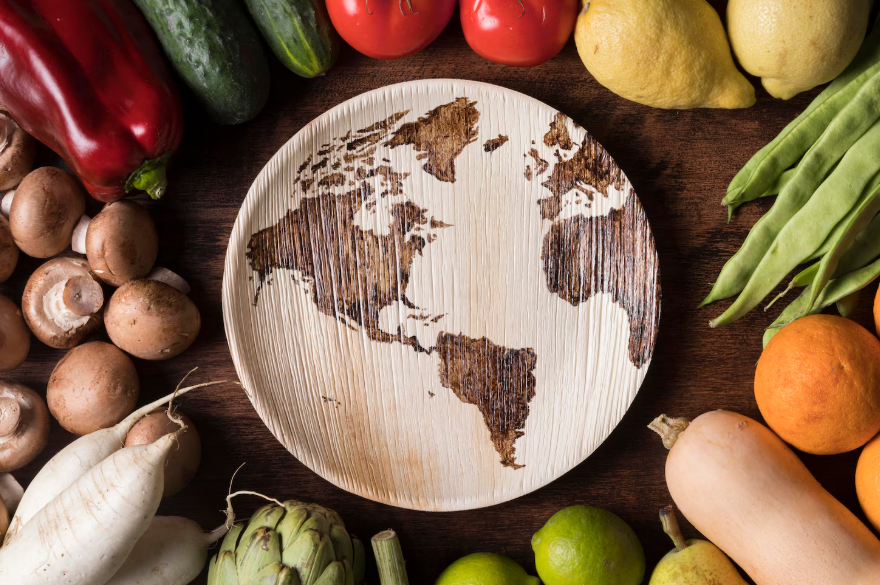
The journey of a single avocado from a farm in Michoacán, Mexico, to a supermarket shelf in Oslo, Norway, involves dozens of actors, multiple modes of transport, and exposure to countless potential disruptions. This intricate web—spanning continents, climates, regulations, and cultures—is the international food supply chain. While it delivers unprecedented variety and abundance to consumers worldwide, it also carries significant vulnerabilities. From geopolitical tensions to extreme weather events, managing risk in this complex system is not just a logistical challenge—it’s a matter of global food security.
In recent years, shocks like the 2020 pandemic, the war in Ukraine, and recurring climate disasters have exposed how fragile these networks can be. Yet, behind the scenes, governments, corporations, and international organizations are deploying increasingly sophisticated strategies to anticipate, mitigate, and recover from disruptions. Understanding how international food supply chain risk management works—and where it falls short—offers critical insight into the future of global food systems.
Why Global Food Supply Chains Are Inherently Risky
International food supply chains are long, interdependent, and subject to variables far beyond any single entity’s control. A shipment of wheat might originate in Canada, be processed in Rotterdam, packaged in Germany, and sold in Singapore—all while navigating fluctuating tariffs, port congestion, phytosanitary inspections, and currency volatility.
According to the Food and Agriculture Organization (FAO), over 23% of global food production crosses at least one international border before reaching consumers. This globalization has improved efficiency and lowered costs, but it has also created systemic risks. When one node fails—such as the 2021 Suez Canal blockage that halted 12% of global trade—the ripple effects can delay perishable goods, inflate prices, and trigger shortages.
Moreover, food is uniquely sensitive: it spoils, requires strict temperature control, and must meet stringent safety standards. Unlike electronics or textiles, a delayed container of fresh produce often becomes worthless within days. This perishability amplifies the consequences of even minor logistical hiccups.
The World Bank highlights that low- and middle-income countries are especially vulnerable, as they often rely on imported staples like rice, wheat, and cooking oil. Disruptions can quickly escalate into humanitarian crises, as seen during the 2007–2008 food price spikes that triggered riots in over 30 countries.
Key Risk Categories in Global Food Logistics
Effective risk management begins with accurate categorization. Experts typically group international food supply chain risks into five core categories:
1. Geopolitical and Regulatory Risks
Trade wars, sanctions, export bans, and sudden changes in import regulations can halt shipments overnight. For example, India’s 2023 ban on non-basmati white rice exports—implemented to curb domestic inflation—sent global rice prices soaring and disrupted supply contracts across Africa and the Middle East.
2. Climate and Environmental Risks
Extreme weather events, droughts, floods, and shifting growing seasons directly impact agricultural output. The Intergovernmental Panel on Climate Change (IPCC) warns that climate change could reduce global crop yields by up to 30% by 2050, particularly in tropical regions that serve as key export hubs.
3. Logistical and Infrastructure Risks
Port closures, labor strikes, fuel shortages, and inadequate cold-chain infrastructure can derail deliveries. In sub-Saharan Africa, for instance, post-harvest losses reach 30–40% due to poor storage and transport—a stark contrast to less than 5% in high-income nations, per the United Nations Environment Programme.
4. Biological and Safety Risks
Foodborne pathogens, pest infestations, and contamination events can trigger recalls and border rejections. The European Commission’s Rapid Alert System for Food and Feed (RASFF) logged over 4,000 notifications in 2023 alone, many involving aflatoxins in nuts or salmonella in spices.
5. Economic and Market Risks
Currency fluctuations, inflation, and commodity speculation can make imports unaffordable. The World Food Programme notes that food import bills for developing countries hit a record $236 billion in 2022, straining national budgets and limiting access to essential nutrients.
How Companies Build Resilience: Strategies That Work
Leading food importers and exporters don’t wait for crises—they embed resilience into their operations. One proven approach is supply chain diversification. Instead of sourcing all soybeans from Brazil, a European feed manufacturer might split orders between Brazil, the U.S., and Paraguay. This reduces dependency on any single region and buffers against localized shocks.
Another cornerstone is real-time visibility. Modern supply chains leverage IoT sensors, blockchain ledgers, and AI-driven analytics to track shipments from farm to fork. Walmart’s use of blockchain to trace mangoes reduced traceability time from seven days to 2.2 seconds—a game-changer during contamination outbreaks.
Strategic stockpiling also plays a role. Japan, for example, maintains emergency reserves of wheat and soybeans equivalent to several months of consumption, managed by the Ministry of Agriculture, Forestry and Fisheries. Similarly, the EU’s Common Agricultural Policy includes crisis reserves for key commodities.
Collaboration is equally vital. The Global Food Safety Initiative (GFSI), backed by companies like Nestlé and Unilever, harmonizes food safety standards across borders, reducing inspection delays and rejection rates. Meanwhile, public-private partnerships—such as the World Economic Forum’s Food Innovation Hubs—connect farmers, tech firms, and policymakers to co-develop resilient solutions.
The Role of Technology in Mitigating Disruption
Technology is transforming risk management from reactive to predictive. Satellite imagery now monitors crop health in real time; platforms like Gro Intelligence analyze soil moisture, rainfall forecasts, and planting patterns to predict regional shortfalls months in advance.
Blockchain, often associated with cryptocurrencies, is proving invaluable in food traceability. IBM Food Trust, used by Dole and Carrefour, creates immutable records of every transaction—enabling rapid identification of contamination sources and minimizing unnecessary recalls.
Cold-chain innovations are also critical. Solar-powered refrigerated containers, such as those developed by ColdHubs in Nigeria, extend the shelf life of perishables in off-grid areas. Meanwhile, digital freight platforms like Flexport optimize routing and customs clearance, cutting transit times by up to 20%.
Even artificial intelligence is entering the field. Startups like Crisp use machine learning to forecast demand fluctuations based on weather, social trends, and economic indicators—helping retailers avoid both overstocking and stockouts.
These tools don’t eliminate risk, but they compress response times and improve decision-making under uncertainty.
Government Policies and International Frameworks
No private company can manage systemic risks alone. Governments and multilateral institutions provide the scaffolding for stable trade. The World Trade Organization’s (WTO) Agreement on the Application of Sanitary and Phytosanitary Measures (SPS Agreement) sets science-based rules for food safety regulations, preventing arbitrary trade barriers.
Regional agreements also matter. The African Continental Free Trade Area (AfCFTA) aims to reduce intra-African trade barriers, creating shorter, more resilient supply routes less dependent on distant markets. Similarly, the U.S.-Mexico-Canada Agreement (USMCA) includes provisions for agricultural cooperation during emergencies.
National policies play a crucial role too. The U.S. Food Safety Modernization Act (FSMA), enforced by the FDA, shifts focus from responding to contamination to preventing it—requiring importers to verify foreign suppliers’ safety practices. The European Union’s Farm to Fork Strategy integrates sustainability and risk reduction into its entire food policy framework.
During acute crises, coordinated responses are essential. The UN’s Food Systems Summit in 2021 spurred commitments from over 100 countries to strengthen supply chain resilience, including investments in digital infrastructure and smallholder farmer support.
Case Study: Lessons from the Red Sea Crisis
The ongoing Red Sea shipping disruptions—triggered by Houthi attacks on commercial vessels—offer a real-time stress test of global food logistics. As major carriers reroute around Africa, transit times between Asia and Europe have doubled, and freight costs have surged by over 300%.
Yet, the impact on food supplies has been uneven. Countries with diversified sourcing and strong strategic reserves, like Germany, have absorbed the shock with minimal consumer disruption. In contrast, nations heavily reliant on Red Sea routes for staple imports—such as Egypt, which imports 80% of its wheat—face heightened vulnerability.
Some importers responded by chartering smaller vessels through alternative corridors or accelerating air freight for high-value perishables. Others activated contingency clauses in supplier contracts, allowing temporary shifts in origin countries. The crisis underscores a key principle: resilience is not about avoiding disruption, but about having options when it occurs.
The International Chamber of Shipping estimates that prolonged Red Sea instability could add $15 billion annually to global food transport costs—highlighting the economic stakes of maritime security in food trade.
Comparing Risk Management Approaches Across Regions
Different regions adopt distinct strategies based on their economic structures, trade dependencies, and institutional capacities. The table below illustrates key contrasts:
| Region | Primary Risk Focus | Key Strategies | Notable Weaknesses |
|---|---|---|---|
| European Union | Food safety, regulatory compliance, climate adaptation | Harmonized standards (GFSI-aligned), Farm to Fork Strategy, strategic grain reserves | High dependency on Ukrainian grain; aging rural infrastructure |
| United States | Biosecurity, supply continuity, import verification | FSMA enforcement, USDA monitoring, private-sector innovation (e.g., blockchain pilots) | Fragmented state-level oversight; vulnerability to Mississippi River droughts |
| Southeast Asia | Climate volatility, post-harvest loss, export dependency | ASEAN Emergency Rice Reserve, cold-chain investment, crop insurance schemes | Limited port capacity; political instability in key producing nations |
| Sub-Saharan Africa | Import reliance, infrastructure gaps, conflict | AfCFTA integration, regional grain reserves (e.g., ECOWAS), mobile-based market info | Underdeveloped logistics; high financing costs for SMEs |
| Middle East | Water scarcity, geopolitical instability, import dependence | Strategic food reserves (e.g., UAE’s AgriTech investments), overseas farmland acquisitions | Extreme climate stress; limited domestic production capacity |
This comparison reveals that while high-income regions emphasize prevention and traceability, lower-income regions often prioritize basic access and affordability—reflecting broader development disparities.
Actionable Steps for Businesses and Policymakers
For food businesses operating internationally, proactive risk management isn’t optional—it’s existential. Here are evidence-based steps to enhance resilience:
- Map your entire supply network, including Tier 2 and Tier 3 suppliers. Many companies only track direct vendors, leaving blind spots.
- Conduct scenario planning for high-impact, low-probability events (e.g., port closure, export ban). The OECD provides free risk assessment templates for agri-food firms.
- Invest in supplier capacity building, especially in developing countries. Training smallholders in GAP (Good Agricultural Practices) reduces rejection rates at borders.
- Adopt digital traceability systems early. Even basic QR-code labeling can speed up recalls and build consumer trust.
- Diversify transportation modes—don’t rely solely on maritime shipping. Intermodal solutions (rail + road + sea) offer flexibility during chokepoints.
Policymakers, meanwhile, should:
- Strengthen regional food reserves coordinated through bodies like the FAO.
- Harmonize phytosanitary standards to reduce non-tariff barriers.
- Fund climate-resilient infrastructure, particularly cold chains and irrigation.
- Support open data platforms that share real-time market and weather intelligence with farmers.
Looking Ahead: The Future of Food Supply Chain Security
The next decade will test the limits of global food logistics. Population growth, urbanization, and climate change will intensify pressure on supply chains, while emerging technologies offer new tools for stability. Vertical farming, lab-grown proteins, and AI-driven logistics may shorten supply lines and reduce environmental footprints.
Yet technology alone won’t suffice. True resilience requires equity: empowering small-scale producers, ensuring fair trade terms, and prioritizing nutrition over mere volume. As the FAO’s State of Food Security and Nutrition in the World 2023 report emphasizes, resilient supply chains must be inclusive ones.
The goal isn’t a perfectly smooth system—disruptions are inevitable—but one that bends without breaking, adapts without panic, and ensures that no community goes hungry because a ship was delayed or a harvest failed.
Frequently Asked Questions (FAQ)
Q1: What is the biggest threat to international food supply chains today?
While multiple risks exist, climate change stands out due to its systemic, long-term impact. Rising temperatures, erratic rainfall, and extreme weather events directly threaten agricultural productivity in key exporting regions like the U.S. Midwest, Southeast Asia, and the Black Sea basin. The IPCC identifies climate variability as a top driver of future food insecurity.
Q2: How do export restrictions affect global food prices?
Export bans or quotas—often imposed during domestic shortages—can trigger panic buying and speculative trading, amplifying price spikes. Research from the International Food Policy Research Institute (IFPRI) shows that during the 2007–2008 crisis, export restrictions accounted for 40% of the global rice price increase. Such measures fragment the market and undermine trust in trade reliability.
Q3: Can blockchain really prevent food fraud?
Blockchain enhances transparency by creating tamper-proof records of origin, handling, and testing. While it doesn’t eliminate fraud outright, it makes deception far harder and easier to detect. For example, the EU’s use of blockchain in olive oil supply chains has reduced mislabeling incidents by enabling instant verification of geographical indications.
Q4: Why are smallholder farmers particularly vulnerable to supply chain disruptions?
Smallholders often lack access to storage, credit, and market information. When transport halts or prices crash, they can’t hold inventory or pivot to alternative buyers. According to the World Bank, over 500 million small farms produce 80% of food in Asia and sub-Saharan Africa—yet receive minimal support during trade shocks.
Q5: How does the WTO handle food safety disputes between countries?
The WTO’s SPS Committee serves as a forum for members to raise concerns about food safety measures that may act as disguised trade barriers. If unresolved, cases can escalate to formal dispute settlement. The system relies on scientific evidence, requiring complainants to prove that a measure lacks risk assessment or is more trade-restrictive than necessary.
Q6: What role do insurance products play in managing food supply risk?
Parametric insurance—paying out based on predefined triggers like rainfall levels or temperature thresholds—helps farmers and importers hedge against climate-related losses. The World Food Programme’s R4 Rural Resilience Initiative combines insurance with savings and credit, protecting vulnerable households in Ethiopia and Senegal.
Q7: Are local food systems more resilient than global ones?
Local systems reduce transport dependency and can respond faster to community needs. However, they lack the scale and diversity to buffer against regional crop failures. A hybrid approach—strengthening local production while maintaining strategic global links—is often optimal, as recommended by the UN’s Committee on World Food Security.
Q8: How can consumers contribute to more resilient food supply chains?
Consumer choices influence corporate behavior. Supporting brands that disclose sourcing practices, invest in fair trade, and minimize waste sends market signals for responsible supply chain management. Reducing household food waste—which accounts for 11% of global emissions, per UNEP—also eases pressure on logistics networks.
The international food supply chain is a marvel of human coordination—but also a mirror reflecting our collective vulnerabilities. Managing its risks demands more than just better logistics; it requires foresight, cooperation, and a commitment to equity. As climate pressures mount and geopolitical tensions simmer, the ability to keep food moving safely, affordably, and sustainably across borders will define not just economic stability, but human well-being in the 21st century. The path forward lies not in retreating from globalization, but in building smarter, fairer, and more adaptive systems that nourish people and planet alike.