
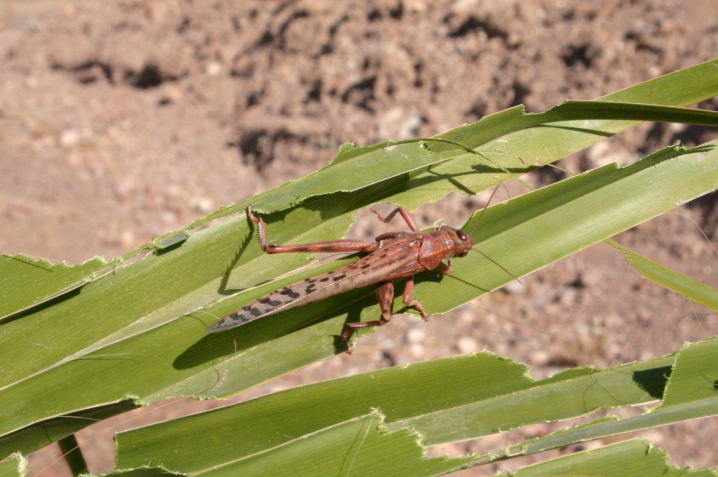

Desert locusts are among the most ancient and destructive agricultural pests in the world. Capable of forming massive swarms that cover hundreds of square kilometers, they threaten food security and rural livelihoods across Africa, the Middle East, and Southwest Asia. In a single day, a moderate locust swarm can eat as much food as 2,500 people, leaving farming communities completely devastated. Historically, controlling these plagues was a losing battle fought with late-stage chemical spraying. However, advances in modern satellite imaging, drone monitoring, GPS tracking, and biological pesticides are shifting the balance of power, enabling proactive locust containment.
The Biology and Threat of the Desert Locust
The desert locust (Schistocerca gregaria) is usually a solitary insect that lives in dry desert regions. However, when heavy rains fall on these arid lands, the soil becomes moist, and vegetation grows rapidly. These conditions trigger a physiological transformation. The locusts breed quickly, change color from green to bright yellow, and transition into a “gregarious phase.” They form swarms that move rapidly with the wind, traveling up to 150 kilometers in a day. Because outbreaks happen in remote, hard-to-reach desert locations, traditional monitoring methods often fail to detect swarms before they reach agricultural areas.
Satellite Remote Sensing and Early Warning Systems
Modern locust control begins in space. International organizations, led by the United Nations Food and Agriculture Organization (FAO) Desert Locust Information Service (DLIS), analyze real-time satellite data. Satellites monitor two critical environmental factors: soil moisture and green vegetation. Since locusts require wet sandy soil to lay their eggs and green plants for food, satellite maps help scientists predict where locusts are breeding. This allows control teams to target early-stage hopper bands (locusts that cannot yet fly) before they develop into flying swarms.
Drones and Mobile GIS Data Collection
Once satellites identify potential breeding grounds, ground teams and unmanned aerial vehicles (drones) are deployed for close-range surveillance. Drones can fly over rugged, inaccessible desert areas, mapping vegetation and identifying locust populations. Field scouts are equipped with the eLocust3 system—a GPS-enabled tablet and mobile application that allows them to record findings and transmit them via satellite link directly to national locust control centers. This ensures that response teams have immediate, accurate data to plan containment actions.
Eco-Friendly Biological Control Methods
While chemical pesticides are still used for severe infestations, they are expensive and can harm beneficial insects, livestock, and local water supplies. To address this, scientists have developed bio-pesticides. One of the most successful is Metarhizium acridum, a natural fungus that targets locusts specifically. When sprayed on a swarm, the fungal spores infect and kill the locusts within a few days, without harming birds, mammals, or other insects. This eco-friendly alternative is increasingly integrated into sustainable agricultural management plans.
Technological Tools in the Fight Against Locusts
- Sentinel Satellites: Provide global mapping of soil moisture and vegetation.
- Surveillance Drones: Monitor remote desert terrains for early locust detection.
- eLocust3 Tablets: Allow instant transmission of field data to global networks.
- Bio-Pesticides: Offer biological, target-specific pest control.
Frequently Asked Questions
Why are locust swarms so dangerous to agriculture?
Locust swarms are dangerous because they are highly mobile and consume massive amounts of vegetation. A small swarm can destroy crops, pastures, and trees in a matter of hours, threatening the food security of entire nations.
How does satellite data help in controlling locusts?
Satellites detect green vegetation and moist soil in desert regions, which are the primary breeding grounds for locusts. This allows teams to intervene before swarms form.
What are bio-pesticides and are they safe?
Bio-pesticides are pest control agents made from natural organisms, like fungi. They are highly safe because they target locusts specifically, leaving other wildlife, livestock, and water sources unharmed.
What is the eLocust3 system?
eLocust3 is a mobile data collection system used by field officers to log locust sightings, weather data, and control actions, sending the info via satellite to national databases in real-time.
Can weather patterns predict locust migrations?
Yes, wind speed and direction are key predictors because locusts fly with the wind. Tracking wind patterns helps meteorologists forecast which agricultural regions are next in line for infestation.
How fast do desert locusts reproduce?
Under favorable conditions, a single female locust can lay up to 300 eggs. A new generation can multiply tenfold every three months, leading to exponential population growth.
What countries are most affected by desert locusts?
Locusts affect about 30 countries across East and West Africa, the Middle East, and Southwest Asia, spanning a total area of 16 million square kilometers.
How do drones assist ground control teams?
Drones explore vast, hard-to-reach desert locations, mapping green vegetation patches and taking high-resolution imagery to detect early hopper bands.
Conclusion
The integration of space technology, automated drones, real-time mobile reporting, and biological control has transformed locust management. By shifting from reactive chemical spraying to early, data-driven prevention, the global agricultural community can safeguard crops and maintain regional food security.