

Poliomyelitis is not going away. Sometimes, it seems as though the disease is close to disappearing. Then new cases appear.
However, American businessman and philanthropist Bill Gates remains convinced that wild polio can be eradicated. For more than twenty years, money from the Bill and Melinda Gates Foundation has helped finance efforts against polio.
The foundation recently announced the winners of its Grand Challenges Explorations programme. Some of the winners were recognised for their work on polio, including studies aimed at developing new vaccines.
Each winner will receive a grant of one hundred thousand dollars. Those competing for the grants were encouraged to think ‘outside the box’ and develop non-traditional ideas. The goal is to hasten the day when the international coalition to defeat polio has no more work to do.
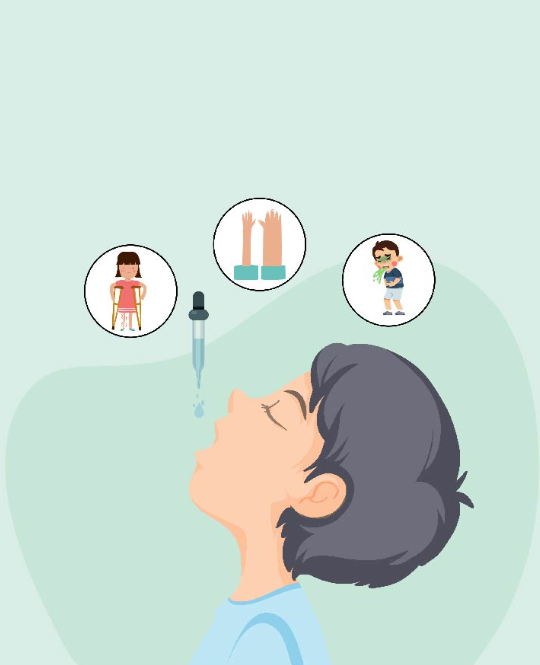
Some of the Grand Challenges Explorations funding will go towards researching ways to improve the vaccines given to children in developing countries. The current vaccine is swallowed. This oral vaccine contains a weakened version of the live poliovirus.
Changes in the live virus can cause paralysis, which is an extremely rare event. The virus infects one in every 250 million children who receive the oral vaccine. However, researchers are working to prevent this tragedy from happening.
In general, huge progress has been made in the worldwide campaign against polio over the past twenty years. Polio vaccines have reduced the number of recorded cases by 99% since 1988. This was when the Global Polio Eradication Initiative began.
Vaccines are very important because antibiotics do not help once someone is infected. Antibiotics can only kill bacteria, not viruses. There is no cure for polio. Treatment involves rest, fluids, and medication to control symptoms such as high body temperature.
The wild polio virus can spread easily from person to person. It spreads through bodily fluids, waste material and water systems. Vaccine-derived polio, which is very rare, occurs when changes in genetic material affect the vaccine.
Polio mainly affects children. However, adults can get it too. Many people are infected without realising it. They may only experience a higher than normal temperature and pain in the throat. However, if polio attacks the central nervous system, the person may lose the ability to stand or walk. If the disease affects breathing, it can be fatal.
In 1988, polio left an estimated 350,000 patients with paralysis. They lost the use of their arms or legs. Some could no longer breathe without help.
The Global Polio Eradication Initiative includes national governments and the United Nations Children’s Fund (UNICEF). Another partner is the US Centers for Disease Control and Prevention.
Another partner is the volunteer service group Rotary International. Rotary members have campaigned against polio for many years. The group has also organised fundraising programmes for the anti-polio campaign. Violinist Itzhak Perlman and orchestra conductor James DePreist recently held a Concert to End Polio in Chicago, Illinois.
Both musicians have survived paralytic polio. Mr Perlman was four years old when he contracted the disease. Mr DePreist was in his twenties. Today, both men walk with the aid of crutches or other devices.
According to scientists, three polio viruses cause wild polio. Type one is the most dangerous. It can infect many people in a short amount of time. It has caused around 85% of all polio cases. Wild polio type two disappeared worldwide in 1999. Cases caused by the type three poliovirus do not spread as quickly as those caused by the type one poliovirus.
Polio continues to be a problem in Nigeria, India, Afghanistan and Pakistan today. According to officials, several issues make it challenging for these countries to prevent the spread of the disease.
For instance, 500,000 babies are born every month in northern India alone. It is difficult to reach and vaccinate all of these children. In Pakistan and Afghanistan, armed conflicts and other disputes have interfered with — or even stopped — anti-polio campaigns.
In 2003, Nigeria stopped providing the polio vaccine for almost a year. False reports about the vaccine caused this stoppage. These reports claimed that the vaccine caused AIDS. Other reports claimed that it prevented people from having children.
Nigeria experienced a surge in polio cases after the vaccinations ceased. The disease also spread to other countries.
However, by August 2007, the news about polio in Nigeria seemed hopeful. Nigeria had reported a significant decrease in polio cases since January. Then came some unwelcome news. Sixty-nine children in the north of the country developed paralytic polio.
Some of the infected children had received the Sabin oral polio vaccine. This vaccine contains a weakened poliovirus that provides effective protection against type one. However, in Nigeria, the vaccine had undergone a harmful genetic mutation.
This has led critics to question the continued use of the Sabin oral polio vaccine in the international campaign against polio. They argue that its association with infection makes the vaccine unacceptable.
Nine years ago, American health officials stopped recommending the use of the vaccine. They said this was to eliminate the possibility of paralytic polio being linked to it.
Dr Olen Kew is a virus expert at the Centers for Disease Control. His studies include vaccine-associated paralytic polio (VAPP). He says that, before the year 2000, the United States had about eight such cases a year when the oral polio vaccine was in use. Approximately twenty percent of cases occurred in children with compromised natural defences against disease.
Given the risk of VAPP, why use the Sabin oral polio vaccine? Experts say this vaccine works faster against the spread of type one polio. It is also inexpensive. Healthcare workers who administer it require minimal training.
Olen Kew notes that many developing countries use the vaccine because children can receive it orally. The Sabin oral polio vaccine also protects the intestines. This prevents the disease from spreading from person to person.
However, the virus expert warns that there is always a risk that the weakened strains of the virus used in the vaccine could mutate into a form that causes severe illness or even death.
Jonas Salk developed the first major polio vaccine in the 1950s. Albert Sabin then developed the oral polio vaccine in the 1960s. Dr Salk’s polio vaccine was injected. An improved version of the Salk vaccine is now used in the United States.
Poliovirus was first identified in 1988, long before Doctors Salk and Sabin produced their vaccines. Earlier scientists recognised the illness. However, they could not prevent people from becoming infected.
For example, polio killed six thousand people in the United States in 1916. Another 27,000 Americans suffered permanent damage.
For years, polio remained a frightening health threat. Many of the victims were children and young adults. Families tried all kinds of ways to protect their children.
A teacher living in the United States remembers wanting to go swimming when she was a child. However, her mother always told her it was too dangerous during polio season.
The mother was right. Hot summers were disastrous. In the summer of 1952, more than 57,000 people were infected with polio in the United States alone. Despite parents’ efforts to protect their children, the disease continued to spread.
Some polio survivors from those early days went on to become well known in sports, medicine, the arts and other fields. Doctors say they often see bravery and energy in patients who had polio. However, researchers are working towards a future where no one will ever suffer from the disease again.