
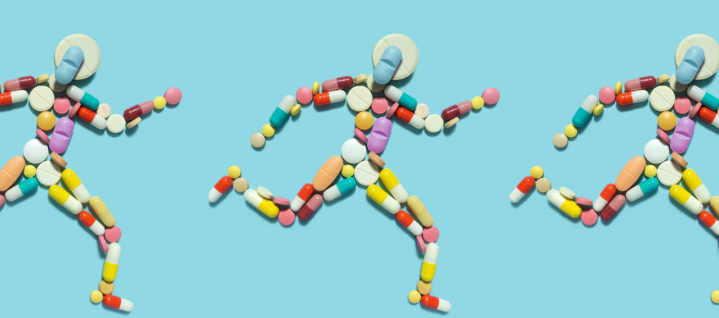

Sports have long been a part of popular culture. In the United States, some athletes enjoy the same level of fame as movie stars or rock musicians. Their lives are not only covered by the news media, but also featured in films and literature. Sports have even found their way into everyday expressions. One example is: ‘It’s not whether you win or lose, but how you play the game.’ This saying has been used for years to embody the spirit of fair play. However, today, many people are questioning the honour of some athletes.
Bob Doughty: Barry Bonds holds the Major League Baseball record for the most home runs in a single season. He also holds the record for the most career home runs. Last month, he went on trial in San Francisco, California. He was accused of lying to a federal grand jury about his reported use of performance-enhancing drugs. He has repeatedly denied knowingly taking such drugs.
When many Americans talk about doping in sport, they think of anabolic steroids. Most sports organisations have banned the non-medical use of anabolic steroids. However, some athletes continue to take them. They believe that steroids give them an advantage when competing.
Steroids are used to increase muscle strength. However, they can also damage the liver, increase cholesterol and stop testosterone production. They can also cause personality changes. Steroid users may become angry for no reason. Some become dependent on them and feel they cannot live without them. Users can become depressed and, in some cases, may even contemplate suicide. Some men who use anabolic steroids develop breasts, while their reproductive organs shrink. Some women develop a deeper voice and grow facial hair.
Testosterone is a steroid hormone. Hormones are chemicals that help keep the body functioning normally. The effects of testosterone can be seen in boys as they become young men. They develop muscle power and become stronger. Testosterone is also important for other changes, such as a deeper voice and hair growth.
Both men and women produce testosterone, but men produce much more of it. However, not all men produce the same amount. Some naturally have higher levels than others. As men grow older, their testosterone levels decrease.
Some people take testosterone supplements for medical reasons. However, some athletes use testosterone to strengthen their muscles and improve their performance. Testosterone supplements are banned in many sports. Researchers who have studied testosterone generally agree that long-term use may enhance athletic performance. However, they disagree about its short-term value. Also, testosterone supplements carry risks. Most doctors agree that taking large amounts can increase the risk of heart disease and other health problems.
The discovery of banned drugs and drug use at major sporting events led to the creation of the World Anti-Doping Agency. In 1998, French police raided the Tour de France and found banned substances.
Following this, the International Olympic Committee spearheaded the creation of an independent agency to establish and enforce universal anti-doping regulations. WADA, as the agency is known, comprises representatives of the Olympic movement and officials from around the world.
‘Doping’ is the general term for using banned substances or engaging in banned activities to improve athletic performance. According to WADA, the term probably comes from the Dutch word ‘dop’. This was the name of an alcoholic drink used by Zulu warriors to enhance their performance in battle.
According to the agency, the term ‘doping’ began to be used for athletes at the beginning of the twentieth century. Initially, it referred to the illegal drugging of racehorses.
The agency notes that athletes have used substances for centuries to enhance their performance. The ancient Greeks used special foods and drinks. Nineteenth-century cyclists and others used alcohol, caffeine and cocaine, and some even used strychnine, a strong poison. By the 1920s, sports organisations were trying to prevent the use of doping substances. However, they lacked the scientific means to test for them.
One method of doping is called blood doping. This involves using substances such as hormones or even blood itself to increase the production of red blood cells. This increases the amount of oxygen that the blood carries to the muscles, thereby increasing their strength. One such hormone is EPO. It is said to be most useful to athletes in endurance sports such as cycling and long-distance running. However, doctors say that the hormones used for blood doping can thicken the blood, increasing the risk of heart disease or stroke. Using blood from another person can also spread viruses. However, doctors also say that using a person’s own blood to increase the level of red blood cells can raise the risk of heart disease and stroke.
Another substance that can improve performance is human growth hormone (HGH). This hormone is produced naturally by the pituitary gland in the brain. Experts say that higher-than-normal levels of HGH can cause diabetes, muscle and bone pain, high blood pressure, and other disorders.
The White House Office of National Drug Control Policy provided VOA with a statement about sports doping. The office said it recognises the powerful influence athletes have on young people. It said that it works closely with anti-doping agencies in the United States and other countries. It also attempts to influence sports organisations worldwide to create policies to combat the use of performance-enhancing drugs.
Dopers in sport are always looking for new substances and technologies to help them pass drug tests. In March, a Swiss court ruled that an athlete could be penalised for illegal doping even if they do not fail a test. The Court of Arbitration for Sport is the highest court in sport. Its ruling could influence anti-doping testing worldwide. This was the court’s first ruling after examining the scientific and legal merits of an athlete’s ‘biological passport’. Information in a biological passport can help to catch athletes who use banned drugs but find ways to avoid testing positive for them. These athletes are known as sophisticated dopers.
David Epstein writes about sports doping for Sports Illustrated magazine.
David Epstein says, “Right now, there are plenty of doping methods that are mostly or completely undetectable. You can dope and still stay within the limits of testing. There are many ways to dope that are still cutting-edge compared to the anti-doping technology we have.’
So, what is wrong with doping? This is a question that many people ask, including some health experts. These people support what is known as medically-supervised doping. They claim it would reduce the dangers associated with doping. They argue that sporting events would be fairer if all competitors were openly permitted to dope. David Epstein says his readers react strongly when he writes about medically supervised doping.
Some say we need to root it out, while others say we should accept it and quit ruining the fun.
The World Anti-Doping Agency is opposed to medically supervised doping. Its medical director, Alain Garnier, has stated that doctors should not be involved in doping. Dr Garnier says that helping athletes to perform better is not necessarily good for their health. He also rejects the idea that permitting doping would create an equal playing field. Accepting doping, he says, would allow economic resources and scientific expertise to determine the outcome of athletic events. Only those with the necessary resources and expertise would win, he says.
Anti-doping officials say they want to protect the integrity of sports by guaranteeing a level playing field. They want to ensure that athletes who do not use banned substances have an equal chance of winning.
David Epstein says that some athletes have told him that they would sacrifice years of their life if it meant becoming a champion through the use of drugs.
“I think some athletes have absolutely said they’re willing to sacrifice their health in the future. I think many of them simply don’t think it will have a long-term effect on their health.’