
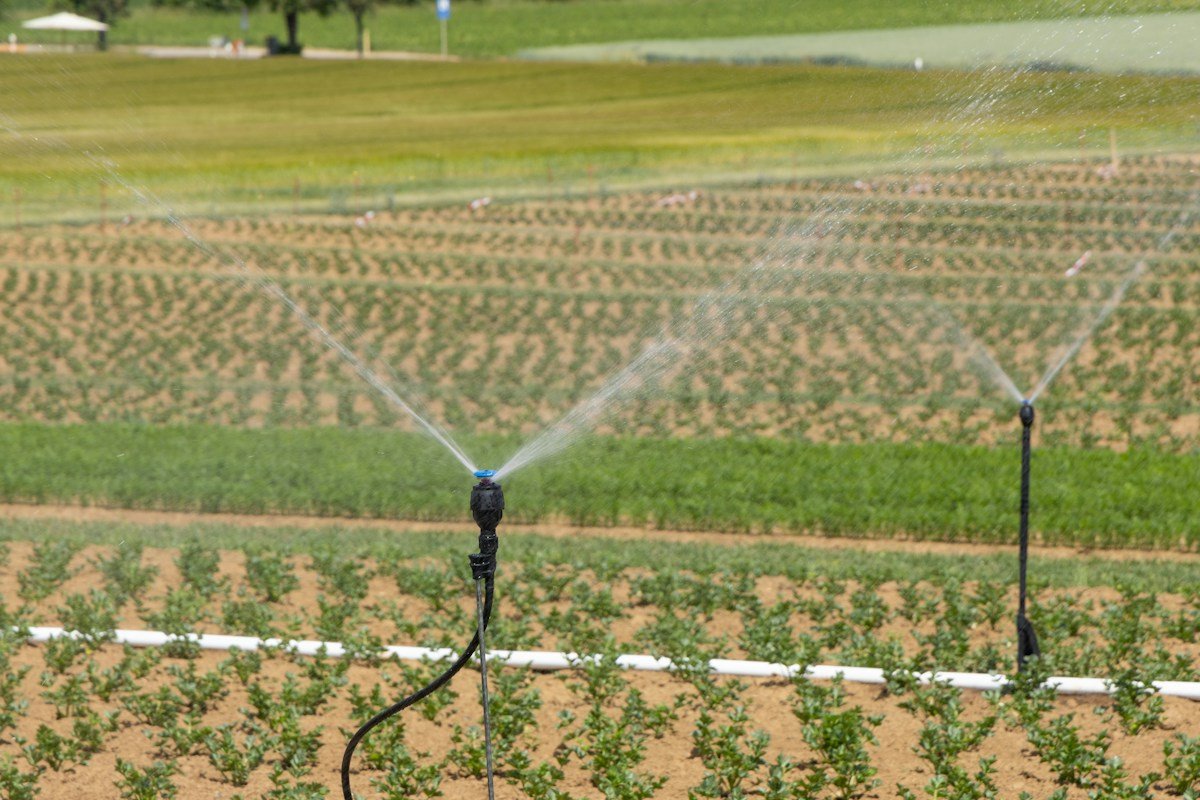

Arid and semi-arid agroecosystems confront severe operational headwinds defined by extreme evaporative demand, depleting fossil aquifers, and escalating secondary soil salinization. Conventional furrow, border check, and overhead pivot irrigation methods routinely dissipate more than forty to fifty percent of applied water to non-beneficial atmospheric evaporation, deep percolation, and unmanaged tailwater runoff. In regions characterized by high vapor pressure deficits and hyper-arid rainfall regimes, sustainable agricultural output necessitates an immediate architectural transition toward pressurized subsurface drip irrigation (SDI) and automated precision surface drip frameworks calibrated to deliver millimeter-level moisture directly into active crop root zones.
Precision drip irrigation transcends simple hardware installations of polyethylene tubing and molded plastic emitters. It operates as an integrated biological and physical management matrix synthesizing real-time soil moisture tension dynamics, microclimate eddy covariance modeling, hydraulic pressure compensation engineering, and computerized fertigation kinetics. When configured correctly, precision drip systems elevate crop water productivity by sixty to eighty percent while restricting weed germination and foliar fungal infection vectors by maintaining an arid surface boundary layer across inter-row spaces.
However, operating pressurized micro-irrigation in hyper-arid environments introduces severe operational vulnerabilities, most notably localized root-zone salinity accumulation, biological emitter clogging, and chemical scale deposition. The evaporative upward wick of saline subsoil moisture combined with dissolved fertilizer mineral salts can establish lethal osmotic zones along the periphery of the wetting bulb if leaching fractions and hydraulic flush protocols are miscalculated. This technical manual provides an exhaustive operational blueprint for designing, deploying, and managing automated precision drip irrigation networks across arid agricultural landscapes.
Furthermore, precision water management intersects directly with farm economic solvency. With commercial irrigation pumping energy representing up to thirty-five percent of variable seasonal operational expenditures, minimizing volumetric pumping through real-time soil tension feedback delivers massive utility savings while extending the commercial lifespan of regional groundwater aquifers and high-value perennial orchards.
Thermodynamic Principles of Evapotranspiration in Hyper-Arid Climates
Accurately calculating daily crop irrigation requirements in arid zones requires evaluating the Penman-Monteith reference evapotranspiration (ET0) equation standardized by the Food and Agriculture Organization. Hyper-arid microclimates subject plant canopies to immense atmospheric vapor pressure deficits (VPD) frequently exceeding 4.5 to 5.5 kilopascals during peak solar irradiation hours. Under these extreme atmospheric demand conditions, the rate of water extraction from the soil is dictated not merely by physical moisture presence, but by the kinetic ability of the plant vascular xylem to transport water rapidly enough to prevent cavitational embolism.
Crop evapotranspiration under non-stressed conditions (ETc) is modeled as the product of the reference evapotranspiration (ET0) and a crop-specific coefficient (Kc). In precision drip management, agronomists utilize dual-coefficient partitioning models that separate the composite Kc into basal crop transpiration (Kcb) and bare soil surface evaporation (Ke). Because drip irrigation wets only twenty to thirty-five percent of the total field surface area beneath the plant canopy, the surface evaporation component (Ke) is suppressed to near zero, permitting precise water delivery matched exclusively to the physiological transpiration requirements of the crop.
During periods of regional advection, commonly termed the “clothesline effect,” hot, dry air masses originating over surrounding barren desert sands sweep across irrigated agricultural fields. This horizontal thermal advection dramatically elevates sensible heat transfer into the crop canopy, boosting midday transpiration rates by twenty to thirty percent above theoretical aerodynamic models. Precision drip controllers integrate on-site meteorological telemetry to detect advective thermal spikes, dynamically triggering pulsing irrigation cycles to maintain cellular turgor without inducing root zone saturation.
Additionally, tracking the diurnal fluctuation of stomatal conductance reveals that many desert-adapted and Mediterranean crops (including olives, pomegranates, and date palms) initiate midday stomatal closure to limit moisture loss. Applying large volumes of irrigation during these defensive stomatal closure phases results in inefficient gravitational percolation; precision drip protocols shift primary irrigation volumes to early morning and late nocturnal windows, maximizing water use efficiency.
Hydraulic Engineering of Pressure-Compensating Drip Emitter Networks
Maintaining uniform water distribution across extensive commercial fields featuring undulating topography or long row runs requires pressure-compensating (PC) emitter architecture. Non-compensating turbulent flow emitters suffer from severe discharge rate deviations when lateral pipe friction causes internal pressure drops along extended pipe runs. A pressure drop of merely twenty percent across a non-PC drip lateral produces a ten percent reduction in localized emitter discharge, leading to chronic under-watering at the lateral tail and over-watering near the manifold inlet.
Pressure-compensating emitters resolve this hydraulic limitation by incorporating a flexible, elastomeric silicone diaphragm positioned above a precision-engineered labyrinth flow path. As inlet water pressure fluctuates within the operational range (typically 0.8 to 4.0 bar), the silicone diaphragm flexes into the discharge chamber, dynamically constricting the effective exit orifice area. This mechanical constriction maintains a remarkably constant emitter discharge rate (e.g., exactly 1.6 or 2.0 liters per hour) across the entire lateral length, regardless of elevation changes or line friction losses.
Furthermore, modern subsurface drip installations deploy continuous self-flushing and anti-siphon (AS) pressure-compensating emitters. When an irrigation cycle terminates and line pressure collapses, ordinary emitters create a localized vacuum that can suck surrounding soil particles and fine sand into the emitter orifice, causing permanent mechanical blockages. Anti-siphon emitters incorporate an internal check valve that instantly seals the orifice against negative pressure, preventing soil ingestion and enabling multi-year subsurface deployment without emitter failure.
Root intrusion presents an additional physical hazard in perennial subsurface drip applications. Tree and vine roots naturally gravitate toward the moist emitter cavity, physically penetrating labyrinth pathways and choking water discharge. To prevent root penetration, premium emitters integrate microscopic copper oxide nanoparticles into the molded plastic matrix or utilize specialized systemic chemical root-inhibitor injection protocols that establish an impassable chemical barrier around the emitter discharge port.
Soil Moisture Dynamics and Wetting Bulb Hydrodynamics
The physical distribution of water discharging from a drip emitter into the surrounding soil profile is governed by the relative dominance of gravitational forces versus capillary matric suction forces. In coarse, sandy desert soils with high hydraulic conductivity, gravitational forces dominate, causing the moisture wetting bulb to assume a narrow, elongated vertical profile resembling an inverted carrot. Conversely, in heavy clay or silt loam soils exhibiting high matric potential, capillary suction pulls water horizontally, forming broad, spherical or horizontal pancake wetting patterns.
Selecting proper emitter spacing along the lateral and emitter discharge rates must be calibrated directly to the physical texture of the soil profile. In coarse sands, placing emitters eighty centimeters apart causes dry gaps between wetting bulbs where root systems desiccate. Sandy soils demand tight emitter spacings (twenty to thirty centimeters) and high-frequency pulse irrigation to build overlapping horizontal moisture fronts without pushing water beneath the active root zone. In fine-textured soils, wider emitter spacing (fifty to seventy centimeters) with lower discharge rates prevents surface ponding and anaerobic saturation.
Understanding the wetting pattern enables agronomists to engineer the ideal “active root zone” reservoir. In drip systems, the highest root density congregates within the central core of the wetting bulb, where soil matric potential is maintained between negative ten and negative twenty-five kilopascals. Maintaining moisture tension within this optimal range ensures that plants expend minimal metabolic energy extracting water, allocating photosynthates instead toward vegetative biomass and fruit development.
Field soil mapping using electromagnetic induction (EMI) sensors allows irrigation engineers to identify spatial textural variations across commercial parcels. Integrating EMI texture maps into the primary irrigation design enables zoned variable-rate manifold layouts, ensuring that sandy knolls and clay depressions are managed through distinct, customized hydraulic scheduling regimes.
Soil Salinity Management and Leaching Fraction Hydraulics
Secondary soil salinization represents the greatest existential threat to irrigated agriculture in arid river basins. All irrigation water sources contain dissolved mineral salts, including sodium cations, chloride anions, sulfates, and bicarbonates. As plants extract pure water vapor through transpiration and surface water evaporates into the arid atmosphere, these mineral salts are left behind in the soil profile. Over successive seasons, electrical conductivity of the saturated soil extract (ECe) escalates, elevating soil osmotic pressure and triggering physiological drought in cash crops.
Drip irrigation fundamentally alters the spatial distribution of soil salinity compared to flood or sprinkler irrigation. In a drip-irrigated field, salts are continuously pushed outward by the advancing wetting front, accumulating in concentrated, highly saline bands along the outer periphery of the wetting bulb and at the dry soil surface between crop rows. As long as irrigation cycles maintain continuous moisture within the core of the bulb, the active root zone remains at a relatively low osmotic potential, enabling normal crop growth even under moderately saline water regimes.
However, maintaining this protective low-salinity core requires the calculated application of a leaching fraction (LF). The leaching fraction represents the percentage of applied irrigation water that must pass completely through the active root zone to flush accumulated salts into deep subsoil strata. Agronomists calculate the leaching requirement (LR) using the standard equation: LR = ECw / (5 * ECe – ECw), where ECw represents the electrical conductivity of the irrigation water and ECe represents the salinity tolerance threshold of the target crop.
In hyper-arid zones receiving sporadic rainfall, high-salinity zones present severe hazards during light rain events. A light rainfall of ten to fifteen millimeters is insufficient to leach accumulated surface salts deep into the subsoil; instead, it dissolves the concentrated salt crust on the soil surface and washes it downward directly into the active crop root zone, causing catastrophic root burn and crop defoliation. Experienced arid farm managers immediately activate their drip irrigation systems during natural rain events, utilizing pressurized water delivery to push descending salt fronts safely away from crop root zones.
Automated Soil Moisture Sensing and Telemetry Instrumentation
Modern precision irrigation rejects speculative calendar-based scheduling in favor of continuous, sensor-driven closed-loop automation. Deploying real-time in-situ soil moisture sensors enables operators to monitor soil matric potential and volumetric water content (VWC) continuously throughout the vertical profile, optimizing irrigation start and stop triggers with surgical precision.
Capacitance-based frequency domain reflectometry (FDR) and time-domain transmissometry (TDT) multi-depth probes represent the primary sensing instrumentation deployed in commercial orchards and row crops. These multi-sensor probes measure dielectric permittivity at ten-centimeter vertical increments down to a meter or more beneath the soil surface. Telemetry nodes collect high-frequency data, transmitting metrics via cellular or LoRaWAN mesh networks to cloud-based analytics dashboards that display dynamic soil moisture depletion curves in real time.
Simultaneously, granular matrix tensiometers and solid-state watermark sensors measure real-time soil water matric suction in centibars or kilopascals. Unlike volumetric metrics, which vary widely depending on soil texture, matric potential provides an absolute thermodynamic measurement of the energy required by plant roots to extract water. In sandy soils, an operator might initiate irrigation when tension reaches thirty kilopascals, whereas in heavy clay soils, irrigation may be delayed until tension reaches sixty kilopascals, maintaining optimal physiological comfort across distinct soil types.
Advanced automation platforms integrate sensor telemetry directly with programmable irrigation controllers. When sensor readings at the primary rooting depth cross the designated “managed depletion threshold,” the control system autonomously opens hydraulic solenoid valves, delivering a pre-programmed pulse volume. Once moisture sensors at the lower rooting boundary register the arrival of the wetting front, the controller shuts down the valve, preventing wasteful over-irrigation and deep percolation losses.
Nanobubble Aeration Integration and Root Zone Dissolved Oxygen Enhancement
Integrating on-site nanobubble oxygen generators into pressurized irrigation manifolds represents an emerging technological frontier in arid drip systems. In hyper-arid climates, irrigation water stored in shallow open reservoirs or delivered through warm lateral piping frequently exhibits suppressed dissolved oxygen (DO) levels, dropping below 4.0 milligrams per liter during midsummer heat spikes. When hypoxic water enters the soil profile, plant root respiration stalls, inhibiting active adenosine triphosphate (ATP) production and severely impairing the root cellular membrane pumps responsible for active nutrient ion uptake.
Nanobubble injection technology dissolves high-purity gaseous oxygen into the irrigation stream as stable, microscopic bubbles measuring between fifty and two hundred nanometers in diameter. Unlike macroscopic bubbles that rise rapidly and burst at the water surface due to buoyant forces, nanobubbles exhibit negligible buoyancy and maintain a negative electrostatic zeta potential. This negative surface charge prevents coalescence, allowing billions of oxygen nanobubbles to remain suspended throughout the flowing water column for weeks, traversing thousands of meters of subterranean lateral piping without outgassing.
When oxygenated water discharges through subsurface emitters into the active rhizosphere, nanobubbles elevate localized dissolved oxygen tension to supersaturated thresholds (twenty to thirty milligrams per liter). This burst of root-zone oxygenation suppresses anaerobic fungal root rot pathogens (including Pythium and Phytophthora), stimulates beneficial aerobic mycorrhizal fungi, and dramatically improves nutrient absorption kinetics. Commercial trials across arid citrus and table grape acreage demonstrate that nanobubble aeration increases commercial fruit yields by twelve to eighteen percent while reducing water-stress-induced fruit drop during prolonged summer heat waves.
Drone Multispectral Thermal Imaging for Spatial Irrigation Uniformity Auditing
Verifying distribution uniformity and detecting localized emitter failures across vast broadacre drip installations historically required labor-intensive manual inspections that frequently missed subterranean leaks and progressive labyrinth clogging until visible canopy defoliation manifested. Modern commercial irrigation management integrates unmanned aerial vehicle (UAV) remote sensing platforms equipped with calibrated thermal infrared and high-resolution multispectral cameras to conduct automated spatial uniformity audits.
Thermal infrared drone sensors capture localized canopy temperature variations down to fractions of a degree Celsius. Because actively transpiring plant leaves are continuously cooled by evaporative water loss, a well-watered crop canopy maintains a temperature several degrees cooler than ambient atmospheric air. If an underground emitter line becomes choked by root intrusion or mineral scale, localized soil moisture depletion forces plant stomata to constrict, arresting transpiration and causing canopy surface temperatures to spike instantly. Automated computer vision software parses high-altitude thermal orthomosaics, generating georeferenced spatial anomaly heat maps that pinpoint failing irrigation zones down to individual lateral rows.
Simultaneously, multispectral sensors capturing Red Edge and Near-Infrared (NIR) reflectance bands compute high-precision Normalized Difference Vegetation Index (NDVI) and Normalized Difference Water Index (NDWI) layers. Fusing thermal stress indicators with canopy chlorophyll absorption data allows facility agronomists to distinguish hydraulic water distribution failures from localized nematode damage or chemical fertilizer imbalances. Dispatching field maintenance technicians directly to GPS-tagged failure coordinates slashes troubleshooting labor costs by seventy percent, ensuring that hydraulic distribution uniformity across commercial fields remains strictly above ninety-two percent throughout the entire growing season.
Water Filtration Systems: Media, Disc, and Hydrocyclone Engineering
The physical integrity and operational lifespan of a precision drip irrigation network depend entirely upon the efficacy of its primary filtration station. Drip emitter labyrinths feature microscopic water passage cross-sections ranging from 0.5 to 1.2 millimeters. If irrigation water containing suspended mineral sand, silt particles, organic algae, or biological zooplankton enters the lateral network without rigorous filtration, physical clogging occurs rapidly, permanently destroying emission uniformity across the field.
For surface water sources (such as agricultural canals, irrigation reservoirs, and rivers) carrying high organic loads and suspended filamentous algae, pressurized deep-bed silica media filters are mandatory. Media filters contain graded crushed silica sand or basalt media that captures organic contaminants throughout the entire three-dimensional depth of the media bed rather than merely on a two-dimensional surface. When differential pressure across the media bed reaches 0.5 bar, an automated controller initiates sequential backwash cycles, reversing flow to lift the sand bed, flush trapped organic sludge out through a waste manifold, and restore pristine filtration capacity without interrupting downstream irrigation flow.
For groundwater wells carrying high inorganic sand and heavy mineral grit, centrifugal sand separators (hydrocyclones) are installed upstream of primary filters. Water enters the hydrocyclone tangentially at high velocity, creating a powerful vortex that slings heavy sand particles outward against the conical steel walls. The sand slides downward into an accumulation chamber at the base of the unit, while clarified water exits through a central top vortex finder, removing up to ninety-eight percent of abrasive sand particles larger than seventy-five microns without moving parts or replaceable filter elements.
Secondary filtration utilizes automated disc filters featuring stacks of grooved, compressed polypropylene rings. Water is forced through microscopic diagonal grooves etched into the compressed disc surfaces, providing secondary depth filtration down to one hundred or one hundred and thirty microns. Automated hydraulic piston mechanisms decompress and spin the disc stacks during backwash cycles, providing maintenance-free operational protection for downstream lateral emitters.
Chemical Water Treatment and Biological Biofilm Remediation
Physical filtration stations successfully capture suspended inorganic and organic particulates, but they cannot prevent the formation of biological biofilms and chemical mineral scales downstream inside the drip laterals. Surface and groundwater sources contain dissolved iron, manganese, calcium, and bacterial populations that flourish within the warm, low-velocity environment of polyethylene drip tubing, forming thick bacterial slimes that choke emitter labyrinths from the inside out.
Iron bacteria (such as Gallionella and Sphaerotilus) oxidize soluble ferrous iron (Fe2+) into insoluble ferric hydroxide (Fe(OH)3) gelatinous sludge when water contains as little as 0.2 milligrams per liter of dissolved iron. To eradicate bacterial biofilms and oxidize dissolved iron before it enters the laterals, operators implement continuous or shock chlorination protocols using sodium hypochlorite or chlorine dioxide. Injecting chlorine to achieve a free chlorine residual between 1.0 and 2.0 milligrams per liter at the furthest lateral tail ends dissolves biological slimes, sterilizes algae, and keeps emitter labyrinths pristine.
Chemical mineral scaling presents an equally severe threat in regions utilizing alkaline, hard groundwater. High concentrations of dissolved calcium and bicarbonate ions precipitate as insoluble calcium carbonate (CaCO3) scale when water temperature rises or pH increases within black drip laterals exposed to desert sun. To remediate and prevent calcium scale accumulation, operators execute periodic acid injection routines utilizing technical-grade sulfuric, hydrochloric, or phosphoric acid.
Acid injection protocols are calibrated to depress the water pH to 4.0 to 4.5 for thirty to sixty minutes during dedicated flush cycles. This acidic pulse rapidly dissolves calcium carbonate scale, clearing restricted labyrinth passages. Lateral tail flush valves are then opened to discharge dissolved mineral debris out of the piping network, restoring original manufacturer emission uniformity coefficients across the entire field.
Precision Fertigation Stoichiometry and Nutrient Injection Kinetics
Fertigation, the practice of injecting water-soluble plant nutrients directly through the pressurized irrigation network, represents the pinnacle of modern agronomic efficiency. By delivering dissolved fertilizers in synchronization with daily crop water demand, fertigation maximizes nutrient uptake efficiency, slashes total fertilizer application rates by twenty-five to forty percent, and prevents the environmental leaching of mobile nitrates into underlying regional aquifers.
Commercial fertigation stations deploy automated multi-channel differential pressure venturi injectors or positive-displacement hydraulic dosing pumps controlled by digital electrical conductivity (EC) and pH feedback loops. Multiple fertilizer stock tanks hold concentrated solutions of compatible nutrient salts: Tank A typically contains calcium nitrate and chelated iron, while Tank B holds potassium sulfate, monoammonium phosphate, and magnesium sulfate. Separating calcium and phosphate salts into independent stock tanks prevents the catastrophic chemical precipitation of insoluble calcium phosphate sludge within the mixing manifold.
Calculating daily fertigation stoichiometry requires matching nutrient injection concentrations to crop phenological stages. During early vegetative establishment, the injection program emphasizes nitrogen and phosphorus to stimulate root architecture expansion; during reproductive flowering and fruit sizing, the recipe shifts dynamically toward high potassium and calcium ratios to ensure cell wall firmness, soluble sugar accumulation, and post-harvest shelf stability.
Injection timing within the irrigation cycle is critical. Operators adhere to the strict “one-quarter, two-quarters, one-quarter” hydraulic fertigation rule: the first quarter of the cycle applies pure water to pressurize the network and establish the wetting bulb; the middle two quarters inject concentrated nutrients uniformly across the field; the final quarter flushes the piping network with pure water to purge all fertilizer salts, leaving the drip lines filled with clean water to prevent algae growth and emitter scale precipitation between cycles.
Deficit Irrigation Strategies and Physiological Drought Conditioning
In arid regions confronting extreme seasonal water quotas, maximizing physical crop yield per hectare is often economically inferior to maximizing financial revenue per cubic meter of water applied. Controlled Deficit Irrigation (CDI) and Regulated Deficit Irrigation (RDI) represent advanced agronomic strategies where irrigation is deliberately restricted below full evapotranspiration requirements during specific, drought-tolerant crop phenological phases.
In high-value perennial fruit crops, such as wine grapes, almonds, and citrus, implementing RDI during the post-harvest period or during early vegetative shoot growth suppresses excessive, unproductive vegetative foliage without impacting final fruit yield. Restricting vegetative vigor opens crop canopies to sunlight penetration, improves air circulation, and reduces the seasonal incidence of fungal powdery mildew. Concurrently, moderate soil moisture stress triggers elevated concentrations of secondary phenolic compounds, anthocyanins, and soluble Brix sugars, dramatically enhancing fruit flavor profiles and processing quality.
Partial Root-zone Drying (PRD) represents an innovative deficit irrigation configuration requiring dual drip lateral lines per crop row. Under PRD protocols, water is applied to one side of the plant root system while the opposite side is permitted to dry down. Roots in the dry soil synthesize abscisic acid (ABA), a systemic plant hormone that translocates through the xylem to the canopy, inducing partial stomatal closure and reducing transpirative water loss. Meanwhile, roots on the irrigated side absorb sufficient water to maintain fruit expansion and cellular turgor, allowing the crop to thrive on up to thirty to forty percent less total seasonal water.
Implementing deficit irrigation demands real-time physiological plant monitoring using pressure chambers (Scholander bombs) to measure midday stem water potential (SWP). While soil moisture sensors measure environmental availability, stem water potential measures the actual internal hydration stress experienced by the crop, providing the ultimate definitive safety metric to ensure that deficit stress remains strictly within non-damaging physiological thresholds.
Subsurface Drip Irrigation (SDI) vs Surface Drip Architecture
Selecting between surface drip and Subsurface Drip Irrigation (SDI) configurations represents a foundational structural decision that impacts farm machinery traffic, weed ecology, and long-term capital amortization. While surface drip systems are simpler to install and inspect visually, they remain vulnerable to mechanical damage from field equipment, UV solar photodegradation, and destructive chewing by rodents and coyotes seeking water in arid landscapes.
Subsurface Drip Irrigation involves the mechanical installation of heavy-wall drip tubing permanently buried twenty to forty-five centimeters beneath the soil surface. By depositing water directly within the subsoil root profile, SDI completely eliminates surface soil evaporation, cuts weed seed germination by eighty to ninety percent by keeping the top five centimeters of the soil profile dry, and permits heavy harvesting equipment and tractors to traverse field rows unimpeded during active irrigation cycles.
However, SDI installations require significantly higher initial engineering precision and strict filtration standards. Because buried emitters cannot be visually inspected for clogging, operators rely on automated in-line electromagnetic flowmeters and pressure transducers to detect subtle volumetric flow deviations. A sudden drop in lateral line pressure indicates a subsurface pipe rupture, while an upward drift in pressure accompanied by reduced total flow signals progressive emitter labyrinth clogging across the buried network.
Economic evaluations over ten-to-fifteen-year operating horizons reveal that while SDI requires twenty to thirty percent higher upfront installation CapEx, its twenty-year lifespan, thirty percent lower water consumption, and total elimination of annual lateral retrieval and re-laying labor costs deliver superior long-term internal rates of return (IRR) across broadacre commercial farms.
Economic Optimization, Water Pricing Policies, and Capital Amortization
Adopting advanced precision drip automation requires substantial capital expenditure for automated filtration skids, electronic telemetry probes, variable frequency drive booster pumps, and pressure-compensating lateral piping. Building an unshakeable economic justification requires evaluating capital amortization against escalating water tariffs, energy costs, and yield stabilization benefits.
In arid agricultural basins across the western United States, southern Europe, the Middle East, and northern Australia, water rights and municipal pumping tariffs have risen dramatically. Transitioning a 500-hectare commercial almond or olive operation from impact sprinklers to automated subsurface drip typically reduces annual water consumption by 2,500 to 3,500 cubic meters per hectare. In basins where supplemental water costs exceed 0.30 to 0.50 dollars per cubic meter, water savings alone cover the complete initial capital expenditure within three to four growing seasons.
Furthermore, precision drip irrigation eliminates yield variability caused by climatic heat waves. While flood-irrigated crops suffer acute oxygen deprivation during prolonged saturation events followed by severe moisture deficit before the next flood rotation, drip-managed crops enjoy continuous, non-limiting soil moisture and nutrient availability throughout the entire seasonal cycle, producing fifteen to twenty-five percent higher commercial grade-A packout percentages that command premium wholesale market prices.
To assist commercial agricultural managers in evaluating micro-irrigation hardware and automation configurations, agronomists employ multi-variable comparative matrices. Analyzing operational parameters across traditional furrow systems, modern surface drip networks, and automated subsurface drip infrastructure provides commercial operators with an objective decision-making framework.
The following comparative diagnostic matrix illustrates the structural, hydrological, and financial trade-offs across distinct agricultural irrigation methodologies deployed in arid regions.
Comparative Diagnostic Matrix of Agricultural Irrigation Methodologies
| Technical Parameter | Traditional Furrow Irrigation | Automated Surface Drip | Subsurface Drip (SDI) |
|---|---|---|---|
| Application Water Efficiency | 45 to 60 percent (massive runoff) | 85 to 92 percent (minimal loss) | 94 to 98 percent (zero evaporation) |
| Distribution Uniformity (DU) | Poor (60 to 70 percent) | High (88 to 94 percent) | Maximum (92 to 96 percent) |
| Fertigation Precision Control | Uncontrolled slug dosing | Precise proportional injection | Surgical root-zone injection |
| Inter-Row Weed Germination | Severe (entire surface saturated) | Moderate (wet strip along row) | Near Zero (surface remains dry) |
| Pumping Energy Requirements | Low pressure, massive volume | Medium pressure, reduced volume | Medium pressure, lowest volume |
| Mechanical Hardware Lifespan | Indefinite (earthen ditches) | 4 to 7 years (UV/rodent exposure) | 15 to 20+ years (protected subsoil) |
| Field Machinery Trafficability | Restricted for days after irrigation | Unrestricted between wet strips | 100 percent unrestricted always |
| Capital Expenditure (CapEx/ha) | Very Low (500 to 1,200 USD) | Medium (2,800 to 4,500 USD) | High (3,800 to 6,200 USD) |
Authoritative hydrological research published by the Food and Agriculture Organization Land and Water Division and irrigation engineering guidelines from the USDA Agricultural Research Service definitively establish that pressurized micro-irrigation delivers the highest water productivity ratios in global dryland agriculture. Academic centers such as the Irrigation Training and Research Center at Cal Poly publish rigorous testing standards for pressure-compensating emitter performance. Furthermore, salinity transport models indexed in the Journal of Agricultural Water Management and climate resilience frameworks from Nature Communications Earth and Environment provide empirical validation for automated sensor-driven deficit strategies. These peer-reviewed principles provide the scientific foundation required to answer critical operational questions for commercial producers.
Frequently Asked Questions About Precision Arid Zone Irrigation
How does pressure compensation maintain uniform water delivery across steep slopes?
Pressure-compensating emitters utilize an internal flexible elastomeric silicone diaphragm that dynamically changes its shape in response to incoming water pressure fluctuations. When pressure increases at the bottom of a slope, the diaphragm flexes deeper into the labyrinth exit cavity, constricting the discharge orifice and maintaining an identical flow rate (such as 1.6 liters per hour) to emitters located at the top of the hill.
What is the most effective method for preventing emitter root intrusion in subsurface drip?
Preventing root intrusion in subsurface drip irrigation requires a multi-faceted approach: installing emitters impregnated with slow-release copper oxide compounds that create a microscopic root-inhibition zone, periodically injecting trace concentrations of trifluralin or phosphoric acid during scheduled maintenance cycles, and maintaining optimal soil moisture tension within the wetting bulb so roots do not experience water-seeking stress.
How do operators calculate the precise leaching fraction to manage soil salinity?
The leaching fraction (LF) is calculated by dividing the electrical conductivity of the incoming irrigation water (ECw) by five times the target crop’s salinity tolerance threshold (ECe) minus the irrigation water salinity. Applying this calculated additional percentage of water flushes accumulated mineral salts beyond the active root zone, preventing osmotic stress.
Which filtration technology is recommended for surface canal water loaded with algae?
Pressurized deep-bed silica sand media filters are mandatory for surface water carrying biological algae and organic suspended loads. Unlike screen or disc filters that clog rapidly on their surfaces, media filters trap organic contaminants throughout the complete three-dimensional depth of the sand bed, executing automated backwash cycles to purge captured algae without restricting downstream flow.
How does shock chlorination eradicate bacterial biological slime within drip laterals?
Shock chlorination involves injecting sodium hypochlorite or chlorine dioxide into the irrigation manifold to achieve a free chlorine concentration of ten to twenty milligrams per liter at the furthest lateral tail ends. The system is shut down for four to twelve hours, allowing the chlorine to oxidize bacterial slimes and dissolve organic biofilms before lateral flush valves are opened to expel the debris.
What are the primary operational advantages of subsurface drip over surface drip?
Subsurface drip irrigation eliminates surface water evaporation, reduces weed seed germination by eighty to ninety percent by keeping surface soils dry, protects lateral tubing from UV photodegradation and animal damage, and allows heavy farm machinery to traverse field rows during active irrigation cycles without damaging tubing.
How do multi-depth capacitance probes optimize automated irrigation scheduling?
Multi-depth capacitance probes measure volumetric water content at ten-centimeter vertical intervals down through the soil profile. Automated controllers monitor the moisture depletion curve in the upper active root zone to trigger irrigation starts, while sensors at the bottom of the profile monitor the arrival of the wetting front, terminating irrigation before water percolates wastefully below the root zone.
What is the optimal timing protocol for chemical fertigation injection cycles?
Commercial operators follow the one-quarter, two-quarters, one-quarter rule: the first quarter of the cycle runs clean water to pressurize the network; the middle two quarters inject concentrated dissolved fertilizers uniformly into the flowing stream; the final quarter runs clean water to flush all residual fertilizer salts out of the drip laterals to prevent emitter corrosion and biological growth.
Can regulated deficit irrigation be applied safely without reducing total crop yields?
Yes, Regulated Deficit Irrigation (RDI) is applied during specific drought-tolerant phenological stages (such as post-harvest or early vegetative shoot development) where moisture restriction suppresses excess vegetative growth without impacting fruit set or sizing. Monitoring midday stem water potential using pressure chambers ensures that internal stress remains within safe physiological boundaries.
Hydrological Engineering Synthesis and the Future of Arid Zone Agriculture
Precision drip irrigation protocols represent the indispensable technical foundation for preserving agricultural productivity across an increasingly arid and climate-stressed planet. By shifting from crude volumetric flooding to closed-loop, sensor-automated subsurface micro-irrigation, commercial farming enterprises achieve unprecedented resource efficiency, transforming water from a scarce environmental constraint into a precisely measured, highly productive agronomic input. As sensor networks, satellite telemetry, and variable-rate fertigation systems converge, precision drip management ensures that arid agricultural landscapes continue to feed human civilization while safeguarding the planetary hydrological balance for generations to come.