

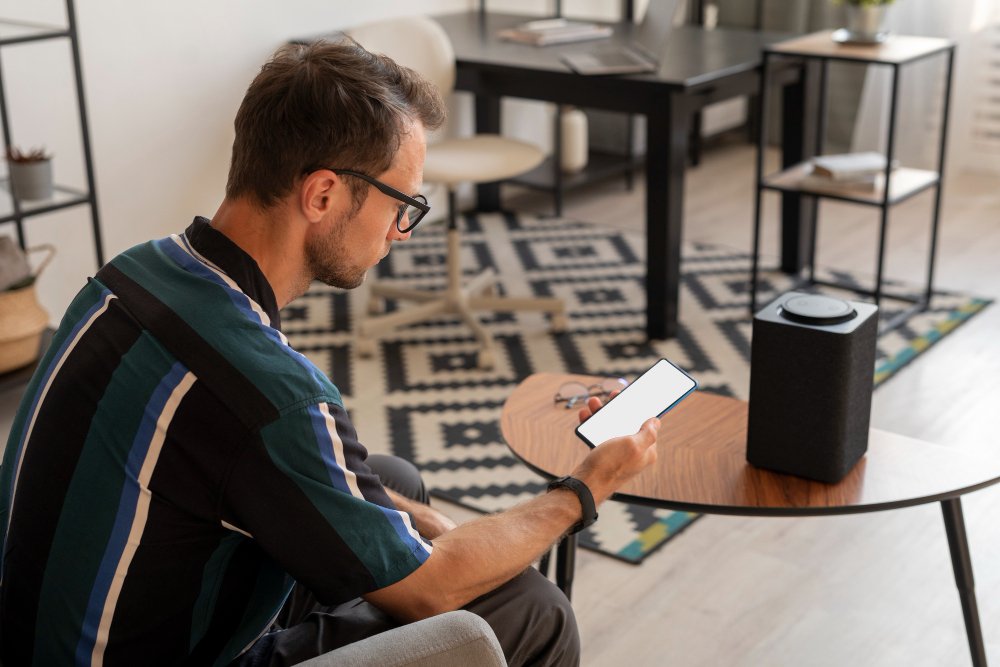
There is a hidden conversation happening in millions of living rooms every day, and it is completely entirely silent to the human ear. A television commercial plays, emitting a high-frequency acoustic signal. Seconds later, a smartphone or smart home speaker across the room registers that sound, silently logging the interaction and linking the user’s television viewing habits to their mobile search profile. This invisible bridge between disconnected devices is known as ultrasonic cross-device tracking, a sophisticated surveillance technique that leverages sound waves to monitor user behavior.
As smart home audio speakers become central hubs for daily life, their always-on microphones make them the perfect listeners for these silent acoustic beacons. While these devices offer unparalleled convenience, they also introduce unprecedented privacy vulnerabilities. Blocking this form of tracking requires a comprehensive understanding of how acoustic beacons function, where they hide, and the specific hardware and software configurations needed to disable them.
Understanding the Mechanics of Ultrasonic Cross-Device Tracking
To effectively neutralize a threat, one must first understand its architecture. Ultrasonic cross-device tracking (uXDT) relies on audio frequencies that operate just beyond the threshold of human hearing, typically between 18 kHz and 22 kHz. While adult human ears generally max out around 15 kHz to 17 kHz, the standard microelectromechanical systems (MEMS) microphones embedded in smart speakers, smartphones, and tablets can easily capture these high-frequency audio bands.
The tracking ecosystem involves two primary components: an emitter and a receiver.
The emitter is usually a media source. Advertisers and tracking networks embed highly specific, inaudible audio signatures—often called “audio beacons”—into television commercials, online video advertisements, or even the background music playing over a retail store’s public address system.
The receiver is a microphone-equipped device, such as a smart home speaker or a mobile phone, that has an application running in the background listening for these specific frequencies. When the receiver captures the beacon, it connects to an internet server and confirms that the device was within physical proximity of the audio source. By logging the IP address, device ID, and the specific audio beacon, data brokers can instantly link a supposedly anonymous television viewer to a highly specific mobile device profile.
This technology has alarmed privacy advocates worldwide. In fact, a foundational study published by academic researchers analyzing privacy threats through ultrasonic side channels discovered hundreds of applications actively listening for these beacons in the background without clear user consent.
Why Smart Home Speakers are Prime Targets
Smart home audio speakers sit at the intersection of convenience and surveillance. Unlike a laptop that might be closed or a phone that might be buried in a pocket, smart speakers are designed to remain stationary in central living spaces, perpetually powered, and continuously monitoring the ambient audio environment for their designated “wake words.”
This always-listening architecture makes them incredibly efficient receivers for ultrasonic data. When a smart speaker is placed in the same room as a television, a computer, and a family’s mobile devices, it becomes the acoustic anchor of the room. If tracking software is integrated into the speaker’s ecosystem, or if the speaker is paired with a television network utilizing uXDT, the speaker can help bridge the gap between all isolated devices in the household.
The privacy implications are vast. Beyond simply serving targeted advertisements, cross-device tracking can theoretically be weaponized to de-anonymize users. For instance, if an individual is utilizing a virtual private network (VPN) on their laptop but their smart speaker registers an ultrasonic beacon emitted from a website they are visiting, the tracking network can link the “anonymous” web traffic to the known identity associated with the smart home speaker’s registered account.
Step-by-Step Guide to Blocking Ultrasonic Cross-Device Tracking
Eradicating ultrasonic surveillance from a smart home environment requires a multi-layered approach. Because this tracking method exploits both physical sound waves and digital network connections, securing a smart speaker involves hardware adjustments, ecosystem management, and network-level filtering.
Phase 1: Hardware and Physical Interventions
The most foolproof method of preventing any microphone from capturing audio is physical limitation. While turning off a smart speaker defeats its primary purpose, there are strategic ways to limit its acoustic reach.
- Utilize Physical Mute Switches: The vast majority of modern smart speakers include a physical mute button that severs the electrical connection to the microphone array. When engaging in sensitive conversations or when not actively using the device, establishing a habit of muting the hardware provides an absolute guarantee against acoustic tracking.
- Strategic Spatial Placement: Because high-frequency sound waves are highly directional and easily absorbed by soft materials, physical placement matters. Placing a smart speaker behind a sound-dampening barrier, or ensuring it is not in the direct line-of-sight of television speakers or computer monitors, can degrade the reception of high-frequency beacons.
- Acoustic Jamming Devices: For high-security environments, engineering researchers have developed wearable jamming devices that emit localized, ultrasonic white noise. These devices broadcast a continuous signal in the 24 kHz to 26 kHz range, overloading the MEMS microphones in nearby smart speakers and rendering them incapable of registering covert tracking beacons.
Phase 2: Software and Ecosystem Configurations
Because smart speakers do not operate in a vacuum, blocking ultrasonic tracking requires securing the entire digital ecosystem connected to the device, including paired smartphones and the speaker’s native application settings.
- Audit Microphone Permissions Aggressively: The smart speaker itself is only half the equation; the mobile applications used to control the speaker often harbor the tracking software. Navigate to the privacy settings of any mobile device used in the home. Revoke microphone access for any application that does not strictly require it for core functionality. Shopping applications, games, and basic utility apps have historically been the worst offenders for harboring background ultrasonic listeners.
- Disable Voice Purchasing and Personalization: Dive into the native application of the smart speaker (such as the Google Home or Amazon Alexa app). Disable settings labeled “Personalized Advertising,” “Voice Purchasing,” or “Help Improve Our Services.” These settings often grant the manufacturer broader permissions to analyze background audio data and share acoustic telemetry with third-party tracking partners.
- Regularly Purge Audio Logs: Smart speaker manufacturers store voice queries in the cloud. By setting the companion application to automatically delete audio recordings daily or weekly, the data pool available for potential profiling is severely limited.
Phase 3: Network-Level Blocking
Even if an ultrasonic beacon successfully reaches a smart speaker or paired mobile device, the tracking is incomplete until the device “phones home” to the tracking server over the internet. Blocking these outbound requests at the router level effectively neutralizes the threat.
- Deploy a DNS Sinkhole: Network-wide ad blockers, such as a Raspberry Pi configured with Pi-hole software, analyze all outgoing internet traffic from the home network. By blacklisting the domain names associated with known ultrasonic tracking companies, the smart speaker is prevented from transmitting the acoustic payload back to the data broker.
- Isolate Smart Devices on a Guest Network: Smart speakers should never share the same Wi-Fi band as personal computers or mobile phones. Configure the home router to broadcast a separate “Guest Network” strictly for Internet of Things (IoT) devices. This network segmentation ensures that even if a smart speaker is compromised by an ultrasonic payload, it cannot easily scan the local network to link itself to other secure devices in the home, a tactic highly recommended by cybersecurity threat analysts.
The Regulatory Landscape and Industry Pushback
The deceptive nature of ultrasonic tracking has not gone unnoticed by regulatory bodies. Because the technology relies on audio signals that humans cannot detect, it inherently bypasses traditional mechanisms of user consent.
In 2016, the Federal Trade Commission (FTC) issued formal warning letters to developers who had integrated a prominent ultrasonic tracking framework into their mobile applications. The FTC argued that applications listening to television viewing habits without explicit, contextual disclosure could constitute a deceptive practice under the FTC Act.
Following this regulatory pressure, major mobile operating system developers began implementing stricter privacy controls. Modern iterations of Android and iOS now feature visual indicators—such as a persistent green or orange dot in the status bar—whenever an application accesses the microphone. Furthermore, operating systems now require explicit, runtime permission before an application can access audio hardware, severely hindering the ability of tracking software to operate silently in the background.
Despite these advancements, the threat remains viable. As noted by privacy researchers investigating zero-permission tracking, determined entities have theoretically demonstrated how smartphone gyroscopes can be manipulated to detect ultrasonic frequencies, entirely bypassing microphone permission requirements. While this zero-permission tracking remains largely academic, it highlights the relentless evolution of cross-device surveillance tactics.
Visualizing Defense Strategies: A Tactical Breakdown
To effectively combat these varying levels of tracking, it is helpful to categorize the defense mechanisms. The table below outlines the primary methods for disrupting the ultrasonic surveillance chain.
| Defense Vector | Implementation Method | Primary Advantage | Potential Drawback |
| Hardware Disconnect | Utilizing the physical mute switch on the smart speaker. | Absolute certainty; physically cuts the microphone circuit. | Renders voice commands inoperable until manually unmuted. |
| Permission Auditing | Revoking microphone access for non-essential apps on paired devices. | Stops tracking software from accessing the receiver. | Requires regular manual audits to ensure compliance after app updates. |
| Network Sinkholing | Installing Pi-hole or a router-level DNS ad-blocker. | Blocks the device from sending tracking data back to servers. | Requires technical knowledge to configure and maintain network hardware. |
| Acoustic Interference | Using an ultrasonic jammer to emit high-frequency white noise. | Blinds all nearby microphones to tracking beacons seamlessly. | Hardware is currently bulky and highly specialized for consumer use. |
| Audio Filtering | Installing browser extensions that strip ultrasonic frequencies from web media. | Cleans audio sources directly at the point of origin (the computer). | Only protects against web-based media, not television or retail audio. |
Defending the Digital Perimeter
The infiltration of high-frequency tracking into residential spaces represents a significant shift in the data brokerage industry. The assumption that an individual’s television viewing, web browsing, and smart speaker interactions are inherently separate domains is no longer valid. The “air gap” between devices has been bridged by sound.
Taking control of smart home privacy requires moving away from default settings. Manufacturers prioritize seamless integration and data collection, often burying privacy controls deep within sub-menus. By taking an active role in network management—segmenting Wi-Fi networks, strictly moderating application permissions, and utilizing physical hardware controls—the flow of ultrasonic data can be effectively severed.
Frequently Asked Questions
Can humans hear ultrasonic tracking signals?
No. The vast majority of tracking beacons operate between 18 kHz and 22 kHz. While young children and certain animals (like dogs and cats) can hear frequencies up to 25 kHz or higher, the average human adult loses the ability to hear anything above 15 kHz to 17 kHz due to natural age-related hearing degradation.
Does using a Virtual Private Network (VPN) block ultrasonic tracking?
A VPN alone does not block ultrasonic tracking. While a VPN encrypts web traffic and hides the user’s IP address, ultrasonic tracking works by bridging the physical gap between devices. If a smart speaker captures a beacon from a laptop using a VPN, the tracking software can link the anonymous VPN session to the known identity of the smart speaker, effectively neutralizing the VPN’s anonymity.
Is ultrasonic cross-device tracking legal?
The legality of the practice is heavily debated and varies by jurisdiction. In the United States, the Federal Trade Commission has warned that using such tracking without explicit consumer disclosure is deceptive. In the European Union, the General Data Protection Regulation (GDPR) mandates strict, opt-in consent for data collection, making covert audio tracking highly problematic from a legal standpoint.
Are all smart speakers actively listening for these beacons?
Not inherently. A smart speaker out of the box is primarily listening for its designated wake word. However, third-party “skills” or integrations added to the speaker, or native manufacturer settings that allow data sharing with advertising partners, can enable the processing of background audio for tracking purposes.
Can I look at my router to see if my smart speaker is sending tracking data?
Yes, but it requires network monitoring tools. By logging into a router interface or using a network analyzer like Wireshark, one can view the outgoing DNS requests from the smart speaker’s specific IP address. If the speaker is repeatedly pinging known advertising or analytics servers immediately following media playback in the home, it may be transmitting acoustic telemetry.
Final Reflections and Next Steps
The reality of modern consumer electronics is that convenience is frequently subsidized by data extraction. Ultrasonic cross-device tracking exemplifies the lengths to which advertising networks will go to map consumer behavior, turning the very air in a living room into a medium for surveillance.
Securing a smart home ecosystem is not a one-time event but an ongoing process of digital hygiene. For those looking to secure their environments immediately, the first and most crucial step is to audit the mobile device that controls the smart home ecosystem. Open the privacy settings, navigate to the microphone permissions, and aggressively revoke access for any application that does not require audio input to function. Following this, segmenting the home Wi-Fi to isolate Internet of Things devices will ensure that smart speakers remain cordoned off from sensitive personal computing networks. Through informed configuration and vigilance, the convenience of voice automation can be enjoyed without sacrificing the sanctity of acoustic privacy.