
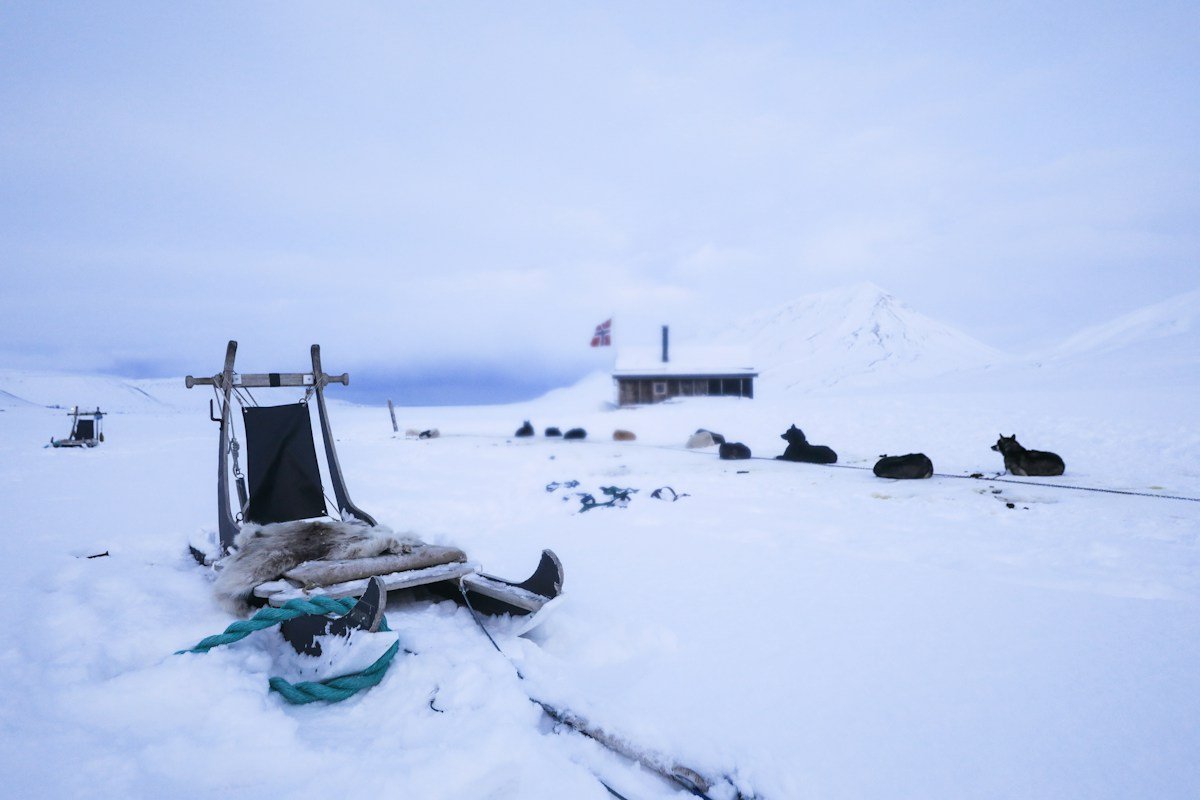

Arctic winter expeditions represent the pinnacle of terrestrial cold-weather exploration, immersing explorers in an environment defined by deep sub-zero temperatures, perpetual darkness, howling katabatic blizzards, and shifting sea ice. In polar regions such as the Arctic Ocean ice cap, northern Greenland, Svalbard, and the Canadian Arctic Archipelago, ambient winter temperatures routinely plunge below minus forty degrees Celsius, with wind chill values plummeting past minus sixty degrees Celsius. In this hyper-frigid cryospheric domain, atmospheric moisture freezes instantly, metals turn brittle, synthetic plastics shatter under moderate impact, and human tissue freezes solid in minutes if exposed to ambient air currents.
Surviving and traveling through polar winter is fundamentally an exercise in microclimatic biophysical thermodynamics. An explorer cannot fight the Arctic cold through physical strength alone; instead, survival requires establishing a continuous, multi-layered microclimate that insulates metabolic heat, controls internal moisture accumulation, and shields fragile human biology from convective wind stripping. The primary operational adversary on a polar expedition is not merely the external cold, but internal moisture. Sweat produced during strenuous sled hauling condenses and freezes within clothing layers and sleeping bags, destroying insulation and precipitating fatal hypothermia over multi-week traverses.
Executing successful polar journeys demands mastery across a specialized spectrum of cold-weather skills: the physics of vapor barrier systems, technical snow architecture for storm shelters, pulk sled rigging and hauling ergonomics, high-fat metabolic fueling, and reliable white-gas stove operation in frozen environments. Explorers must navigate dynamic sea ice fields, recognize the subtle structural changes in multi-year ice versus paper-thin nilas, establish redundant polar bear early warning perimeters, and maintain psychological resilience throughout months of polar night.
Furthermore, modern polar expedition preparation combines historical indigenous Inuit survival wisdom with cutting-edge materials science and wilderness medicine. Traditional fur ruff geometry, ice navigation tactics, and high-fat dietary frameworks are today integrated with hydrophobic down, aerogel insulation, titanium multi-fuel stoves, and satellite telemetry. This comprehensive technical guide provides an exhaustive, authoritative blueprint for planning, equipping, and executing unsupported Arctic winter expeditions across the world’s most unforgiving frozen wildernesses.
Environmental Thermodynamics of the Polar Cryosphere: Radiative Cooling and Windchill Physics
The physical environment of the Arctic winter is governed by extreme thermodynamic imbalances. During the polar night, which lasts up to six months at high latitudes, the cryosphere receives zero incoming solar shortwave radiation. However, the snowpack and sea ice continuously emit longwave infrared radiation into space in accordance with the Stefan-Boltzmann law. Under clear, cloudless skies with minimal atmospheric water vapor to trap outgoing infrared energy, this unchecked radiative cooling drives surface temperatures to astonishingly low minimums, often dropping surface snow temperatures ten to fifteen degrees colder than the overlying air column.
This radiative heat loss creates intense surface thermal inversions, where dense, ultra-cold air pools across ice plains and valley floors beneath a layer of slightly warmer air aloft. When regional pressure gradients or gravitational forces disturb these inverted air masses, katabatic winds result. Cold, high-density air cascades down glaciated ice caps and continental plateaus, accelerating through mountain fjords to hurricane-force velocities within minutes, transforming calm freezing conditions into blinding whiteout ground blizzards.
Convective heat loss driven by wind is quantified through the Wind Chill Index, a biophysical model that calculates the rate of heat loss from exposed human skin as a function of air temperature and wind speed. While wind cannot lower an object’s temperature below the ambient air temperature, it violently strips the microscopic boundary layer of warm, stagnant air that naturally clings to clothing and skin. At minus thirty degrees Celsius with a forty-kilometer-per-hour wind, the effective wind chill drops below minus forty-eight degrees Celsius, reducing the time required for exposed skin to freeze into third-degree frostbite to under five minutes.
Furthermore, extreme cold alters the material properties of expedition hardware. Rubber gaskets lose elasticity and crack; lubricants solidify into abrasive pastes; lithium-ion battery capacities contract by seventy to eighty percent due to sluggish chemical ion mobility; and carbon steel becomes notch-sensitive, shattering under shock loads that would produce benign deformation in temperate climates. Polar hardware must be winterized by degreasing all mechanical components, replacing petroleum lubricants with dry graphite or synthetic low-temp fluoropolymer fluids, and selecting specialized cold-tolerant alloys.
Biophysical Heat Loss Kinetics: Conduction, Convection, Evaporation, and Respiration
The human body operates as a thermodynamic heat engine, maintaining an internal core temperature of thirty-seven degrees Celsius through cellular metabolic combustion. At rest, an adult human generates approximately 80 to 100 watts of metabolic heat; during heavy pulk hauling across rough sea ice, metabolic heat production surges to 500 to 800 watts. Maintaining thermal equilibrium requires balancing this internal heat output against the four primary pathways of environmental heat loss: radiation, convection, conduction, and evaporation.
Conduction represents the direct transfer of kinetic energy between molecules in physical contact. In polar camping, conduction is most hazardous through direct contact with dense, cold surfaces such as snow, sea ice, or metal equipment. Snow has a thermal conductivity roughly five times higher than air, while metal conducts heat hundreds of times faster. Touching bare skin to a frozen metal ski binding or aluminum tent pole at minus forty degrees causes instantaneous conductive freezing, stripping epidermis and dermis upon removal. Explorers must isolate themselves from the ground using dual sleeping pads: a closed-cell cross-linked polyethylene foam pad beneath a high-R-value inflatable air mattress containing down or synthetic micro-chambers.
Convection strips heat as moving air currents pass over the body. It is mitigated through windproof outer shells and seamless mechanical seals at cuffs, collars, and hems. Evaporation occurs through insensible perspiration and active sweating. Every gram of water evaporated from the skin removes approximately 2.4 kilojoules of metabolic heat. If an explorer overheats during sled hauling and sweats heavily, that moisture begins a destructive chain reaction of conductive heat loss once physical activity halts.
Respiratory heat loss is uniquely massive in polar winter. Inhaling dry, sub-zero air requires the respiratory mucosa to warm the air to thirty-seven degrees Celsius and humidify it to one hundred percent relative humidity before it reaches the alveoli. Hyperventilating minus forty-degree air during heavy sled hauling accounts for up to twenty to twenty-five percent of total metabolic heat expenditure, while exhaling warm, humidified air expels over a liter of water vapor daily, exacerbating systemic dehydration.
The Vapor Barrier System (VBS): Preventing Insulation Degradation
The Vapor Barrier System is one of the most critical and misunderstood operational concepts in extreme cold-weather expeditioning. In temperate conditions, outdoor apparel emphasizes breathable waterproof membranes (such as Gore-Tex) designed to allow sweat vapor to escape into the atmosphere. In polar winter environments where temperatures remain continuously below minus twenty degrees Celsius, breathable systems fail catastrophically over multi-day journeys due to the physics of the dew point.
When warm, moist vapor generated by the body (insensible perspiration totaling roughly 500 to 1,000 milliliters per day) migrates outward through breathable insulation layers (such as fleece, wool, or down), it encounters an extreme temperature gradient. The temperature inside clothing next to the skin is thirty degrees Celsius, while the outer surface of the parka is minus thirty degrees Celsius. At some point within the thickness of the insulation, the temperature drops to the dew point, where air can no longer hold the moisture as vapor. The vapor condenses into liquid water and immediately freezes into solid ice crystals directly inside the fibers of the sleeping bag or parka.
Over a multi-week polar expedition, this trapped ice accumulates relentlessly. Down clusters collapse, losing their loft and trapped dead-air volume. Sleeping bags gain between 500 grams and two kilograms of solid ice per week, turning into stiff, frozen shells that offer zero thermal insulation. In an unsupported expedition where tents cannot be heated to drying temperatures, this progressive insulation collapse leads inexorably to hypothermia.
The Vapor Barrier System solves this problem by completely blocking moisture at the source. A non-breathable, vapor-impermeable layer (such as silnylon or polyurethane-coated ripstop) is worn directly against a thin base layer or bare skin. Because the humidity within the vapor barrier microclimate rapidly reaches one hundred percent, the body’s insensible perspiration mechanism halts via negative vapor pressure feedback. Crucially, zero moisture enters the outer insulation layers. Down sleeping bags and heavy parkas remain completely dry, maintaining their loft and insulation value indefinitely across months of sub-zero travel.
Advanced Polar Layering Architecture: Wicking, Loft, and Wind Shell Engineering
Constructing a functional polar layering system requires a modular, highly adjustable architecture that allows the explorer to regulate thermal resistance with surgical precision. The foundational rule of polar movement is simple and uncompromising: sweat and you die. Sled haulers must strip layers before they begin sweating and add layers immediately upon pausing, maintaining a cool, dry microclimate throughout the marching day.
The next-to-skin base layer consists of heavy-weight merino wool (250 to 300 grams per square meter) or hydrophobic polyester/polypropylene blends. Merino wool retains thermal insulation even if slightly damp, absorbs odor over multi-week wear, and possesses a natural fiber crimp that traps air. Synthetic base layers wick moisture faster and dry more rapidly, making them preferred by athletes maintaining high cadences. Zippers on high collars allow rapid venting of the carotid artery zones during exertion.
The mid-layer provides variable dead-air loft without restricting physical movement. High-loft fleece (such as Polartec Thermal Pro or Alpha) offers exceptional air permeability, allowing excess metabolic heat to vent freely when outer shells are unzipped. Over the mid-layer, an active synthetic insulated jacket (utilizing continuous-filament Primaloft Gold or Climashield) provides structural resilience and moisture tolerance during brief rest breaks.
The outer shell is the fortress against convective wind stripping. Unlike mountaineering shells, extreme cold shells should not utilize semi-permeable microporous membranes, which frost up on the interior and become rigid boards at minus forty degrees. Instead, polar explorers utilize tightly woven, non-membrane micro-polyester fabrics (such as Pertex or high-density cotton ventile). Ventile cotton swells when wet to block wind while remaining astonishingly breathable, allowing internal moisture vapor to pass freely without freezing inside the laminate.
Hood design is the centerpiece of facial survival. Polar parka hoods feature deep, moldable wire-rimmed tunnel snorkels that extend ten to fifteen centimeters forward from the face, creating a pocket of calm, turbulent-free air in front of the mouth and nose. The rim of the snorkel is trimmed with natural wolverine or coyote fur. Unlike synthetic faux fur, which collects frost and freezes into solid icicles, natural wolverine fur possesses unique microscopic hair structure and non-stick natural oils that allow frozen breath condensate to be brushed off effortlessly with a gloved hand.
Pulk Sled Rigging and Hauling Mechanics: Towing Physics and Friction Coefficients
Unsupported polar expeditions require hauling massive payloads ranging from 100 to 160 kilograms per person, encompassing all food, fuel, shelter, and equipment needed for sixty to eighty days of independent survival. Backpacking such loads across Arctic terrain is physically impossible; explorers rely on specialized low-profile expedition sleds, historically known as pulks (or toboggans).
Expedition pulks are engineered from compression-molded high-density polyethylene (HDPE), fiberglass, or carbon-Kevlar composites. Hull design must balance torsional flexibility with directional stability. Rounded, rockered hulls navigate chaotic sea ice pressure ridges and boulder fields without snagging, while longitudinal aluminum or high-molecular-weight polyethylene runners mounted along the bottom track in a straight line across wind-scoured ice plains, preventing the sled from sliding sideways into crevasses or sastrugi troughs.
Rigging geometry connects the pulk to the explorer’s hauling harness. Two distinct towing systems dominate polar travel: rigid shaft systems and dynamic rope traces. Rigid fiberglass or aluminum shafts provide precise control during descents, preventing the heavy sled from overtaking and crashing into the skier’s heels on downward slopes. However, in chaotic sea ice where the sled frequently rolls over 360 degrees across broken ice rubble, rigid shafts break under torsional stress. In rough terrain, explorers transition to rope traces consisting of ten-millimeter static climbing line fitted with heavy-duty rubber shock-absorbing bungees that absorb sudden kinetic jolts.
Snow friction mechanics in the Arctic diverge radically from temperate skiing. At sub-zero temperatures, snow does not melt under ski pressure to create a lubricating water film; instead, the dry, microscopic ice grains behave like sharp quartz sandpaper. The kinetic friction coefficient between plastic ski bases and minus forty-degree snow can exceed 0.15, tripling the physical effort required to drag the pulk. Explorers utilize ultra-high-molecular-weight polyethylene (UHMWPE) sled runners, applying specialized cold-temperature fluorocarbon waxes to minimize abrasive drag.
Packing weight distribution within the pulk is paramount. Heavy dense items (fuel cans, food rations, and spare batteries) are loaded in the bottom center of the sled, keeping the center of gravity as low as possible to prevent rolling. Fragile items (vacuum flasks, stoves, and emergency satellite communicators) are padded within sleeping gear near the top. Quick-access safety bags containing emergency bothy bags, down mitts, and first-aid kits are secured under top bungee nets for instantaneous deployment.
Polar Camp Craft: Snow Architecture, Deadman Anchoring, and Storm Fortification
Establishing camp in an Arctic blizzard requires rigorous discipline, automated teamwork, and robust snow engineering. In hurricane-force winds and minus forty-degree temperatures, an expedition team must transform barren snowfields into a stormproof, fortified shelter within thirty to forty-five minutes of halting physical travel.
Expedition shelters are dominated by heavy four-season polar tunnel tents (such as Hilleberg Keron or Nammatj models) equipped with interconnected inner and outer canopies, reinforced double poles, and full-length perimeter snow flaps. Tunnel tents present an exceptionally low aerodynamic profile to prevailing winds while providing massive vestibule space for cooking and gear management. The tent is pitched with its narrow foot end aligned directly parallel to the wind direction to minimize drag and prevent broadside pole collapse.
Anchoring a tent in soft snow or hard wind-packed firn cannot be accomplished with standard metal stakes. Explorers employ deadman anchors: heavy aluminum snow flukes, wide snow stakes, skis, or ski poles buried horizontally thirty to fifty centimeters deep in compacted snow. Snow is packed firmly over the buried anchor and allowed to sinter (recrystallize and bond), creating an immovable anchor point capable of withstanding hurricane-force wind loads. Extra-long guy lines constructed from low-stretch Dyneema cord distribute loads across multiple anchor points.
Before pitching the tent, the team constructs an upwind snow wall using specialized aluminum snow saws. Slicing dense, wind-packed firn yields structural snow blocks measuring forty by thirty by twenty centimeters. The team stacks these blocks into a semi-circular wall two meters tall, positioned three to four meters upwind of the tent. The snow wall deflects the main force of incoming winds, creating a calm eddy zone over the tent while preventing drifting snow from burying the vestibule.
Inside the vestibule, explorers excavate a deep foot-well trench through the snow down to chest level. This architectural trench allows team members to sit comfortably on the edge of the tent floor with their legs hanging naturally, while colder, dense air naturally drains down into the trench away from sleeping bodies. Snow brushed off clothing falls directly into the trench, keeping the sleeping quarters completely dry.
Sub-Zero Nutrition, Caloric Budgets, and High-Fat Metabolic Adaptation
The metabolic demands of an unsupported Arctic winter expedition are among the highest documented in human exercise physiology. Hauling a 120-kilogram pulk for eight to ten hours daily across rugged sea ice while simultaneously shivering to maintain core temperature expends between 6,000 and 8,000 kilocalories per person per day. Attempting to meet this massive energy requirement through standard carbohydrate-based diets results in rapid physiological failure due to weight constraints.
Fat is the ultimate fuel for polar exploration. While carbohydrates and proteins yield approximately 4.1 kilocalories per gram, dietary fat provides 9.0 kilocalories per gram, more than doubling the energy density per kilogram of sled payload. Polar expedition rations are engineered to derive fifty-five to sixty-five percent of total daily calories from fat, utilizing pure butter, clarified ghee, macadamia nuts, olive oil, and traditional pemmican (a nutrient-dense mixture of dried pulverized meat and rendered tallow).
Over the initial ten to fourteen days of an expedition, explorers undergo a profound physiological metabolic transition, shifting into nutritional ketosis. Hepatic mitochondria upregulate beta-oxidation pathways, converting fatty acids into acetoacetate and beta-hydroxybutyrate ketone bodies. These circulating ketones cross the blood-brain barrier to fuel cognitive functions while muscle tissues switch almost entirely to fat oxidation. This ketogenic adaptation provides steady, non-fluctuating energy, eliminating the rapid blood glucose crashes and intense hunger spikes associated with high-carbohydrate diets.
Feeding mechanics must account for physical freezing. Standard energy bars and chocolate turn rock-hard at minus forty degrees, shattering teeth if bitten directly. Polar explorers formulate bite-sized, high-fat energy clusters that remain chewable in sub-zero cold, carrying them in insulated pockets close to the body where metabolic warmth prevents freezing.
Hydration Kinetics and Stoving Engineering in Sub-Zero Regimes
Dehydration is a chronic, insidious danger on polar expeditions. In the hyper-arid Arctic air, explorers lose massive volumes of water through heavy respiratory ventilation and cold-induced diuresis. Maintaining blood plasma volume, microvascular peripheral perfusion, and metabolic efficiency requires consuming four to five liters of water per day. However, in the frozen cryosphere, every single milliliter of water must be produced by melting snow and ice over liquid-fuel stoves.
Expedition stove setups utilize heavy-duty, field-maintainable white-gas liquid fuel stoves (such as the MSR XGK EX). Standard canister stoves utilizing propane-butane mixes fail completely in polar cold, as fuel vapor pressure collapses below minus ten degrees Celsius, leaving liquid fuel trapped in the canister. White gas (pure petroleum naphtha) maintains volatility at extreme sub-zero temperatures, providing high thermal output when pumped under mechanical pressure through preheating coils.
The melting process consumes immense fuel: approximately one liter of white gas per person every four days solely for melting snow and cooking. Explorers harvest clean, dense firn or multi-year freshwater ice (which requires thirty percent less thermal energy to melt than loose, low-density powder snow). Sourcing ice on the Arctic Ocean requires meticulous identification of multi-year sea ice: old ice that has survived multiple summer thaws leaches out all salt brine, leaving pure, glass-clear freshwater ice that is safe for human consumption.
Operating stoves inside a sealed polar tent presents acute risks of carbon monoxide (CO) poisoning and catastrophic tent fire. Carbon monoxide is an odorless, colorless gas produced during incomplete combustion, particularly when cold metal cookpots with large heat-sink fins quench the stove flame. Expedition protocols mandate generous tent ventilation: keeping intake and exhaust vents propped open with stiff wire stays and operating stoves atop a broad wooden or fiberglass stove board to prevent melting down into the snowpack.
Frostbite and Non-Freezing Cold Injury (NFCI) Pathology and Management
Cold injuries are divided into freezing injuries (frostbite) and non-freezing cold injuries (such as trench foot). Understanding the distinct pathophysiological mechanisms of these conditions is vital for prevention and immediate clinical management in remote polar environments.
Frostbite involves the actual physical freezing of extracellular water within tissues, typically striking digits, ears, cheeks, and the nose. In superficial frostbite (frostnip), only the epidermis and superficial dermis freeze, manifesting as pale, waxy, numb skin that softens upon gentle warming without tissue necrosis. In deep, third-degree frostbite, freezing extends into deep subcutaneous fat, muscle, and bone. Ice crystals shear cell membranes, and subsequent vascular microthrombosis causes complete ischemic gangrene.
Field rewarming protocols dictate that deep frostbite must NEVER be thawed if there is any risk of refreezing during subsequent travel. A frozen extremity functions as a rigid peg that an explorer can still walk upon during an emergency escape; once thawed, the limb becomes intensely painful, heavily blistered, and completely non-functional. Furthermore, refreezing thawed tissue produces catastrophic, irreversible total necrosis. Once at a secure base, rewarming is executed by immersion in circulating warm water maintained precisely between thirty-seven and thirty-nine degrees Celsius, accompanied by high-dose ibuprofen to inhibit destructive thromboxane and prostaglandin cascades.
Non-Freezing Cold Injury develops from prolonged exposure to cold, wet conditions above freezing temperatures (zero to ten degrees Celsius), typically resulting from moisture accumulation inside boots. Chronic vasospasm and endothelial damage cause long-term neurovascular dysfunction, manifesting as persistent sensory paresthesia, intense hyperhidrosis, and chronic cold hypersensitivity that can persist for years. Daily foot drying, changing into dry wool sleeping socks, and the strict use of vapor barrier sock liners are non-negotiable preventative measures.
Sea Ice Dynamics, Leads, Polynyas, and Pressure Ridge Traverses
Navigating across the Arctic Ocean requires an intimate scientific understanding of sea ice geophysics. Unlike continental ice sheets that rest on solid bedrock, sea ice is a dynamic, fractured crust of frozen ocean water floating upon a deep marine basin. Propelled by ocean currents and planetary winds, the ice pack is in continuous motion, drifting anywhere from five to twenty-five kilometers per day, creating a moving conveyor belt that can either advance or reverse an expedition’s hard-won geographical progress.
As opposing ice floes grind together under compression, massive pressure ridges form. These chaotic rubble zones feature jagged blocks of blue ice piled three to eight meters high, creating formidable physical barricades. Explorers must navigate through pressure ridges by unhitching pulks, scouting passable fractures, and hauling sleds over near-vertical ice blocks by hand. Conversely, divergent wind stress pulls floes apart, opening active leads: fractures of dark open ocean water ranging from several meters to kilometers wide.
Negotiating open leads presents acute logistical hazards. Explorers evaluate new ice formation, known as frazil and grease ice transitioning into flexible elastic sheets called nilas. Dark nilas (under five centimeters thick) is incapable of supporting human weight; light nilas (ten centimeters thick) can support a skier moving with rapid, gliding strides, provided the pulk’s weight is distributed across its entire hull. For wide, open leads with zero ice bridging, modern expeditions utilize drysuit swimming techniques or convert floating Kevlar pulks into amphibious paddle rafts, paddling across dark polar waters while monitoring for surfacing seals and predatory polar bears.
Polar Navigation, Magnetic North Declination, and Grid Navigation
Navigating at high polar latitudes presents extraordinary technical obstacles for traditional terrestrial cartography. In the Arctic, magnetic compasses become erratic and unreliable as the horizontal component of Earth’s magnetic field weakens. Close to the geomagnetic pole, compass needles dip vertically toward the ice, sticking against casing housings and introducing magnetic declination variations exceeding forty to sixty degrees over short geographic distances.
To maintain accurate headings, polar navigators employ polar grid navigation systems. By overlaying a standardized rectangular Cartesian grid over polar projection charts, the navigator eliminates the convergence of meridians toward true north, maintaining consistent directional bearings regardless of latitude. When navigating during the rare periods of clear polar skies, explorers utilize solar compasses and shadow-stick tracking, observing the sun’s azimuth and calculated hourly arc across the 360-degree horizon to verify true direction.
Electronic GPS units provide crucial satellite positioning, but extreme sub-zero cold severely compromises lithium battery voltage and liquid crystal displays. Explorers carry GPS units inside internal chest pockets against bare skin, deploying them only for brief two-minute satellite fixes before returning them to body warmth. Waypoints, daily magnetic bearings, and sastrugi wind drift angles are cross-referenced continuously: because prevailing blizzard winds carve sastrugi snow ridges in fixed alignments across the ice, a navigator can maintain a straight bearing for hours in whiteout conditions simply by holding a constant angle relative to the physical snow ripples beneath their ski tips.
Polar Bear Defense Protocols and Camp Perimeter Architecture
In the Arctic basin and surrounding archipelagos, polar bears (Ursus maritimus) represent the apex predator. Unlike sub-arctic brown bears, which frequently bluff-charge or defend territory, polar bears view humans purely as potential food resources. Stealthy, highly curious, and capable of smelling prey from kilometers away, polar bears demand continuous defensive readiness across all expedition phases.
Expedition camp defense incorporates a multi-tiered security array. When pitching camp, explorers install an automated perimeter tripwire fence around the entire campsite at a standoff distance of fifteen meters. The tripwire connects to spring-loaded mechanical firing pins that ignite loud 12-gauge acoustic blanks or flash-bang cartridges if a bear contacts the monofilament line, alerting sleeping explorers while deterring the animal.
Lethal and non-lethal deterrent tools are kept within arm’s reach at all times. Standard aerosol bear spray is carried in chest harnesses close to body warmth, as aerosol propellant pressure collapses completely at minus twenty degrees Celsius if left exposed. For lethal defense, expedition guides carry 12-gauge pump-action shotguns loaded with heavy magnum Brenneke hardened lead slugs or high-caliber bolt-action rifles (minimum .30-06 or .375 H&H Magnum). Firearms must be stripped of all oils and greases to prevent bolt actions from freezing solid in polar blizzards.
To establish rigorous institutional standards for polar expedition safety across varying cryospheric zones, expedition leaders and polar rescue organizations rely on comprehensive diagnostic matrices. These environmental frameworks evaluate operational parameters, temperature regimes, hauling logistics, and rescue horizons across continental ice sheets, coastal fjords, dynamic sea ice, and glaciated plateaus.
The following diagnostic matrix provides a comparative operational reference evaluating primary polar expedition terrains, environmental temperature thresholds, critical sled and shelter equipment, metabolic demands, and search-and-rescue timelines.
Comparative Diagnostic Matrix of Polar Expedition Operational Zones
| Cryospheric Zone | Thermal & Wind Profile | Critical Sled & Shelter Gear | Metabolic & Hydration Needs | Emergency Extraction Complexity |
|---|---|---|---|---|
| Arctic Ocean Sea Ice | -30 to -45°C, high humidity, leads opening, pressure ridges, drifting ice pack | Floating Kevlar pulk, immersion drysuit, ice saw, polar bear perimeter, 12-gauge shotgun | 7,000-8,000 kcal/day, 4.5L fluid, melting multi-year ice, 65% fat diet | Extreme; ski-plane Twin Otter landing requires flat, thick ice strip; multi-day delay |
| Greenland Ice Sheet | -20 to -50°C, 3,000m altitude hypoxia, violent piteraq katabatic winds (>150 km/h) | Double-poled tunnel tent, 2m snow block wall, HDPE pulk runners, ski kites | 6,500 kcal/day, hypobaric dehydration, melting firn, high carbohydrate supplementation | High; helicopter extraction limited by elevation and katabatic storms; ski-plane standby |
| Svalbard Glacial Fjords | -15 to -35°C, sudden maritime thaws, gale-force gap winds, extensive sea ice | Rigid shaft pulk, crampons, ice screws, flare tripwire, vapor barrier boots | 5,500 kcal/day, 4L fluid, river ice sourcing, high-protein recovery | Moderate; Governor of Svalbard Super Puma rescue helicopters within 2 to 4 hours |
| Barren Lands Tundra | -35 to -55°C, razor-sharp sastrugi snow drifts, total lack of natural timber sheltering | Traditional wood/canvas toboggan, snowshoes, canvas pyramid tent, collapsible woodstove | 6,000 kcal/day, pemmican rations, lake ice chopping, electrolyte balance | High; snowmobile rescue or bush plane on tundra skis; extreme distance from hubs |
| Sub-Polar Glaciated Passes | -10 to -25°C, extreme snowfall, high avalanche hazards, hidden crevasse bridges | Crevasse rescue kit, roped hauling traces, avalanche beacons, snow probes, shovels | 5,000-6,000 kcal/day, rapid hydration, melting fresh powder snow | Moderate to high; technical mountain rescue required if crevassed; weather dependent |
Rigorous adherence to these scientific cryospheric protocols ensures that polar expeditions maintain operational integrity and safety across the most hostile frozen expanses on Earth. For authoritative research on polar environmental science, cryospheric logistics, and cold-weather wilderness medicine, explorers consult established global institutions including the Scott Polar Research Institute and the British Antarctic Survey. Detailed glaciological and sea ice telemetry can be accessed via the National Snow and Ice Data Center, alongside professional guiding standards established by the International Polar Guides Association and scientific logistics documented by the National Science Foundation Office of Polar Programs.
Frequently Asked Questions About Arctic Winter Expeditions
What is the primary function of a vapor barrier liner in sub-zero sleeping systems?
A vapor barrier liner is a non-breathable, moisture-impermeable layer used inside a sleeping bag. It prevents perspiration from migrating into down insulation where cold temperatures would cause it to condense and freeze into solid ice, permanently destroying the bag’s loft and insulating value across multi-week expeditions.
How does natural wolverine fur prevent facial frostbite compared to synthetic fur?
Natural wolverine fur possesses unique microscopic hair surface textures and hydrophobic natural oils that prevent frozen breath moisture from adhering. Frost that forms on wolverine fur can be brushed off easily with a gloved hand, whereas synthetic fibers hold moisture and freeze into solid, skin-abrasive ice blocks.
What makes liquid white gas superior to canister fuels in polar environments?
Compressed canister gases (propane-butane blends) experience a collapse in vapor pressure below minus ten degrees Celsius, leaving liquid fuel trapped inside the canister. Liquid white gas (naphtha) maintains volatility at extreme sub-zero temperatures and is pressurized manually with a pump, providing dependable thermal output down to minus fifty degrees.
What is the physiological benefit of a high-fat diet during Arctic sled hauling?
Dietary fat yields nine kilocalories per gram compared to four kilocalories per gram for carbohydrates, providing maximum energetic density per kilogram of sled payload. Adapting to nutritional ketosis allows the body to steadily burn fat reserves without experiencing blood glucose drops, supporting sustained metabolic heat production.
What is the rule regarding field rewarming of deep frostbite?
Deep frostbite must never be thawed in the field if there is any danger of refreezing before reaching definitive medical care. Refreezing thawed tissue produces catastrophic, irreversible total cellular destruction, whereas walking on a frozen foot to reach an extraction point preserves overall survival.
How do deadman snow anchors function in hurricane-force blizzard conditions?
Deadman anchors are wide objects (such as skis, snow stakes, or snow flukes) buried horizontally deep within compacted snow. As the snow recrystalizes (sinters) over the buried object, it forms an immovable consolidated anchor capable of resisting extreme wind uplift forces that would pull out vertical stakes.
What causes carbon monoxide accumulation inside polar winter tents?
Carbon monoxide is produced by incomplete fuel combustion when operating stoves inside poorly ventilated tents, especially when large cold metal pots quench the burner flame. Cold air reduces natural ventilation, allowing the toxic gas to accumulate rapidly unless roof and floor vents are actively propped open.
How do polar explorers harvest drinking water on the Arctic Ocean ice cap?
Explorers locate multi-year sea ice, which has survived multiple summer melting cycles. Over time, gravitational drainage leaches all salty brine from the ice structure, leaving pure, glass-clear freshwater ice that requires thirty percent less stove fuel to melt than low-density windpack snow.
What makes tunnel tents ideal for polar winter storm conditions?
Tunnel tents offer an aerodynamic profile that sheds high-velocity winds efficiently when pitched parallel to the storm direction. Their parallel hoop poles provide vast internal vestibule volume for cooking and gear management while perimeter snow flaps allow explorers to weigh down edges with heavy snow blocks.
Polar Expedition Synthesis and Cryospheric Wilderness Legacy
Arctic winter exploration represents a profound confrontation with the rawest physical forces on planet Earth. By journeying through the frozen cryosphere with disciplined thermodynamic planning, rigorous camp craft, and profound physiological respect, explorers push back the frontiers of human endurance and geographical knowledge. In the silent majesty of the polar night, the mastery of cold-weather science transforms a lethal frozen desert into an awe-inspiring theater of human resilience, scientific discovery, and enduring wilderness adventure.