

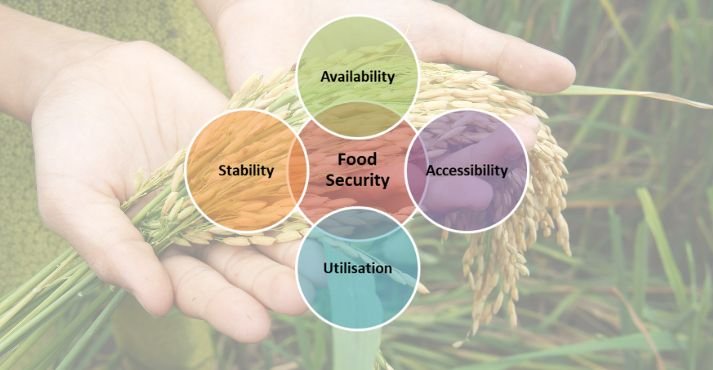
The relationship between the climate and the food on our plates is as old as agriculture itself. For millennia, farmers have relied on predictable seasonal patterns to sow, tend, and harvest crops. However, the stability that underpinned human civilization for ten thousand years is now fracturing. Climate change is no longer a distant theoretical threat; it is an active disruptor of global food systems, altering yields, nutritional quality, and the very geography of where food can be grown. Understanding this impact requires looking beyond simple temperature rises to examine the complex web of interactions between atmospheric changes, soil health, water availability, and economic stability.
The Shifting Baseline of Agricultural Productivity
At its core, agriculture is a biological process dependent on specific environmental conditions. Crops have evolved or been bred to thrive within narrow ranges of temperature, rainfall, and sunlight. When these baselines shift, the physiological processes of plants are disrupted. Rising global temperatures accelerate the life cycle of many crops, causing them to mature too quickly. This rapid maturation often results in smaller grains and reduced biomass, directly lowering the total yield per hectare. Research from the Intergovernmental Panel on Climate Change (IPCC) indicates that for every degree Celsius increase in global mean temperature, major crop yields such as wheat, rice, and maize are projected to decline significantly, particularly in tropical and temperate regions.
The impact is not uniform across the globe. While some high-latitude regions may experience temporary yield boosts due to longer growing seasons and warmer temperatures, these gains are often offset by poor soil quality and lack of infrastructure. Conversely, regions that are already food-insecure, particularly in sub-Saharan Africa and South Asia, face the steepest declines. The Food and Agriculture Organization (FAO) highlights that these areas rely heavily on rain-fed agriculture, making them exceptionally vulnerable to shifts in precipitation patterns. When the historical reliability of the monsoon or the rainy season evaporates, entire harvests can fail, leading to immediate shortages and price spikes that ripple through local economies.
Water stress acts as a critical multiplier in this equation. Agriculture consumes approximately 70% of the world’s freshwater withdrawals. As climate change alters the hydrological cycle, causing more intense droughts in some areas and catastrophic flooding in others, the reliability of irrigation sources diminishes. Groundwater aquifers, which many farmers turn to when surface water fails, are being depleted faster than they can recharge. The World Resources Institute notes that water scarcity is becoming a primary constraint on food production, forcing difficult choices between agricultural use, industrial needs, and human consumption. In regions like the Middle East and North Africa, the competition for water is already driving up food costs and threatening the viability of farming communities.
Extreme Weather Events and Supply Chain Fragility
While gradual temperature increases erode yields over time, extreme weather events deliver sudden, catastrophic blows to food security. The frequency and intensity of hurricanes, heatwaves, floods, and wildfires have increased markedly in recent decades. These events do not just destroy standing crops; they dismantle the infrastructure required to get food from the farm to the market. A single flood can wash away topsoil, destroying the land’s fertility for years, while a heatwave can sterilize pollen, preventing fruit set in essential crops like corn and tomatoes.
The vulnerability of the global supply chain amplifies the impact of these localized disasters. Modern food systems are highly interconnected; a disruption in one major exporting region can cause shortages thousands of miles away. For instance, when severe droughts hit major grain baskets like the American Midwest or the Black Sea region, global commodity prices surge. The World Bank has documented how such price volatility disproportionately affects low-income households, which spend a larger percentage of their income on food. When prices spike, families are forced to reduce the quantity and quality of their meals, leading to immediate increases in malnutrition rates.
Flooding presents a unique set of challenges beyond crop destruction. Excess water can lead to the proliferation of fungal diseases and pests that thrive in humid conditions. Post-harvest losses also increase when storage facilities are compromised by moisture or when transport routes are severed. In Southeast Asia, where rice is a staple, typhoons frequently devastate paddies just before harvest, wiping out months of labor and investment. The Asian Development Bank emphasizes that without resilient infrastructure and diversified supply chains, these climate shocks will continue to undermine regional food stability, trapping vulnerable populations in cycles of poverty and hunger.
Furthermore, the unpredictability of these events makes planning nearly impossible for farmers. Traditional agricultural calendars, based on centuries of observation, are becoming obsolete. Planting too early risks frost damage or seed rot from unseasonal rains; planting too late exposes crops to end-of-season heat stress or storms. This uncertainty discourages investment in better seeds or technologies, as the risk of total loss becomes too high. The psychological and economic toll on farming communities contributes to rural-to-urban migration, further straining food systems by reducing the labor force available for production.
Nutritional Quality and the Hidden Hunger Crisis
A less visible but equally dangerous consequence of climate change is the degradation of nutritional quality in crops. Elevated levels of carbon dioxide (CO2) in the atmosphere, while acting as a fertilizer to boost plant growth, simultaneously alter the chemical composition of many staple crops. Studies have shown that higher CO2 concentrations can reduce the concentration of essential nutrients such as protein, zinc, and iron in wheat, rice, and legumes. This phenomenon creates a “hidden hunger” where people may consume enough calories to survive but lack the micronutrients necessary for healthy development and immune function.
The implications for public health are profound. Iron deficiency is already a leading cause of anemia worldwide, particularly affecting women and children. Zinc deficiency compromises immune systems, making populations more susceptible to infectious diseases. As the nutrient density of staple foods declines, the burden of malnutrition is expected to rise, even if caloric availability remains stable. Research published by Harvard T.H. Chan School of Public Health suggests that by mid-century, hundreds of millions of people could be at risk of new nutrient deficiencies solely due to CO2-driven changes in crop composition.
This nutritional erosion complicates efforts to combat malnutrition. Supplementing diets with vitamins and minerals is costly and logistically challenging, especially in remote or conflict-affected areas. Breeding crops for higher nutrient content is a potential solution, but it takes time and resources that are often in short supply. Moreover, the shift in crop types driven by climate adaptation—such as moving from nutrient-dense traditional varieties to more heat-tolerant but less nutritious alternatives—can exacerbate the problem. Ensuring food security in a warming world therefore requires a dual focus: maintaining yield volumes while safeguarding the nutritional integrity of the food supply.
The impact extends beyond staples to livestock and fisheries. Changes in ocean temperature and acidity affect the growth and distribution of fish stocks, which are a primary protein source for billions of people. Warmer waters can lead to smaller fish sizes and lower reproductive rates, while acidification harms shellfish and coral reefs that support marine ecosystems. On land, heat stress reduces the productivity of livestock, lowering milk yields and meat production while increasing susceptibility to disease. The Consultative Group on International Agricultural Research (CGIAR) warns that these combined effects threaten to undo decades of progress in improving global nutrition standards.
Pests, Diseases, and the Biological Arms Race
A warming climate is reshaping the biological landscape, favoring the expansion of pests and pathogens that threaten food production. Insects, which are cold-blooded, metabolize faster in warmer temperatures, leading to increased feeding rates and faster reproduction cycles. Many pest species are also expanding their geographic range, moving toward the poles and into higher altitudes where they previously could not survive. This exposes new crops and regions to threats they have never encountered, leaving farmers without the knowledge or tools to manage them effectively.
Locust swarms, for example, have become more frequent and destructive in East Africa and the Middle East due to changing rainfall patterns that create ideal breeding conditions. These swarms can consume entire fields in a matter of hours, devastating livelihoods and regional food supplies. Similarly, fungal diseases like wheat rust and coffee leaf rust are spreading to new areas, fueled by warmer and more humid conditions. The International Maize and Wheat Improvement Center (CIMMYT) reports that stem rust, a devastating fungal disease, has evolved into new strains capable of overcoming traditional resistance genes, posing a severe threat to global wheat production.
The increased reliance on pesticides to combat these surging pest populations introduces additional risks. Overuse of chemicals can lead to resistance, rendering treatments ineffective and creating a cycle of escalating chemical application. This not only increases production costs for farmers but also poses environmental and health hazards. Furthermore, climate change can disrupt the natural predators and pollinators that help keep pest populations in check. Bees and other pollinators are sensitive to temperature extremes and habitat changes; their decline threatens the production of fruits, vegetables, and nuts that depend on pollination.
Adapting to this biological arms race requires sophisticated monitoring systems and rapid response mechanisms. Early warning systems that utilize satellite data and weather modeling can help predict pest outbreaks, allowing for targeted interventions. However, smallholder farmers in developing nations often lack access to these technologies and the resources to implement them. Building resilience against pests and diseases involves diversifying crop varieties, adopting integrated pest management practices, and investing in research to develop resistant crop strains. The speed of climate change, however, often outpaces the speed of biological adaptation, creating a persistent gap in defense.
Socio-Economic Ripples and Global Stability
The impacts of climate change on food security extend far beyond the farm gate, triggering profound socio-economic consequences. Food price volatility is a potent driver of social unrest and political instability. History has shown that sharp increases in food prices can spark riots and topple governments, as seen during the Arab Spring and various protests across the Global South. When families cannot afford to feed themselves, the social contract fringes, leading to conflict and displacement. The International Food Policy Research Institute (IFPRI) analyzes how climate-induced food shocks can exacerbate existing inequalities and fuel migration flows, as people move in search of sustenance and economic opportunity.
Gender disparities are also widened by climate-related food insecurity. In many cultures, women are responsible for food preparation and family nutrition but often have less access to land, credit, and agricultural inputs. When resources become scarce, women and girls are frequently the first to suffer, eating last and least. Additionally, as men migrate to urban areas in search of work due to failing farms, women are left behind to manage increasingly difficult agricultural conditions with fewer resources. Addressing food security in a changing climate therefore requires a gender-sensitive approach that empowers women with the tools and rights needed to adapt.
The economic cost of inaction is staggering. Lost productivity, increased healthcare costs due to malnutrition, and the expenses associated with disaster relief place a heavy burden on national economies. Developing countries, which contribute the least to global greenhouse gas emissions, often bear the brunt of these costs despite having the fewest resources to cope. International cooperation and financial support are essential to help these nations build resilient food systems. Mechanisms such as climate finance and insurance schemes can provide a safety net for farmers, allowing them to recover from shocks and invest in adaptation measures.
Ultimately, food security is a cornerstone of global stability. A world where large populations are hungry and desperate is a world prone to conflict and instability. Ensuring that everyone has access to sufficient, safe, and nutritious food is not just a moral imperative but a strategic necessity. The interconnection between climate action and food security means that efforts to mitigate climate change must go hand in hand with strategies to adapt agricultural systems. Ignoring this link risks unraveling the progress made in poverty reduction and human development over the past century.
Comparative Analysis: Traditional vs. Climate-Resilient Agriculture
To understand the magnitude of the shift required in global agriculture, it is helpful to compare traditional farming practices with emerging climate-resilient approaches. The following table illustrates key differences in methodology, risk profile, and outcomes under changing climate conditions.
| Feature | Traditional Agriculture | Climate-Resilient Agriculture |
|---|---|---|
| Crop Variety | Reliance on monocultures and high-yield varieties optimized for historical climates. | Diversification with drought-tolerant, heat-resistant, and flood-tolerant varieties. |
| Water Management | Dependence on predictable rainfall or standard flood irrigation; high water waste. | Precision irrigation, rainwater harvesting, and soil moisture conservation techniques. |
| Soil Health | Frequent tillage and heavy synthetic fertilizer use; risk of erosion and degradation. | No-till farming, cover cropping, and organic amendments to enhance soil carbon and structure. |
| Pest Control | Reactive application of broad-spectrum pesticides upon infestation. | Integrated Pest Management (IPM), biological controls, and predictive monitoring. |
| Risk Profile | High vulnerability to extreme weather events and market volatility. | Buffered against shocks through diversity and adaptive management practices. |
| Yield Stability | High yields in optimal years; catastrophic failure in extreme years. | Moderate but consistent yields across variable climate conditions. |
| Input Dependency | High dependency on external inputs (fuel, fertilizer, chemicals). | Reduced external inputs; reliance on ecological processes and local resources. |
| Knowledge Base | Static knowledge based on historical seasonal patterns. | Dynamic knowledge integrating real-time data and climate forecasting. |
This comparison underscores that resilience is not merely about surviving a bad season but about fundamentally restructuring agricultural systems to thrive in uncertainty. The transition requires investment, education, and policy support, but the cost of maintaining the status quo is far higher.
Pathways to Adaptation and Mitigation
Addressing the challenge of climate change and food security requires a multi-faceted approach that combines mitigation efforts to slow warming with adaptation strategies to cope with inevitable changes. Mitigation in the agricultural sector involves reducing greenhouse gas emissions from farming practices. This includes improving manure management, optimizing fertilizer use to reduce nitrous oxide emissions, and restoring degraded lands to sequester carbon. Agroforestry, which integrates trees into farming systems, offers a dual benefit of carbon storage and enhanced microclimates for crops.
Adaptation strategies are equally critical and must be tailored to local contexts. Developing and deploying climate-smart crop varieties through advanced breeding techniques, including genomic selection and gene editing, can provide farmers with tools to withstand heat and drought. Improving water infrastructure, such as building small-scale reservoirs and upgrading irrigation efficiency, helps buffer against rainfall variability. Additionally, strengthening extension services to disseminate climate information and best practices to farmers is essential for effective adoption of new technologies.
Policy frameworks play a pivotal role in enabling these transitions. Governments must create incentives for sustainable practices, support research and development, and ensure that social safety nets are in place to protect the most vulnerable. International trade policies should facilitate the flow of food from surplus to deficit regions without distorting markets or harming local producers. Collaboration between the public and private sectors can drive innovation and scale up solutions, from digital agriculture platforms to sustainable supply chain initiatives.
Consumer behavior also influences the trajectory of food security. Reducing food waste, which accounts for a significant portion of global emissions, is a powerful lever for change. Shifting dietary patterns towards more plant-based options can reduce the pressure on land and water resources. Awareness and education empower individuals to make choices that support a sustainable food system. Every link in the chain, from the farmer to the consumer, has a role to play in building a future where food security is maintained despite a changing climate.
Frequently Asked Questions
How does climate change specifically affect the nutritional value of crops?
Elevated levels of atmospheric carbon dioxide act as a fertilizer that accelerates plant growth but dilutes the concentration of essential nutrients. Research indicates that staple crops like wheat, rice, and soybeans grown under high CO2 conditions contain lower levels of protein, iron, and zinc. This reduction occurs because the plants produce more carbohydrates relative to other compounds, effectively lowering the nutrient density per calorie consumed. This phenomenon poses a significant risk of “hidden hunger,” where populations consume sufficient calories but suffer from micronutrient deficiencies.
Which regions are most vulnerable to climate-induced food insecurity?
Regions that rely heavily on rain-fed agriculture and have limited economic resources to adapt are the most vulnerable. This includes large parts of sub-Saharan Africa, South Asia, and small island developing states. These areas often face a combination of rising temperatures, erratic rainfall, and extreme weather events. Furthermore, many of these regions already struggle with high rates of poverty and malnutrition, making them less capable of absorbing shocks to their food systems. The lack of infrastructure for irrigation and storage further exacerbates their vulnerability.
Can technology solve the problem of climate change and food security?
Technology is a critical component of the solution but not a silver bullet. Advances in crop breeding, precision agriculture, and water management can significantly enhance resilience. However, technology must be accessible and affordable for smallholder farmers, who produce a large share of the world’s food. Additionally, technological solutions must be paired with policy changes, infrastructure development, and behavioral shifts. Without addressing the root causes of climate change and the socio-economic barriers to adoption, technology alone cannot ensure global food security.
What role does food waste play in the context of climate change?
Food waste is a major contributor to climate change and a critical inefficiency in the food system. When food is wasted, all the resources used to produce it—water, land, energy, and labor—are also wasted. Furthermore, decomposing food in landfills generates methane, a potent greenhouse gas. Reducing food waste effectively increases the available food supply without requiring additional production, thereby reducing the pressure on natural resources and lowering emissions. It is considered one of the most effective immediate actions to improve food security and mitigate climate change.
How does ocean acidification impact global food supplies?
Ocean acidification, caused by the absorption of excess atmospheric CO2, threatens marine food webs. It hinders the ability of shellfish and corals to build their calcium carbonate shells and skeletons, disrupting habitats and food sources for fish. This affects fisheries and aquaculture, which are vital protein sources for billions of people, particularly in coastal communities. Changes in ocean chemistry can also alter the distribution and abundance of fish stocks, impacting the livelihoods of fishing communities and the availability of seafood globally.
Is it possible to reverse the negative impacts of climate change on agriculture?
While some impacts of climate change are already locked in due to past emissions, further warming can be mitigated through aggressive reductions in greenhouse gas emissions. Adaptation measures can help agricultural systems cope with current and future changes, reducing the severity of impacts. Restoring degraded ecosystems and adopting regenerative agricultural practices can also enhance the resilience of food systems. However, reversing all negative impacts is unlikely; the focus must be on limiting future damage and building systems that can withstand the changes that are already underway.
What are climate-smart agricultural practices?
Climate-smart agriculture (CSA) is an approach that aims to transform agricultural systems to support food security under the new realities of climate change. It has three main pillars: sustainably increasing agricultural productivity and incomes, adapting and building resilience to climate change, and reducing or removing greenhouse gas emissions where possible. Examples include agroforestry, conservation tillage, integrated soil fertility management, and improved water harvesting techniques. CSA seeks to align agricultural development with climate objectives.
How do extreme weather events affect food prices?
Extreme weather events can cause sudden and severe disruptions in food production, leading to supply shortages. When major producing regions experience droughts, floods, or heatwaves, the global supply of commodities like grains and oils decreases. This scarcity drives up prices in international markets. Because food markets are globally interconnected, these price spikes affect consumers worldwide, but they hit the poorest populations the hardest, as they spend a larger proportion of their income on food. Volatility in prices can also lead to hoarding and export restrictions, further destabilizing markets.
Conclusion
The intersection of climate change and food security represents one of the defining challenges of the twenty-first century. The evidence is clear: a warming planet is altering the fundamental conditions under which humanity produces food. From the physiological stress on crops due to rising temperatures and CO2 levels to the devastation wrought by extreme weather and shifting pest dynamics, the threats are multifaceted and intensifying. These changes do not occur in a vacuum; they ripple through economies, exacerbate inequalities, and threaten global stability.
Addressing this crisis requires a departure from business-as-usual approaches. It demands a holistic strategy that integrates mitigation and adaptation, leveraging science, technology, and traditional knowledge. Building resilient food systems is not merely an agricultural task but a societal imperative that involves policymakers, researchers, farmers, and consumers. The path forward involves investing in sustainable practices, protecting natural resources, and ensuring equitable access to food and technology.
The window for effective action is narrowing, but it has not closed. By prioritizing food security in climate agendas and fostering global cooperation, it is possible to navigate these turbulent times. The goal is a future where the plate is full, the food is nutritious, and the systems that provide it are robust enough to withstand the uncertainties of a changing climate. Achieving this vision requires urgency, innovation, and an unwavering commitment to the well-being of current and future generations. The choices made today will determine the food landscape of tomorrow.