
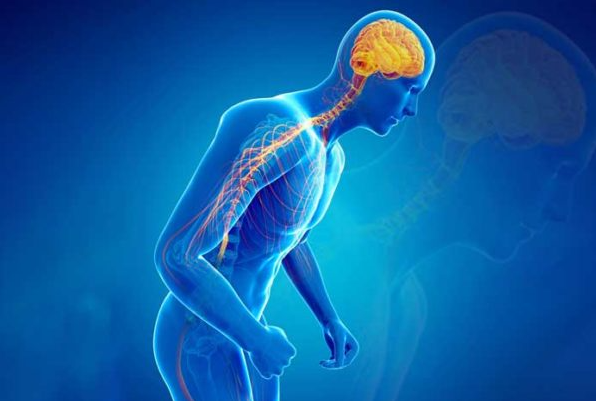

Parkinson’s disease is a disorder of the central nervous system. It is progressive. It worsens over time. It affects a small group of cells located in the middle of the brain. This area is known as the substantia nigra. These cells gradually lose their ability to produce a chemical called dopamine.
A decrease in dopamine can result in one or more of the general signs of Parkinson’s disease. These include tremors in the hands, arms and legs. Other signs include difficulty moving or maintaining balance while walking or standing. There may also be emotional changes, such as feeling depressed or anxious. The symptoms of Parkinson’s disease vary from person to person. They also vary in intensity.
The disease is named after James Parkinson. He was a British doctor who first described the condition in 1817. Dr Parkinson did not know what caused it. In the 1960s, medical researchers discovered changes in the brains of people with the disease. These discoveries led to the development of medicines to treat the symptoms of the disease. However, there is still no cure or way to prevent Parkinson’s disease. Doctors are still unsure about the cause.
Parkinson’s disease affects more than four million people worldwide. More than one million of these are in North America. Most of these people are older adults.
Most patients have idiopathic Parkinson’s disease. ‘Idiopathic’ means that the cause is unknown. People who develop the disease often want to link it to something identifiable. This might be a medical procedure or extreme emotional distress.
However, many doctors reject the idea of a direct link to Parkinson’s disease. They point out that many other people have had similar experiences yet do not develop the disease.
Nevertheless, doctors acknowledge that such events may trigger the appearance of symptoms earlier than they would otherwise.
Studies have found a link between the disease and certain chemicals. Last year, an American study revealed a connection between Parkinson’s disease and pesticides, such as those used for killing insects. The study compared 319 people with Parkinson’s disease to over 200 of their family members.
Two years ago, a European study also found a link between pesticide use and Parkinson’s disease. This study also found that serious head injuries increased a person’s risk of developing the disease. Scientists at Aberdeen University in Scotland collected information about over nine hundred people with Parkinson’s disease or similar conditions. They compared this group with almost two thousand people without the disorder. Everyone was asked about their use of pesticides, chemical fluids, and metals such as iron. The researchers also collected information about family history of the disease and head injuries.
Farm workers and others who reported frequent pesticide use were forty-one percent more likely to develop Parkinson’s disease than others. The disease was also twice as common among people who had been knocked unconscious more than once in their lives. These individuals had temporarily lost consciousness after sustaining a blow to the head.
Another area of study is family genetics. There are examples of members of the same family having the disease. According to the National Institutes of Health in the United States, about 15% of people with Parkinson’s have a family history of the disease. However, most cases involve people with no such family history.
A few years ago, researchers completed what they termed the first comprehensive map showing genetic links to Parkinson’s disease. This map identifies genetic changes that may increase risk in certain individuals.
Recently, a gene-testing company announced plans for a large-scale genetic study of patients with Parkinson’s disease. The company, 23andMe, was founded by Anne Wojcicki.
She is the wife of Sergey Brin, one of the creators of the internet search engine Google. He carries a gene that increases his risk of developing Parkinson’s disease. His mother has the disease. The company is collaborating with two non-profit organisations. They hope to collect DNA samples from 10,000 patients with Parkinson’s disease. The aim is to identify common genes that may cause the disease.
There is currently no cure for Parkinson’s disease. However, improved treatments that ease the effects of the disease enable many patients to live almost normal lives. Some people who have lost their ability to perform certain tasks are sometimes able to regain these abilities with treatment.
The most commonly used drug is levodopa. According to the National Institutes of Health, levodopa is a chemical found naturally in plants and animals. Once it reaches the brain, it is converted into dopamine, which is lacking in people with the disease.
Levodopa helps to ease the symptoms of Parkinson’s disease. However, it does not prevent further changes to the brain caused by the disease. Long-term use can produce unwanted side effects in some people. These include feeling sick.
To prevent this, levodopa can be combined with other substances, such as carbidopa. According to the National Institutes of Health, carbidopa delays the changes in levodopa until it reaches the brain.
Other drugs used to treat Parkinson’s disease mimic dopamine. They produce reactions in nerve cells in the brain. These drugs can be administered alone or in combination with levodopa. Many of the possible side effects are similar to those associated with levodopa use. These include sleepiness, nausea and vivid dreams.
Another treatment for Parkinson’s disease is an operation called deep-brain stimulation. Doctors implant small electrical devices deep in the brain. These devices are connected to a pulse generator.
Deep brain stimulation can reduce the need for drugs such as levodopa. It can also help to alleviate symptoms such as tremors and slowness of movement. A recent report in Science magazine explained how deep-brain stimulation works. The study found that the treatment affects axons, which are nerve fibres that carry signals from one nerve cell to another.
The researchers were from Stanford University in California. They used light-sensitive molecules to activate and deactivate nerve cells in the deep brain structures of mice. No effect was observed when light was shone on cells in an area of the brain known as the subthalamic nucleus. However, bursts of electricity on the axons improved the animals’ movement.
In a separate study, it was found that a less invasive treatment could alleviate the symptoms of Parkinson’s disease. This study demonstrated that a treatment known as dorsal column stimulation could restore movement in rodents exhibiting symptoms similar to those experienced by people with Parkinson’s disease. In this study, the researchers delivered bursts of electricity to the animals’ spinal cords. Romulo Fuentes of Duke University in North Carolina led the research team. He noted that doctors already use spinal cord stimulation to help reduce long-lasting pain in people.
Scientists are also exploring other experimental treatments. In March, President Obama lifted restrictions on the use of federal funds for research involving human embryonic stem cells. These stem cells, derived from very early embryos, have the potential to develop into any tissue in the body. Scientists say that these cells may be able to cure or treat diseases such as Parkinson’s. However, opponents argue that stem cell experiments are wrong because they involve the destruction of human embryos. They argue that this is akin to destroying a human life.
American actor Michael J. Fox has had Parkinson’s disease for eighteen years. Unlike most patients, however, he contracted the disease at a young age. He is now forty-seven and has many symptoms of the disease. However, Fox still acts on television, writes books, and campaigns for Parkinson’s research. The Michael J. Fox Foundation has raised over one hundred and forty-two million dollars to fund research into better treatments. Fox says he is certain that a cure for Parkinson’s disease will be found in the future.