

Our story begins with the willow tree. Since ancient times, people have recognised its ability to alleviate pain and reduce high body temperatures. Over two thousand years ago, the Greek physician Hippocrates recommended that his patients chew the bark and leaves of the willow tree.
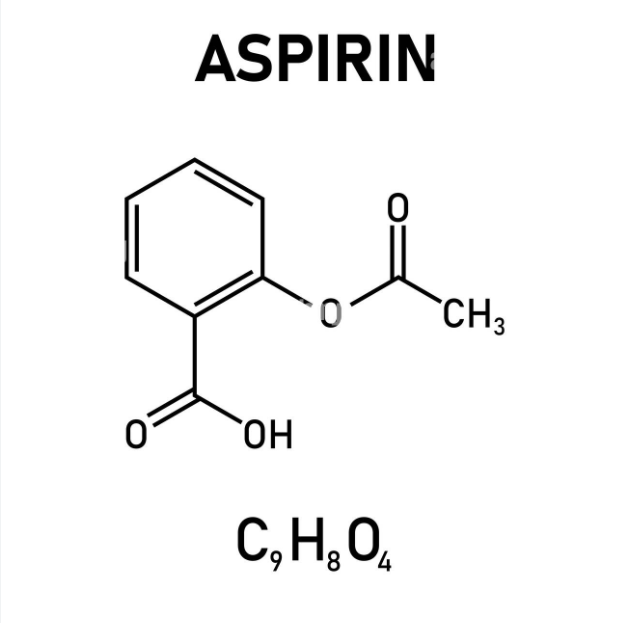
The tree contains a chemical called salicin. In the 19th century, researchers discovered how to make salicylic acid from salicin. Then, in 1897, a chemist named Felix Hoffmann at Friedrich Bayer & Co. in Germany created acetylsalicylic acid.
This later became the active substance in a new medicine that Bayer called aspirin. The ‘a’ came from ‘acetyl’. The ‘spir’ came from the spirea plant, which also produces salicin. And the ‘in’? Well, it’s a common ending for medicine names.
In 1982, a British scientist shared the Nobel Prize in Medicine, in part, for discovering how aspirin works. Sir John Vane discovered that aspirin prevents the body from producing natural substances called prostaglandins. Prostaglandins have several effects on the body. Some cause pain and the swelling of damaged tissue. Others protect the lining of the stomach and small intestine. Prostaglandins also ensure that the heart, kidneys and blood vessels function properly. However, there is a problem. Aspirin works against all prostaglandins, both good and bad.
Scientists have discovered how aspirin interferes with an enzyme. One form of this enzyme produces the prostaglandin that causes pain and swelling. Another form creates a protective effect. Therefore, aspirin can reduce pain and swelling in damaged tissues. However, it can also damage the lining of the stomach and small intestine.
These days, aspirin has to compete with lots of other medicines for treating headaches, muscle pain and fever. These include paracetamol, the active ingredient in products such as Tylenol. However, many people also take aspirin to reduce the risk of heart attacks and strokes caused by blood clots. These clots can block the flow of blood to the heart or brain, causing a heart attack or stroke. Scientists say that aspirin prevents blood cells called platelets from sticking together to form clots.
This effect was first noted by a California doctor named Lawrence Craven more than fifty years ago. He observed unusual bleeding in children who had chewed an aspirin product to ease the pain following a common throat operation.
Dr Craven believed that the bleeding was due to aspirin preventing blood from thickening. He thought this effect might help to prevent heart attacks caused by blood clots. After examining the medical records of eight thousand aspirin users, he found that there had been no heart attacks in this group. He invited other scientists to test his ideas. However, it was years before large-scale studies were conducted.
One of these studies was led by Charles Hennekens of Harvard Medical School. In 1983, he began studying more than 22,000 healthy male doctors over the age of 40. Half of them took an aspirin every other day. The others took what they thought was aspirin. In fact, it was only a placebo, an inactive substance. Five years later, Dr Hennekens reported that those who had taken aspirin had reduced their risk of heart attack. However, they were also at a higher risk of bleeding in the brain than the other doctors.
More recently, at the request of federal health officials in the United States, a group of experts examined studies of aspirin. They concluded that people at increased risk of heart attack should take a low-dose aspirin every day. Those most likely to suffer a heart attack include men over forty and women over fifty. Those who are overweight or smoke are also at greater risk. So are those with heart disease, diabetes, high blood pressure or high cholesterol.
In 2005, scientists reported the results of a major study that confirmed aspirin also benefits women. However, the results were surprising. The study found that aspirin did not reduce the risk of a first heart attack in women. However, women who took aspirin were 17% less likely to have a stroke than those who took a placebo. They were also twenty-four percent less likely to have the most common form of stroke. The effects were most pronounced in women aged sixty-five and over. These results were the opposite of those seen in men. The study lasted ten years. It involved 40,000 women aged 45 to 80. The women who took aspirin were given 100 milligrams every other day.
Aspirin may help someone having a heart attack caused by a blocked artery. It thins the blood, enabling it to flow past the blockage. However, heart experts say that people should seek emergency help immediately. They say that an aspirin is no substitute for treatment.
Some people should not take aspirin. This includes those who take other blood thinners or have bleeding disorders. Pregnant women are usually advised to avoid taking aspirin. Children who take aspirin may develop a disease called Reye’s syndrome. Aspirin can also interfere with other medicines, although this is true of many drugs. A well-known risk associated with taking aspirin is stomach bleeding. The acid in the drug can damage tissue in the stomach or intestines. However, some studies have found that aspirin may help to prevent cancers of the stomach, intestines and colon.
One recent study showed that aspirin blocks the formation of blood vessels that feed cancer growth. Researchers at Newcastle University in England have been exploring a biological process that causes blood vessels to grow. They studied how aspirin affects cells found on the inner surface of blood vessels. They found that a small amount of aspirin suppressed the formation of tubes by these cells.
However, lead researcher Helen Arthur says that people with cancer should only take aspirin if advised to do so by a doctor. She warns that taking large amounts of aspirin over a long period can cause severe stomach bleeding and even death.
Aspirin belongs to a group of medicines known as NSAIDs (non-steroidal anti-inflammatory drugs). Ibuprofen is another example. Several studies have found that men who take NSAIDs have a lower risk of developing prostate cancer. Researchers at the Mayo Clinic in Minnesota investigated how NSAIDs might affect enlarged prostates that are not cancerous. They monitored the health of 2,500 men for 12 years. One-third of the men were taking NSAIDs daily when they entered the study. The scientists recently announced that these drugs may delay or prevent the development of an enlarged prostate. They found that the risk of an enlarged prostate was 50% lower in NSAID users than in other men. The risk of bladder problems was also thirty-five percent lower.
The prostate gland is part of the male reproductive system and sits just below the bladder. It is common for the prostate to grow as men get older. This can result in frequent urination and other effects on a man’s quality of life.
However, due to risks such as stomach bleeding, scientists are not advising all men to take aspirin. However, if men are already taking it, the findings suggest another way in which it might help. However, the reasons are unclear, and the findings must be reproduced by other studies.
Most of the men in the study were taking aspirin. However, the study found that other NSAIDs appeared to have the same effect. The amount taken also did not seem to make much difference.
In any case, medical experts say that people should not take aspirin for disease prevention without first consulting a doctor. There are risks, and researchers have reported that some people get little or no protection from aspirin. Nevertheless, medical research continues to shed new light on one of the world’s oldest and most widely used drugs.