
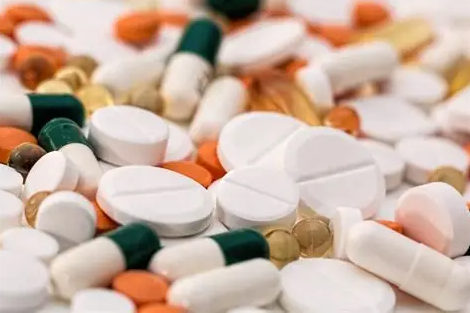

Counterfeit medicines are a widespread problem in developing countries. Like other counterfeit goods, they resemble genuine products. However, counterfeit drugs may contain too much, too little, or none of the active ingredients found in genuine products.
As a result, people do not get the medicine they need. In some cases, the counterfeits cause tragic problems of their own.
For example, about a year ago, more than eighty children in Nigeria died after being given medicine for teething pain. More than twenty children in Bangladesh died last year after being given acetaminophen. In both cases, the medications contained ingredients that resembled the real thing in appearance, smell and taste.
However, the medicine in Bangladesh was produced by a local drug manufacturer that used a dangerous substitute to save money. In the Nigerian case, an illegal chemical dealer sold counterfeit glycerine to a pharmaceutical company. The company then used this chemical to make the teething medicine.
According to the World Health Organization, the problem of counterfeit medicines is particularly prevalent in Africa, Asia and Latin America. The organisation estimates that up to 30% of medicines on sale in many of these countries are counterfeit.
Counterfeit medications are also a problem in the Middle East and many former Soviet countries.
The problem is less widespread in industrialised countries. The WHO says counterfeits represent less than one percent of the illegal drug market in countries such as the United States, Canada, Japan and New Zealand.
However, the agency also states that up to 50% of medicines sold online are counterfeit.
Most people have no way of knowing whether medications are genuine.
The Center for Medicine in the Public Interest is a New York-based group supported in part by the pharmaceutical industry. It predicts that counterfeit sales will reach $75 billion worldwide this year — nearly double the level in 2005.
Substandard medicines are also a widespread problem in developing countries. How do they differ from counterfeits? Legally speaking, counterfeit drugs are produced with the intention of misleading people. Substandard drugs are simply of poor quality.
Last week, we discussed the issue of counterfeit medicines, which is particularly prevalent in Africa, Asia, and Latin America. According to the World Health Organization, up to 30% of medicines sold in many developing countries are fake.
It also estimates that up to 50% of medicines sold online are counterfeit. This can put people at risk, even in wealthy countries, which represent only a small part of the counterfeit drug market.
Today, we will look at the measures being taken to combat counterfeit drugs.
Several companies are developing ways to make counterfeits easier to identify. There are also existing methods, such as a machine that can quickly analyse the chemicals in pills to confirm whether they are genuine.
Other ideas include special tracking codes for drug packages. Consumers could send a text message with the code and receive a response confirming whether the product is listed in a database.
Some drug manufacturers and other companies use three-dimensional images, or holograms, as a security feature on their products.
Other anti-counterfeit efforts include the use of radio frequency identification tags. These electronic tags are used by many companies to track products through the supply chain from the manufacturer. According to the American Food and Drug Administration, R.F.I.D. tags act as an electronic safety net, making it easier to detect counterfeits.
Last July, the FDA advised manufacturers to add physical chemical identifiers to their medicines. These are special chemicals, colourings or flavours that counterfeiters could not easily copy.
Bryan Liang is with the Partnership for Safe Medicines, a US organisation. He says that the internet is not only a place where people can be tricked into buying counterfeit drugs. It is also a place where counterfeiters can find all the materials they need to produce them.
Bryan Liang: ‘The internet is the Wild West. Anyone can sell drugs. Anyone can buy the active ingredients.’
He says that patients themselves are the most important members of the ‘counterfeit detection team’. Raids on counterfeiters are often the result of information from people who have bought fake medicines.
Bryan Liang continues, “The best approach is to know your drug. Know what they feel like. Know what they taste like. Know your traditional reactions. Someone who knows their drugs and how they affect them is the best protection against fakes.”