

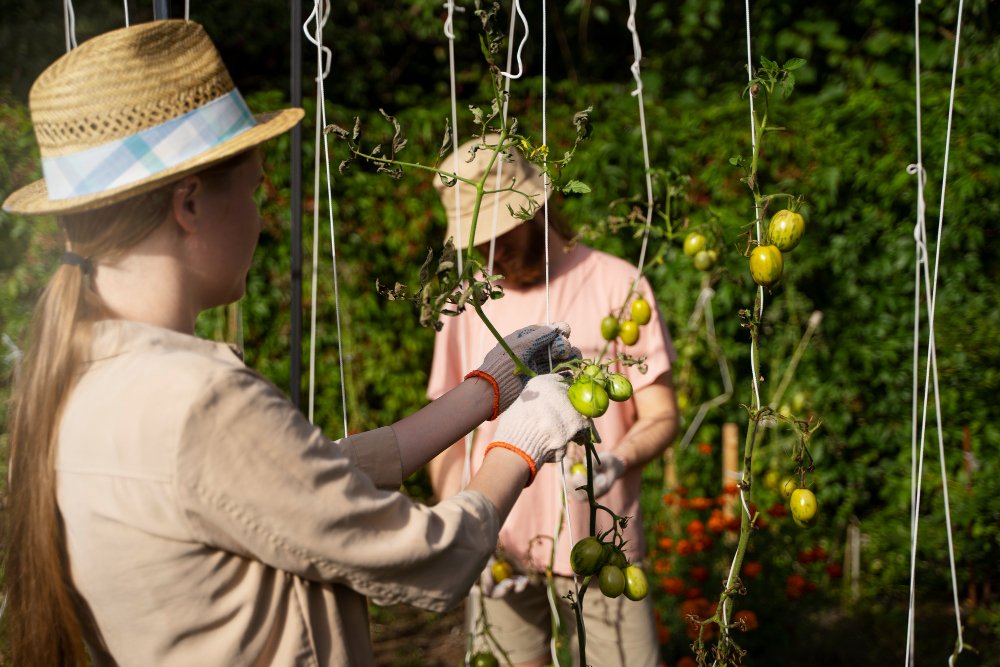
Water scarcity is rapidly reshaping the landscape of global agriculture. As shifting climate patterns introduce prolonged dry spells and unpredictable rainfall, the conventional reliance on constant summer irrigation is becoming increasingly unsustainable for growers. In response to these environmental pressures, agricultural experts, horticulturists, and dedicated cultivators are looking backward to move forward. They are unearthing ancient, time-tested methods of crop production that rely entirely on the moisture captured in the soil during winter rains.
This methodology, coupled with the genetic resilience of historically adapted seeds, provides a blueprint for sustainable food production. By combining drought-resistant heirloom vegetables with forgotten dry-farming techniques, it is entirely possible to cultivate thriving, productive gardens without a single drop of supplemental summer irrigation. This comprehensive guide explores the rich history, soil science, plant biology, and practical application of dry-farming, offering a rigorous framework for cultivating crops in an increasingly arid world.
The Forgotten Science of Dry-Farming
Dry-farming is not simply the act of neglecting to water a garden and hoping for the best. It is a highly intentional, systematic approach to producing agricultural products without supplemental applied water during the dry season. This practice has deep historical roots, having been utilized for millennia by indigenous communities in the arid American Southwest, as well as by traditional farmers across the Mediterranean.
These historical cultivators understood a fundamental truth about agriculture: the soil itself is the ultimate water reservoir. The core philosophy of dry-farming relies on maximizing the infiltration of winter precipitation into the soil profile and then meticulously preserving that moisture throughout the hot summer months. Rather than feeding plants water directly through drip lines or sprinklers, dry-farming trains the plant to send its roots deep into the earth to seek out the subterranean “bank” of stored winter moisture.
This system requires a fundamental shift in how one approaches cultivation. It demands a holistic view of the farm or garden ecosystem, prioritizing careful plant selection and adequate planting bed preparation over the installation of complex irrigation infrastructure. When executed correctly, the results are crops that are deeply connected to their local terroir, exhibiting unparalleled flavor profiles and robust resilience against environmental stress.
The Anatomy of Drought-Resistant Heirloom Vegetables
Modern agricultural hybridization has largely focused on maximizing yield, uniformity, and transportability, often at the expense of root depth and drought tolerance. Modern crops are frequently bred to thrive in heavily irrigated, heavily fertilized environments. Heirloom vegetables, by contrast, are open-pollinated varieties that have been passed down through generations. Many of these heirlooms were bred in specific microclimates long before the advent of mechanized irrigation.
Why Heirlooms Excel in Arid Conditions
Heirloom varieties adapted to arid regions possess specific physiological traits that make them ideal candidates for dry-farming. These traits include:
- Aggressive Taproots: Unlike shallow-rooted modern hybrids, dry-farmed heirlooms rapidly develop deep, penetrating taproots that can reach moisture reserves several feet below the soil surface.
- Thick Cuticles: Many drought-adapted plants feature thicker waxy layers on their leaves, which significantly reduces transpiration (moisture loss through the foliage).
- Determinate Growth Habits: Determinate plants grow to a specific size, set their fruit, and finish their life cycle over a condensed period. Because they are smaller and fruit all at once, they require significantly fewer water resources over the course of a season compared to indeterminate, sprawling varieties.
Selecting the Right Cultivars
Success in this method begins in the seed catalog. It is vital to seek out drought-resistant or drought-tolerant plant varieties that have historical precedent for surviving on minimal water.
- Tomatoes: Potato-leaf varieties often perform better in dry-farmed settings than regular-leaf varieties. Cultivars such as Amish Paste, Yellow Pear, and Early Girl (an open-pollinated relative, though the hybrid is famously used in commercial dry-farming) show remarkable success.
- Melons and Squash: Look for bush varieties rather than vining types. Bush varieties create a dense canopy that shades the soil, reducing evaporation. Small icebox watermelons, like the Moon and Stars variety, as well as Hopi Black squash, are highly adapted to low-water environments.
- Legumes: Tepary beans, historically grown by the Tohono O’odham and Pima peoples in the Sonoran Desert, are arguably the most drought-tolerant legume on the planet, thriving in conditions that would destroy standard bush beans.
Mastering Soil Ecology for Moisture Retention
The foundation of a dry-farmed plot is not the seed, but the soil. If the soil lacks the capacity to hold water, the deep roots of the heirloom vegetable will find nothing but dust. Transforming dirt into a moisture-retaining sponge requires the implementation of robust ecological soil management practices.
The Mechanics of Soil Moisture
Soil holds water within its pore spaces. The ideal dry-farming soil is a loam or clay-loam, which possesses a high “field capacity”—the amount of soil moisture held in the soil after excess water has drained away. Sandy soils, with their large pore spaces, drain too quickly and struggle to hold sufficient water for summer survival.
To improve the water-holding capacity of any soil type, the introduction of organic matter is non-negotiable. Organic matter acts literally as a microscopic sponge. It binds soil particles together to form aggregates, creating macropores that allow heavy winter rains to infiltrate deeply rather than running off the surface. Simultaneously, the organic matter absorbs and holds that water, releasing it slowly to plant roots over the summer months.
The Deep Dig Technique
In a conventional garden, tilling the top six inches of soil is often deemed sufficient. Dry-farming requires significantly deeper preparation to ensure roots face no physical barriers when driving downward.
- Timing the Dig: Soil should only be worked when it is perfectly friable. If native clay soil is squeezed into a ball, it should easily crumble when poked. Working soil that is too wet will destroy its structure, leading to hardpan compaction.
- Double Digging: The bed must be loosened to a depth of 18 to 24 inches. This involves removing the top layer of soil, aggressively loosening the subsoil with a broadfork or digging fork, and then replacing the topsoil mixed with high-quality compost.
- Preserving Aeration: Once a bed has been deep-dug, it must never be walked upon. Foot traffic immediately compacts the soil, crushing the delicate macropores and capillary channels necessary for root expansion and water storage.
Planting Techniques for Deep Root Establishment
Planting a dry-farmed crop differs drastically from traditional spring planting. The goal is to bury the plant deeply enough that its nascent roots are immediately in contact with the subsurface moisture zone.
For deep-rooted crops like tomatoes, transplants are generally preferred over direct seeding, as it allows the grower to manipulate the root depth at planting time. A hole should be dug significantly deeper than the root ball of the transplant. By burying the bare stem and removing the lower leaves—which encourages the plant’s energy to form a robust root system—the grower forces the plant to develop roots deep within the moisture-rich subsoil rather than near the evaporative surface layer.
Plants must also be spaced much further apart than in a traditional irrigated garden. Because each plant must scavenge a vast subterranean area for water, crowding them will lead to intense competition and eventual crop failure. A spacing of four to five feet between tomato plants or squash hills is standard practice.
The Weaning Process
A dry-farmed crop does not survive without any water from day one. It requires a carefully managed weaning process.
Upon planting, the deep hole is flooded with water, ensuring the transplant settles into a deeply saturated environment. For the first three to four weeks, the crop receives deep, infrequent watering. This trains the roots to chase the water downward. After the plant is visibly established and begins to initiate vigorous vegetative growth, all supplemental irrigation is completely cut off. The grower must resist the temptation to water the plants, even if they show minor signs of wilting during the hottest part of the afternoon. This temporary wilting is a natural physiological response to heat, and as long as the plant recovers by morning, the deep root system is functioning correctly.
Surface Management Strategies: The Mulch Mandate
Once the soil is charged with winter rain and the seedlings are established, the primary objective shifts to preventing that moisture from evaporating into the atmosphere. Bare soil exposed to the summer sun will rapidly lose water through capillary action, where moisture is wicked upward to the surface and vaporized.
Organic Mulching
Applying three to four inches of organic mulch (straw, fallen leaves, shredded bark, or untreated cardboard) is one of the most effective ways of enhancing microclimatic conditions to reduce surface water runoff and prevent evaporation. Mulch blocks direct sunlight, dramatically lowering the soil surface temperature and halting the capillary wicking of moisture. It also suppresses weeds, which is critical in a dry-farmed plot, as every weed acts as a botanical straw, stealing precious moisture from the primary crop.
The Historical “Dust Mulch”
In large-scale agricultural operations where applying thick organic mulch is economically unfeasible, traditional dry-farmers utilized the “dust mulch” technique. This involves shallowly cultivating the top two inches of soil after every winter rain. This shallow cultivation breaks the capillary channels at the surface, creating an insulated layer of loose, dry soil that traps the moisture in the deeper layers. While effective for moisture retention, this method can lead to long-term degradation of soil organic matter due to repeated tillage, making heavy organic mulching the preferred choice for small-to-medium-scale growers.
The Vital Role of Cover Crops in Water Conservation
The dry-farming cycle does not end with the summer harvest. Winter management is arguably the most critical phase for next year’s success. Leaving a field bare during the winter rains leads to topsoil erosion and surface crusting, which actively prevents water infiltration.
Integrating cover crops—such as cereal rye, winter peas, or crimson clover—during the dormant season is a proven method for improving soil moisture management. The roots of the cover crops break through compacted soil layers, creating biological channels. When the winter rains fall, the water follows these root channels deep into the subsoil, maximizing the recharge of the soil water bank.
In the spring, these cover crops are terminated—either by mowing, rolling, or light incorporation—before they set seed. The resulting biomass is left on the soil surface, providing an immediate, free source of organic mulch that will protect the soil throughout the impending dry season. Committing to a winter cover crop regimen is heavily viewed by agronomic researchers as an investment in the long-term resilience of the farm, building a soil profile capable of withstanding severe drought years.
The Flavor Trade-Off: Yield Versus Quality
One of the most profound outcomes of dry-farming is the dramatic shift in the quality of the harvest. A conventionally irrigated tomato plant may produce thirty pounds of large, watery fruit. A dry-farmed tomato plant of the exact same variety may produce only ten pounds of fruit, and the individual tomatoes will be noticeably smaller.
However, what is lost in water weight is gained exponentially in flavor concentration. Because the dry-farmed plant is forced to survive in a state of mild water deficit, the biosynthesis of phenolic compounds and sugars within the fruit increases dramatically. The result is an incredibly dense, highly textured vegetable with a Brix level (sugar content) that far exceeds its irrigated counterparts. For culinary professionals and flavor purists, the intense, complex taste of a dry-farmed heirloom vegetable makes the reduction in overall yield a highly worthwhile trade-off.
Key Distinctions: Dry-Farming vs. Conventional Irrigation
To fully conceptualize the paradigm shift required for this methodology, analyzing the contrasting practices provides clear guidance.
Dry-Farming vs. Conventional Gardening Comparison Table
| Feature / Practice | Conventional Irrigated Gardening | Traditional Dry-Farming |
| Water Source | Municipal water, wells, drip lines throughout summer. | Strictly winter rainfall stored in the soil profile. |
| Plant Roots | Shallow, concentrated in the top 12 inches of soil. | Deep taproots, extending 3 to 6 feet down. |
| Plant Spacing | Intensive, close spacing (e.g., 2 feet apart). | Wide, expansive spacing (e.g., 4 to 5 feet apart). |
| Soil Preparation | Light surface tilling; standard fertilization. | Deep double-digging; heavy reliance on organic matter/compost. |
| Crop Yield | High volume, large size, higher water content. | Lower volume, smaller size, dense cellular structure. |
| Flavor Profile | Standard, often diluted by excess water uptake. | Intensely concentrated, high sugar (Brix), complex phenolics. |
| Weed Management | Weeds are a nuisance, competing for nutrients. | Weeds are a critical threat, stealing vital limited moisture. |
Frequently Asked Questions (FAQ)
Can dry-farming be done successfully in raised beds?
Generally, no. Raised beds are explicitly designed for excellent drainage and rapid soil warming, which causes them to dry out quickly. Dry-farming requires the plant roots to access the deep, undisturbed native subsoil where winter moisture is held in reserve.
Does dry-farming work in sandy soil?
It is exceedingly difficult. Sandy soil has a very low water-holding capacity, meaning winter rains drain straight through rather than being stored. Dry-farming is most successful in loam, clay-loam, or clay soils. If attempting this in sandy soil, massive amounts of organic compost must be integrated over several years to build water retention before success can be expected.
If it doesn’t rain in the winter, can I still dry farm?
If a region experiences a severe winter drought and the soil profile is not fully recharged, the system will fail. In years of extreme winter drought, farmers must act as “simulated winter rain” by deeply soaking the fields via irrigation in the early spring before planting, and then cutting off the water for the rest of the season.
Is shading the plants necessary during the summer?
While not strictly necessary for heat-loving crops like tomatoes and melons, strategically utilizing light-weight row covers or shade cloth during the most punishing afternoon heat can help reduce plant stress. However, if the root system is deep enough and the soil moisture is adequate, heat-adapted heirlooms will generally thrive in full sun.
Do I fertilize my dry-farmed plants throughout the summer?
No. Liquid fertilizers require water to be taken up by the roots, and applying granular fertilizers without water will burn the plant. All necessary nutrition must be built into the soil profile during the winter and early spring through the application of compost and cover cropping prior to planting.
Conclusion
The resurgence of dry-farming heirloom vegetables represents much more than a nostalgic return to historical agriculture; it is a highly scientific, ecologically sound response to modern resource scarcity. By understanding the intricate dynamics of soil moisture, respecting the genetic legacy of drought-adapted seeds, and executing precise soil preparation, cultivators can achieve absolute water independence during the growing season.
While the methodology requires greater physical labor in the spring and demands a strict adherence to wide spacing and rigorous weed control, the dividends paid in the late summer harvest are unmatched. The intensely flavored, nutrient-dense crops stand as a testament to the resilience of nature when guided by careful stewardship. As agricultural landscapes continue to shift and water becomes an increasingly precious commodity, mastering the forgotten techniques of dry-farming offers a tangible, proactive path forward for sustainable, robust food production. The soil, when properly managed, already holds everything the plant needs; the grower’s task is simply to unlock it.