
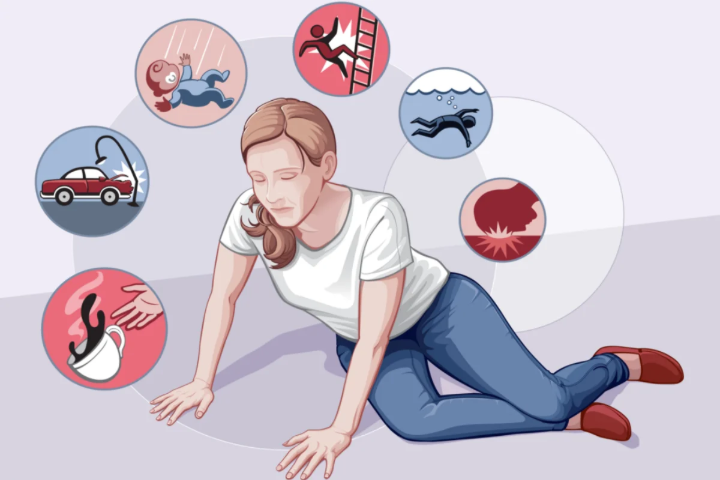

Epilepsy is not well understood by many people. Medical experts are working to improve their understanding of the disorder and enhance the quality of life for those who suffer from it.
Early last year, the sixteen-year-old son of actor John Travolta died suddenly during a family holiday in the Bahamas. Jett Travolta reportedly had a seizure before he died.
A seizure is a sudden attack that affects a person’s mind or body temporarily. People who experience repeated seizures are said to have epilepsy. It is unclear whether Jett Travolta had epilepsy. But what exactly is epilepsy, and how is it treated?
Epilepsy is a medical condition that causes seizures. A seizure occurs when an increase in electrical activity in the brain disrupts its normal functioning.
Nerve cells use electrical particles to communicate with each other. Millions of these particles pass between nerve cells in the brain. When the brain experiences a sudden burst of electricity, the body undergoes physical changes known as epileptic seizures. Those affected may shake uncontrollably for brief periods. They may also temporarily lose the ability to communicate or think clearly.
New research is helping to explain how cells communicate and cause conditions such as epilepsy. Doug Fields, a researcher at America’s National Institutes of Health, has made significant contributions to this field. He demonstrated that a chemical called ATP may be linked to brain disorders such as epilepsy and chronic pain.
Most seizures last between thirty seconds and two minutes. These seizures do not cause permanent damage. However, a seizure lasting more than five minutes is considered a medical emergency. One in ten adults will experience a seizure at some point in their life.
Different types of seizure occur when different parts of the brain are affected. If electrical activity increases in only one area of the brain, the person will experience what doctors call a partial seizure. Often, people may experience a partial seizure without realising it. They may experience strange sensations in an arm or leg. They may also hear noises or stare straight ahead for a few minutes.
Sometimes, they will have uncontrolled movements, such as turning their head to one side. Most partial seizures last less than ninety seconds. Therefore, it is not always possible for others to recognise them as signs of a disorder.
When people hear the word ‘seizure’, they often think of what doctors call a ‘grand mal’ seizure. A person having this type of seizure will fall to the ground. Their body will stiffen and begin to shake. After a few minutes, the individual will stop moving and appear to be awake, knowing what has happened. They may then move slowly for about thirty minutes. Some grand mal seizures start as partial seizures and worsen.
Experts have reported various reasons why a person may have epileptic seizures. For example, head injuries or a lack of oxygen at birth can damage the brain’s electrical system. Other causes include poisoning and high body temperatures.
Older adults may develop epilepsy due to an infection, stroke or Alzheimer’s disease. However, experts say that the cause of the disorder is unknown in more than half of all cases.
The World Health Organization estimates that 50 million people worldwide have epilepsy. Almost 90% of cases occur in developing countries. The WHO states that many people in developing countries suffer from epilepsy due to local conditions. In these regions, individuals are more likely to experience medical conditions or diseases that can result in permanent brain damage.
The WHO says that misunderstandings about epilepsy have resulted in legislation discriminating against people with the disorder. For years, it was legal for American businesses to discriminate against people with epilepsy. However, the Americans with Disabilities Act of 1990 now protects the civil rights of people with disabilities in the United States.
The WHO says that many people with epilepsy receive no treatment. However, there are many treatments available for the disorder.
The first treatment option for epilepsy is usually medication. According to the Epilepsy Foundation, different types of medication can stop or control different types of seizures. There are now more than fifteen types of drug on the market. These drugs only work effectively once they have reached a desired level in the body. It can take months to identify the right drug to control the disorder, as each one may cause side effects. These include weight gain or loss, eye or stomach problems, sleepiness, and loss of balance. Some people may experience depression or problems with thinking or speaking after taking certain drugs.
About ten years ago, a device called the Vagus Nerve Stimulator was developed. It is used to treat adults and young people with partial seizures that cannot be controlled by other methods.
In this treatment, electrical energy enters the brain via the vagus nerve in the neck. This electricity comes from a small power supply that is placed under the skin in the chest. Medical experts set the device to deliver a small amount of energy every few minutes. Patients can also send a short burst of energy through the nerve if they feel a seizure coming on. This has been known to stop a seizure.
However, the Epilepsy Foundation says that people using vagus nerve stimulation still need to take anti-seizure medication. However, the required dosage may decrease as the treatment continues.
Another treatment for epilepsy involves surgery to remove the part of the brain suspected of causing seizures. This is only done when medicines fail to control the disorder. For the operation to be performed, doctors must be able to remove the suspected area without damaging speech, memory or other abilities.
Other types of surgery can prevent electrical activity from spreading throughout the brain. According to the Epilepsy Foundation, doctors are performing more operations now because new information has made them safer. Nevertheless, some people do not benefit from surgery, and others continue to require medication for their seizures.
Some people with epilepsy may be able to control their seizures through dietary changes. The ketogenic diet was developed around eighty years ago. It is very high in fat and low in carbohydrates. It causes the body to burn fat for energy instead of sugar.
If the patient is a child, this diet requires family cooperation. It also requires medical supervision by a trained professional. Patients must be in hospital for the first part of the treatment. The amount of food and liquid that each patient can have at each meal must be carefully weighed. Patients should adhere to the dietary restrictions for at least one month before experts can determine the success of the treatment.
According to the Epilepsy Foundation, approximately one third of children on the ketogenic diet become seizure-free or almost seizure-free. Another third improve, but still experience some seizures. The rest cannot continue with the diet, or it has no effect on their seizures.
Possible side effects of the diet include digestive problems, dehydration, and the development of kidney or gall stones. Another risk is that high levels of fat could build up in the blood.
Even people being treated for epilepsy in one of these ways can still suffer an unexpected seizure. So, what should you do if you witness this happening? According to experts, the most important thing is to ensure the individual is safe until the seizure stops.
Stay with them. Clear the area of anything that could cause harm. If possible, turn their body onto one side. Do not force their mouth open or hold them down. The seizure will stop on its own. Then speak to them calmly and offer to help them get home.