
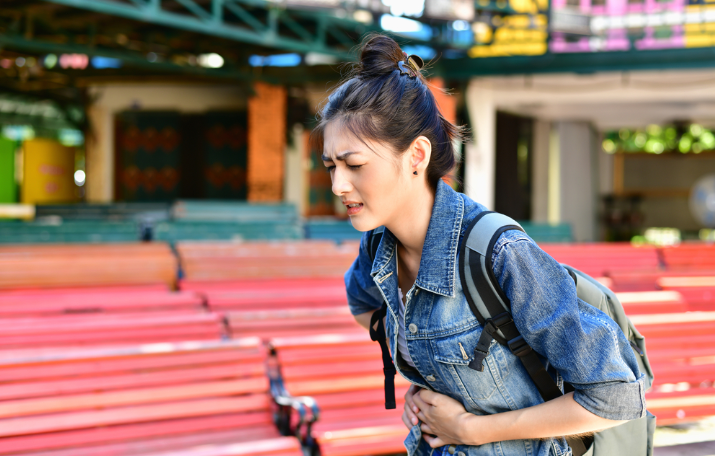

For years, people have wondered whether they are safe from germs when travelling in small, enclosed spaces. They are concerned about coming into close contact with others who may be unwell.
The recent spread of the swine flu virus has exacerbated these concerns. Recently, the World Health Organization raised its warning about the new H1N1 virus to the highest level. Director-General Margaret Chan declared the sickness a pandemic, meaning it has spread to many nations. In light of this information, many people are wondering how safe it is to travel.
The answers they are getting may seem conflicting. For example, a WHO statement urged nations not to close their borders or limit trade and travel. Director-General Chan said that the cases are generally mild for most people. Nevertheless, WHO officials continue to report new cases worldwide.
In the past, the WHO and experts from the US Centres for Disease Control and Prevention have provided guidance on how diseases spread on aeroplanes. They said that you could only become infected if you sat within two rows of someone who was ill. This equates to a distance of up to three metres from the infected individual. This was only true if you sat there for more than eight hours.
However, a travel health expert says that this guidance may not be helpful for swine flu. Mark Gendreau works at the Lahey Clinic Medical Center in Massachusetts, USA. He suggests steps that could help prevent you from getting swine flu on an aeroplane.
His advice includes keeping the airflow over your seat on a low setting. He says you should point the device so that the airflow is directed just in front of your face.
You can catch an infection by touching an infected surface and then touching your eyes, nose or mouth. Dr Gendreau recommends cleaning your hands with soap and water or hand sanitiser wipes. These products should contain at least 50% alcohol. He also recommends covering your face with a mask. Most importantly, avoid travelling when you are unwell.
Clearly, most people do not get sick while taking long trips. However, other things might interfere with your travel plans. For example, you could be placed in medical isolation if someone you travelled with on a plane is suspected of having swine flu.
A senior official from an American city recently had this experience. New Orleans’ mayor, Ray Nagin, his wife, and a security guard spent several days in a hospital-like centre in Shanghai, China. At the time, they were en route to Australia. The mayor was preparing to speak there. However, they were detained because someone who had sat near them on their arrival flight was suspected of having swine flu. This person was suspected of having swine flu. The Nagins did not become ill.
Students from a Maryland high school had a similar experience. During a recent trip to China, they had to spend several days in hotel rooms in the city of Kaili. They were not allowed to leave their rooms because someone on their flight was suspected of having flu. Tests later proved that this suspicion was incorrect.
The students lost several days of sightseeing. However, one girl said she was still glad she made the trip.
Many others share her view. One man from Maryland says he has been planning a trip to Ireland for years. He wants to visit the burial places of his grandparents. He says that not even a pandemic will stop him from making his trip.
The technology used in most airplanes might make you feel safer about air travel. According to the United States Federal Aviation Administration, most large passenger planes now use HEPA filters. These filters are designed to remove dangerous particles from the air.
The letters H-E-P-A stand for ‘High Efficiency Particulate Air’. HEPA filters capture almost all airborne particles measuring zero point three microns or larger.
HEPA filters were developed by America’s Atomic Energy Commission many years ago. The aim was to protect the workers developing the atomic bomb. The first HEPA filters removed radioactive particles from the air. Today, the filters clean the air on aeroplanes.
According to the Centers for Disease Control, HEPA filters are effective in clearing the air of many disease-causing particles. Manufacturers of the devices claim that they kill bacteria and viruses because they remove the moisture that germs need to survive. However, HEPA filters cannot remove particles that cause disease if they are smaller than 0.3 microns. These particles continue to circulate in the air and can infect people.
On a passenger cruise ship, fresh air is available on decks and in other areas above sea level. According to a spokesperson for the Cruise Lines International Association, the quality of the air depends on the requirements of the nation where a ship was built.
Experts say that people should be aware of other health concerns that can arise when travelling by air. One of these is hypoxia. This is caused by a lack of oxygen to the brain. Experts say the body begins to lose oxygen minutes after a plane leaves the ground.
The air pressure in a plane during flight is lower than at sea level. This makes it harder for the body to use the same amount of oxygen effectively as it would on the ground. Consequently, fewer oxygen molecules cross the tissues in the lungs and reach the bloodstream.
The result is a drop in oxygen levels in the blood of between five and twenty percent. This reduces the amount of oxygen that reaches the body’s organs.
One consequence of this lack of oxygen reaching the brain is a headache. In response, the heart beats harder and faster in an attempt to fix the situation. This can make the traveller feel tired.
These signs of hypoxia are not usually dangerous for healthy people. However, a drop in oxygen levels can trigger a health emergency in individuals with heart or lung issues. They may lose consciousness or even have a heart attack.
Experts say that smoking and drinking alcohol also reduces the body’s ability to use oxygen. Therefore, they recommend that people avoid drinking alcohol or smoking cigarettes before or during a flight. They also recommend that people with heart or lung problems seek advice from their doctor before flying.
Another problem for travellers can be a condition called deep vein thrombosis. This is a blood clot — a condition in which some blood thickens and blocks the flow to the heart. If blood clots move to the heart and lungs, they can stop needed oxygen from reaching these important organs, which can be fatal. This is known as a pulmonary embolism.
According to the World Health Organization, passengers who sit still for four or more hours are at a greater risk of developing blood clots. However, it states that only one in six thousand people develop deep vein thrombosis.
Last week, researchers from Harvard University reported that travellers are three times more likely than others to develop deep vein thrombosis. The researchers examined information from fourteen earlier studies. They found that the longer the journey, the greater the risk of developing deep vein thrombosis. They even found a measurable increase in the condition for every two hours spent sitting in a car.
Experts say that the risk of blood clots also increases if a person does not drink enough water. They recommend that passengers who sit for hours drink plenty of water, rather than liquids containing alcohol or caffeine. Passengers should also increase blood flow to their legs. Doctors suggest wearing support stockings and walking around every hour or so during the journey. Alternatively, they should move their legs and feet.
Doctors say that anyone experiencing pain, swelling or redness in a leg during or after a long journey may have a blood clot. Anyone experiencing these symptoms should see a doctor as soon as possible. The condition can often be treated with blood-thinning drugs that stop the clot from moving through the body.