
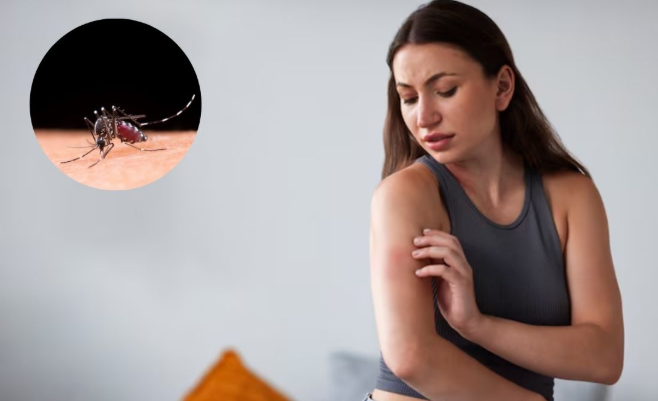

There are more than two thousand species of mosquito. Only female mosquitoes bite people to drink their blood. Male mosquitoes do not drink blood. Instead, they drink fluids from plants. The female mosquito uses her thin sucking tube to break the skin, locate blood vessels and inject a substance that keeps the blood flowing.
The female mosquito then drinks the blood and uses it to produce up to two hundred and fifty eggs. She leaves the eggs in any standing water.
These hatch into worm-like creatures called larvae within two days to a few months. However, some eggs can remain in the water for years until the conditions are right for them to develop. The larvae feed on organisms in the water. After four to ten days, they transform into creatures called pupae. The pupae rise to the surface of the water. Adult mosquitoes emerge from the pupae and fly away.
According to the World Health Organization, mosquitoes carry organisms that cause disease and death for millions of people worldwide. The most significant disease spread by mosquitoes is malaria. In 2006, the W.H.O. reported that 247 million people were infected with malaria. Malaria caused almost one million deaths, primarily among children in Africa. The disease is present in over one hundred countries across Africa, Asia, the Western Pacific, the Middle East, Central America and South America.
Malaria parasites enter a person’s bloodstream through a mosquito bite. These parasites travel to the liver. There, they grow and divide. After a week or two, the parasites invade red blood cells and multiply thousands of times. This causes the person’s body temperature to rise. They may also destroy major organs. People with malaria may suffer kidney failure or a loss of red blood cells.
Some medicines are effective at preventing and treating malaria. They work by preventing the parasites from developing in the body. People die from malaria because they are not treated for the disease, or because treatment is delayed.
The World Health Organization says that efforts to control mosquitoes are improving in many areas. However, it warns that mosquitoes are becoming increasingly resistant to pesticides, which are used to kill insects.
This month, the WHO joined forces with other groups to announce a new initiative to combat malaria. The aim is to reduce the use of the pesticide DDT. The United States banned most uses of DDT in 1972.
The WHO announced ten projects to test non-chemical methods of fighting mosquitoes. These include trees that repel mosquitoes and fish that eat their larvae. However, officials say that any reduction in pesticide use must ensure that efforts to control disease are not weakened.
Mosquitoes can also carry dengue fever. These insects can survive in new environments. They can spread diseases to new areas. For instance, experts state that only nine countries had dengue fever prior to 1970. Since then, the disease has spread to over one hundred countries.
According to the World Health Organization, around fifty million people suffer from dengue fever each year. There is no cure. Children may develop a less serious form of the disease. They may have a high temperature and some areas of their skin may turn red.
Older adults are much more susceptible to dengue fever. They may develop red skin and lose their sense of taste. They may also experience headaches or pain behind their eyes. They may also experience joint pain in areas such as the elbows or knees. This kind of joint pain is why dengue fever is sometimes known as ‘breakbone fever’.
The most severe form of dengue is dengue haemorrhagic fever. Those affected by this disease may bleed from the nose or other openings in the body. Dengue haemorrhagic fever kills around five per cent of those it infects. The only treatment is to control the bleeding and replace lost body fluids.
Yellow fever is another disease spread by mosquitoes. There are no effective drugs against yellow fever. Doctors can only hope that a person’s immune system is strong enough to fight the disease. Yellow fever is mainly found in Africa, northern South America, and the Caribbean Islands. According to the World Health Organization, there are an estimated 200,000 cases and 30,000 deaths from yellow fever each year.
Yellow fever is caused by a virus. A few days after being bitten by an infected mosquito, the victim experiences a high body temperature and pain in the head or muscles. They may also vomit. Most patients recover after three to four days.
However, 15% of patients develop a more serious condition. Their body temperature rises again and their skin turns yellow. The victim may bleed from the nose, mouth, eyes or stomach. Half of those affected die within ten to fourteen days.
A vaccine can prevent yellow fever. Experts say the vaccine is safe and highly effective. Protection lasts for at least ten years, possibly for life.
Mosquitoes can also carry lymphatic filariasis, also known as elephantiasis. This disease has affected over one hundred and twenty million people. One third of those infected live in India. Another third are in Africa. The rest live in South Asia or on Pacific Ocean islands.
Mosquito bites spread the worms that cause elephantiasis. People usually begin to develop the disease in childhood. Many children never show any signs of the disease. However, it can cause hidden damage to the lymphatic system and kidneys.
The most severe symptoms of elephantiasis tend to appear in adults. These signs are more prevalent in men than in women. These include damage to the arms, legs, and reproductive organs. Two drugs are effective in treating the disease.
Another disease spread by mosquitoes is encephalitis. It causes an infection or swelling of the brain. Many different viruses cause different types of the disease. One virus lives naturally in birds and horses. Mosquitoes can spread it to people. In several Asian countries, mosquitoes spread a type of encephalitis known as Japanese encephalitis. A vaccine can prevent this illness.
Other types of encephalitis include West Nile, Saint Louis and Eastern Equine. Most healthy people infected with the virus show no signs of illness. Others become ill for only a day or two. However, those with weak natural defences may develop a severe infection. They may experience high body temperature, headache, shivering and even death.
Experts have learned a lot about mosquitoes. For instance, these insects can detect carbon dioxide in a person’s or animal’s breath from up to sixty metres away. Mosquitoes often prefer the blood of animals to that of people.
They also like dark colours. They do not bite women who are menstruating. However, they do bite pregnant women. Many species of mosquito are most active in the early morning and evening. They feed mostly at night.
Experts say that the best way to prevent diseases carried by mosquitoes is to avoid being bitten. There are several ways to prevent mosquito bites. Do not keep standing water near your home.
Remove all containers that could provide a habitat for mosquitoes. Stay in enclosed areas when mosquitoes are most active. Wear clothing that covers most of your body.
Other methods include applying insect repellent to the skin, clothing and sleeping areas. You can also place nets treated with insecticide over windows and beds at night.