

You can see a colourful and expressive print called ‘Revolt on the Amistad’ at the National Gallery of Art in Washington, D.C. A small sign next to the work states that the artist is Jacob Lawrence.
He did indeed design the image. But who made the print? Today, we explore the world of printmaking to answer that question. We will also visit the expert printmaker who created this work of art.
To create a print, an artist first makes an original image using a form made of wood, metal, or plastic. They reproduce prints of this original image using liquid colours and paper. There are many methods of printmaking. Prints are often numbered to show how many were made in the edition or series.
The oldest form of printmaking is woodcut printing. Woodcut prints may have been used in the Middle East as early as the fifth century to create designs on cloth. Around the ninth century, they were also used in China to print documents.
As you might have guessed, woodcut prints are made out of wood. First, the printmaker draws an image onto a smooth piece of wood. Then they cut away pieces from the surface.
Once the wood has been cut, ink is painted onto the surface. This is then pressed onto a piece of paper. The areas that the printmaker has cut away will be lower on the surface of the wood. These parts do not receive any ink. However, the raised parts of the wood receive the colour. A different piece of cut wood is used for every colour in the final image. This method is called indirect because the ink is applied to the cut form before it is placed on the paper.
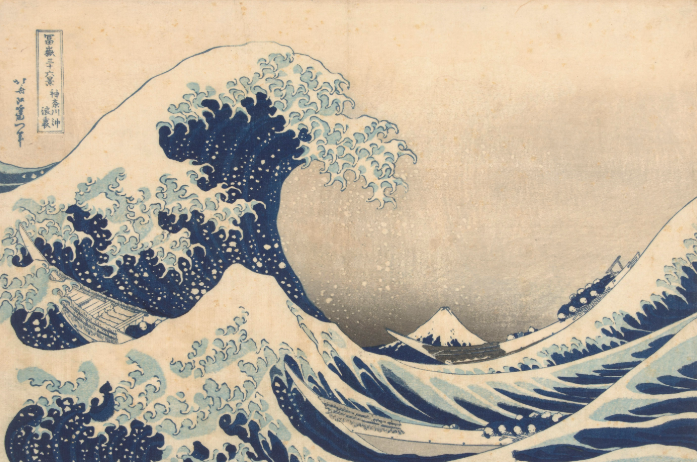
This method of printmaking became popular in Europe in the 16th century. Woodcuts were also a widely used artistic form in Japan from the seventeenth to the nineteenth century. Japanese prints from this period were called ukiyo-e, meaning “pictures of the floating world”.
Many of these images depicted natural scenes from the Japanese countryside. Others depicted city life, featuring popular actors, fat sumo wrestlers and beautiful women. These prints were popular with middle-class people living in towns. As the prints were mass-produced and not original works, they were inexpensive. People could therefore own artwork at a reasonable price.
Ukiyo-e prints had a significant influence on many European artists during the nineteenth century. Painters such as Edgar Degas and Vincent van Gogh incorporated the sharp lines and off-centre composition of these prints into their own work.
Lithography is another form of printing. The word ‘lithos’ comes from Greek for ‘stone’. The artist draws an image with oily ink onto a stone or other flat surface. Next, the stone is covered with a chemical mixture. This fixes the painted image into the stone. When printing begins, the stone is kept wet and covered in oily ink. The area where the original image was drawn will then attract the oily ink. However, the blank areas will repel the ink and instead attract water. This method works because oil and water do not mix.
The lithographic process was invented in the late eighteenth century by the German playwright Aloys Senefelder. He wanted to find a low-cost way to reproduce his plays. However, he soon realised the artistic potential of his lithographic printing method.
Nineteenth-century French artists became very interested in using lithography. Honoré Daumier and, later, Henri de Toulouse-Lautrec, for example, were masters of this process. They would draw directly on
the stone, and a printmaker would complete the process. Lithography is also used commercially. Picture books, newspapers and packaging all over the world are printed using this method.
Etching is another printing process. In this method, the printmaker cuts or etches an image onto a piece of metal. They use a fine, sharp knife to cut through the metal. The metal form is then chemically treated, covered with ink, and pressed onto paper.
Some artists prefer this method because they can draw on the metal as easily as with a pen. Experts say that the greatest artist ever to use this method was Rembrandt. This Dutch artist lived in the 17th century. The detailed perfection of his etchings of nature and religious scenes is extraordinary.
Finally, we come to a more modern form of printmaking: silkscreen printing. This method is based on the stencil technique. A stencil is a thin sheet of metal or plastic from which a design has been cut.
In silkscreen printing, the stencil is attached to a fine piece of stretched silk or nylon cloth. Underneath this is a piece of paper. Liquid paint is then passed over the cloth and stencil. The paint passes through the open areas of the stencil and onto the paper. A different stencil is made for every colour in the print. Of all the printing methods we have described, silkscreen printing is the only direct method. This means the ink goes directly onto the paper.
Andy Warhol was an artist who popularised silkscreen prints in the 1960s. He produced prints featuring subjects such as movie stars and soup cans.
The workshop of renowned master printmaker Lou Stovall is located on a quiet, tree-filled street in Washington, D.C. Let us return to the ‘Revolt on the Amistad’ print we mentioned at the beginning of this story.
Lou Stovall: ‘The artist is Jacob Lawrence and I am the silkscreen printer. The image depicts the revolt on the Spanish slave ship La Amistad, showing the action of the fight. You can see the swaying ropes and the churning water. It really gives you a sense of the drama involved in the fight. That’s one of the things Jacob was known for. He could convey a great deal with just a few strokes.
Lou Stovall creates prints for many artists. They come to him with an original image that they have created. Then, using his artistic skills, Stovall translates that work into a print version. It is important to him that his work remains true to the spirit of the original. He makes careful decisions about colour, shape, and line to produce the best possible print. Some of his silkscreen prints are so detailed that they resemble paintings.
Lou Stovall’s studio is large and very organised. The walls are covered with prints, signs, and photographs. One entire wall is dedicated to his music collection. In another area of the room, there is a large silkscreen table.
Nearby, recently made prints are placed on shelves to dry before other colours are added. Stovall has worked in this studio for over thirty years. He has taught the silkscreen method to many other artists.
He also creates his own artwork here. Sometimes he creates detailed drawings of flowers and nature. He says he likes the clean look of ink drawings on paper. He often turns his drawings into a series of prints. One of his prints is called ‘For Ascending Larks’. This circular image features many layers of flying birds. The idea for the original drawing came from a piece of music by the English composer Ralph Vaughan Williams. Listen to Lou Stovall talk about the music and the meaning of his picture.
Lou Stovall: ‘The piece was called The Lark Ascending, which I thought was one of the most beautiful pieces of music I had ever heard. It inspired me to create a drawing of a flock of different birds representing mankind and humanity. It features every shape, size and colour of bird that I could think of. I think there are about twelve birds in the whole picture. I dedicated it to the hunger movement, in the hope that we would recognise world hunger and try to do something about it.’
Not all of Lou Stovall’s art depicts recognisable subjects. Some of his prints resemble layers of colourful paint spills. These ‘monoprints’ are not planned out in the same way as his other works. He says it is exciting to create this kind of expressive print.
His prints and artwork can be found in museums and private collections all over America. Some of his art is sold in galleries. At other times, collectors buy his work directly from him. However, Lou Stovall says that money is not the main reason he creates art. He says that a magic happens when creating art. He believes that the most important reason for creating art is to share it with the world.